How can I choose a jelly cup filling and sealing machine for export without suffering expensive mold changes later?
You get orders fast, then cup-size changes break your schedule. Many buyers focus on speed first and discover retrofit costs only after installation.
If you export jelly cups, lock cup-diameter strategy first, then validate sealing, filling, and hygiene under real production conditions. That is what protects margin.
I work from a factory-side perspective at Guangdong Xinchuang Machinery Industry Co.,Ltd. In jelly cup projects, I repeatedly see one pattern: buyers ask for “multi-size flexibility,” but their business actually needs stable output, predictable maintenance, and low complaint rates. A cup filling and sealing machine can be highly reliable for years, but only when technical boundaries are defined early. Cup lines are usually customized by cup diameter, and mold switching is not a trivial plug-and-play step. It affects cup feeding alignment, indexing rhythm, fill center position, sealing head matching, and startup qualification time. If this is ignored in procurement, the hidden cost appears later as downtime, scrap, and delayed shipments.
Why is cup diameter strategy more important than nameplate speed?
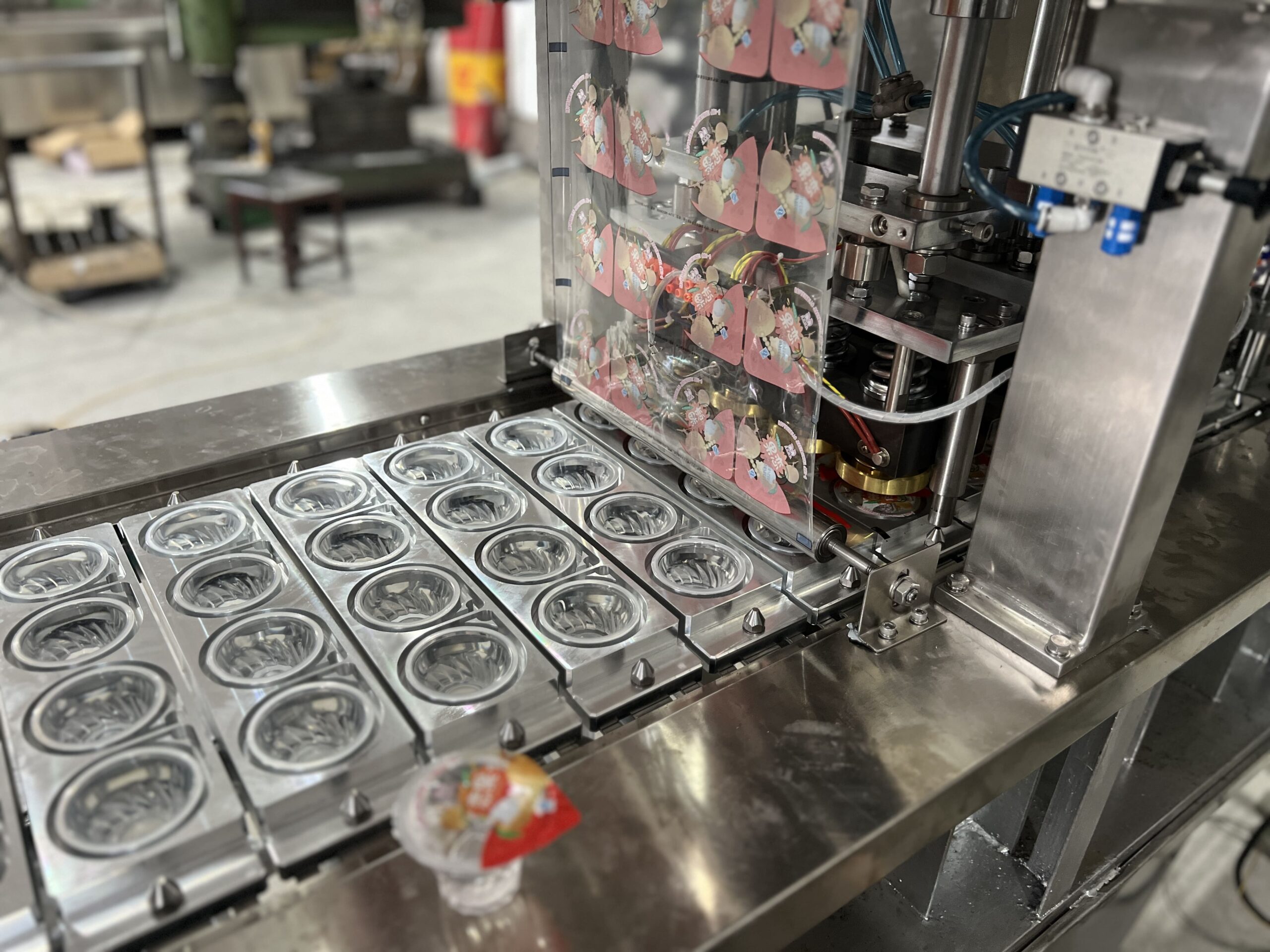
Because nameplate speed is only one number, while diameter strategy defines the mechanical architecture of your line. Your cup diameter tolerance1 influences denesting success, cup position repeatability, and sealing consistency at every cycle. If diameter variation or flange geometry is unstable, the machine may run, but good-cup output will not be stable.
When buyers request one machine for several unrelated cup sizes, I ask a direct question: “Do you want broad compatibility, or do you want predictable cost per qualified cup?” In many export projects, predictable unit economics is the real priority. If so, we recommend freezing one primary diameter for core volume and treating additional sizes as staged retrofit projects with clear downtime and validation plans.
Here is the practical procurement checklist I advise:
- Define your core commercial cup first: diameter, height, flange profile, and material.
- Request written retrofit scope for any second size: parts list, mechanical work, control recipe changes, and required qualification run.
- Ask for speed and reject-rate commitments after changeover, not only under original setup.
- Include startup scrap expectations in acceptance criteria.
This approach may sound conservative, but it avoids the common “can change, but not economically” outcome. In real factories, stable production planning is worth more than brochure flexibility.
How do I protect sealing reliability when jelly properties and environment change?
Jelly cup filling is sensitive to product behavior, ambient conditions, and seal-interface cleanliness. If your jelly temperature, viscosity, or fruit-particle content varies, filling behavior changes. If the cup flange gets product splash or condensation, sealing defects increase quickly. So sealing reliability should be validated as a process system, not only a machine function.
The filling nozzle2 must match your product rheology and dosing rhythm. A nozzle that looks fine with water during demo may produce tails, drips, or splashes with actual jelly mix. Even small residue on cup rim can reduce seal consistency.
For lidding, sealing film3 selection is critical. Film chemistry, stiffness, and heat-seal response must match your cup material and operating window. I recommend a formal seal-window study at commissioning: test temperature, pressure, and dwell combinations, then verify leakage and peel behavior by sampling across a sustained run.
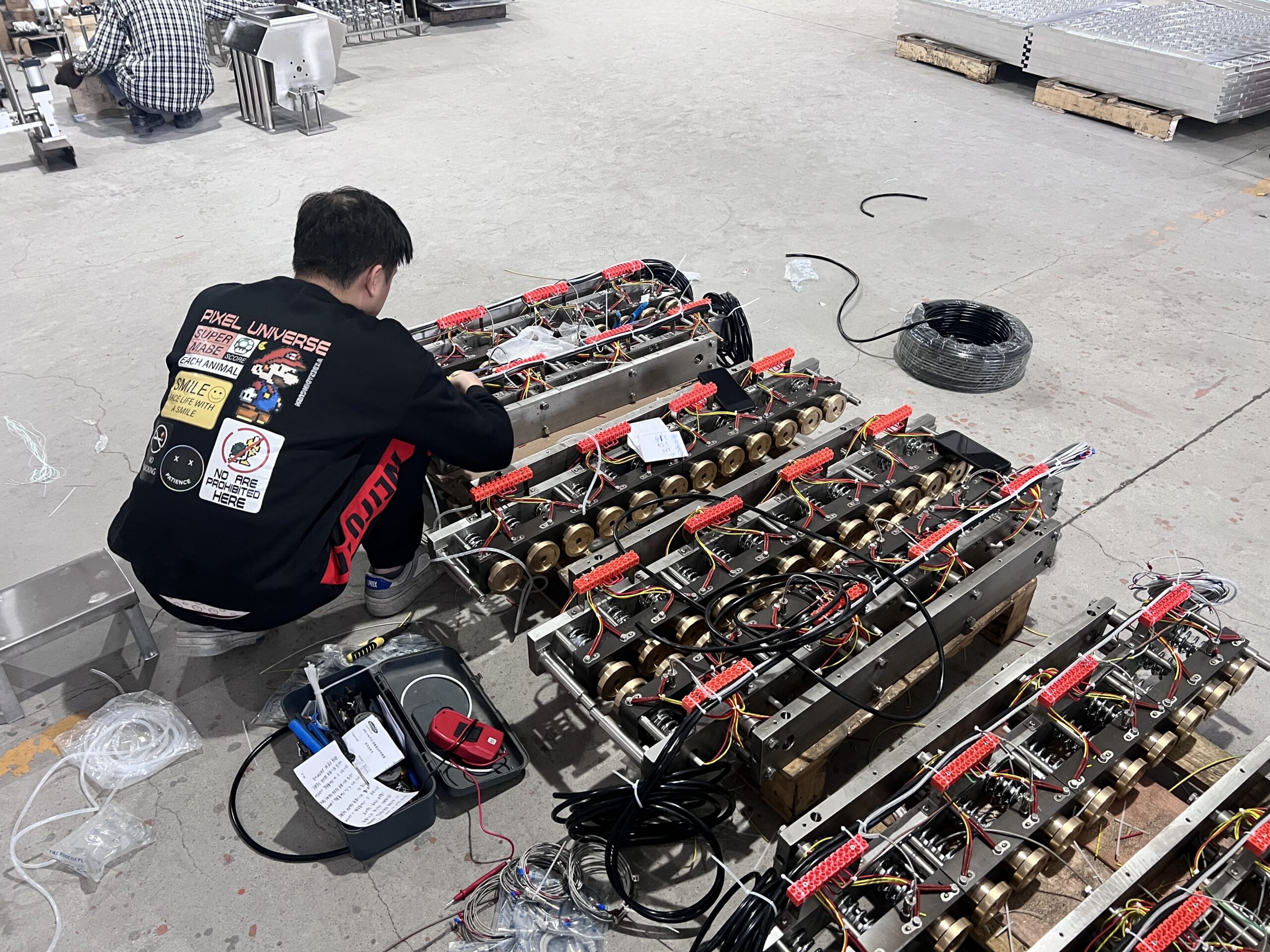
A realistic acceptance protocol should include:
- Sustained production run, not only short demonstration.
- Periodic seal checks and reject-cause logging.
- Startup, mid-run, and post-cleaning restart data.
- Final metric based on good cups per hour.
If you rely only on peak speed clips, you can miss the true risk: unstable seal quality after hours of operation.
What commissioning and control details actually reduce long-term complaints?
In export business, customer complaints usually come from inconsistency, not from one-time catastrophic failure. That is why commissioning depth matters. A proper commissioning plan includes mechanical alignment verification, control recipe management, sanitation rhythm validation, and preventive maintenance baselines.
On process control, stable temperature behavior supports stable fill and seal behavior. In many lines, upstream thermal conditioning with a heat exchanger4 improves consistency. Meanwhile, tuned PID control5 loops help reduce process drift during long runs. If thermal input fluctuates, jelly flow behavior changes and fill repeatability can drift.
Hygiene design is equally important. Practical CIP valve6 layout and clear cleaning SOP compatibility reduce sanitation recovery time and contamination risk. Buyers often under-budget this area, then lose production hours during cleaning and restart.
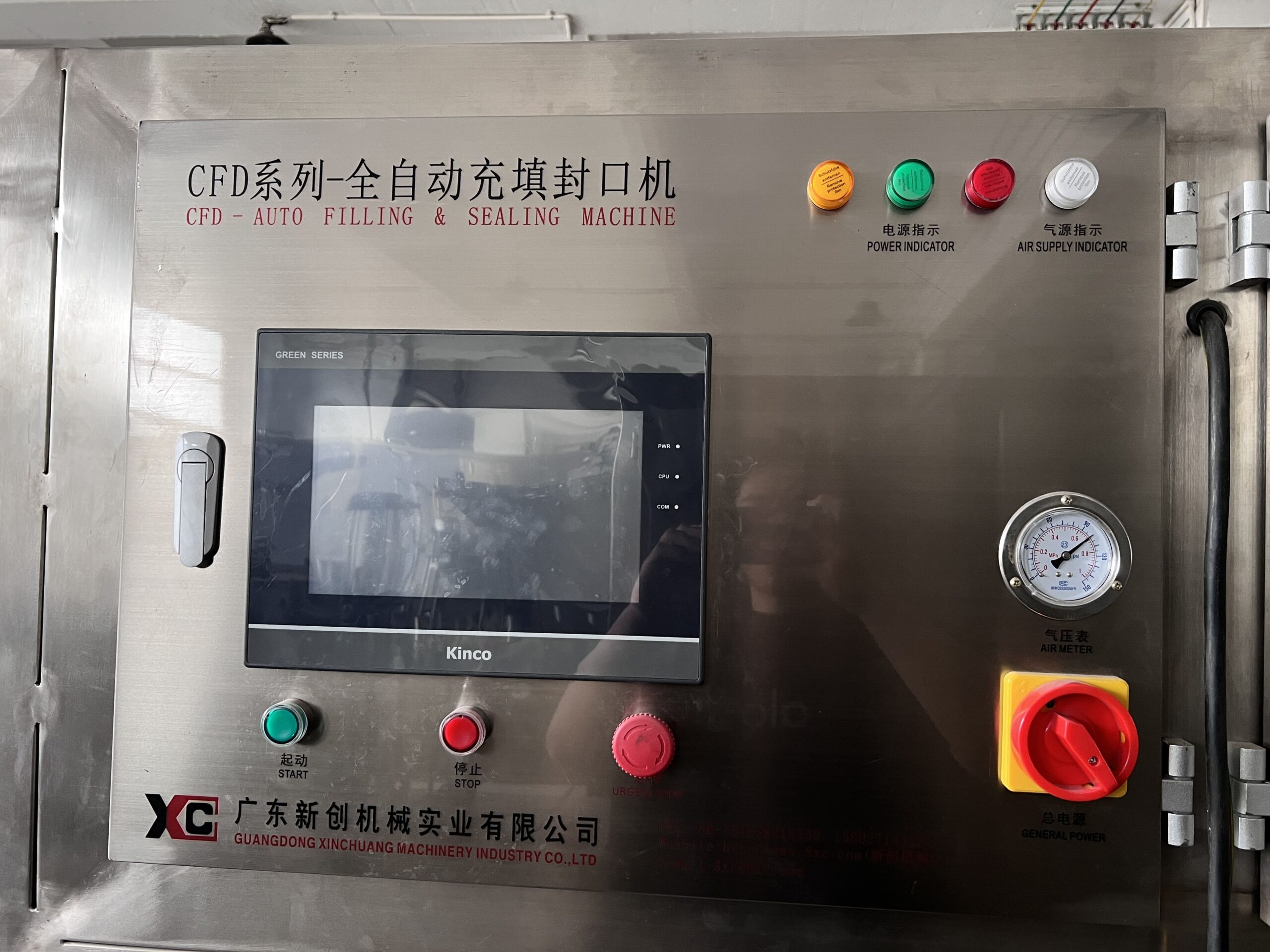
I also advise buyers to review utilities before final machine configuration: compressed air quality, cooling capacity, and power stability. A strong machine on weak utilities will still deliver unstable results. Long service life comes from system fit, operator discipline, and preventive maintenance execution.
When is a jelly cup filling and sealing machine NOT suitable right now?
A machine is not the right choice for every stage of business. I say this early because honest fit is better than expensive mismatch.
It is usually not suitable when your plan requires frequent low-volume switching across many cup diameters every week. In this case, changeover and requalification can consume margin. It is also not suitable when your packaging supply quality is inconsistent and outside tolerance control. Equipment can compensate only within limits.
Another red flag is when the team expects immediate high-speed output but cannot allocate time for proper commissioning and operator training. Without recipe discipline, cleaning discipline, and routine inspection, even a premium line will not maintain target uptime.
There is also a strategic mismatch case: if your required shelf-life model demands a fundamentally different process architecture, a standard cup filling and sealing line may be insufficient. Then the right decision is process redesign, not parameter stretching.
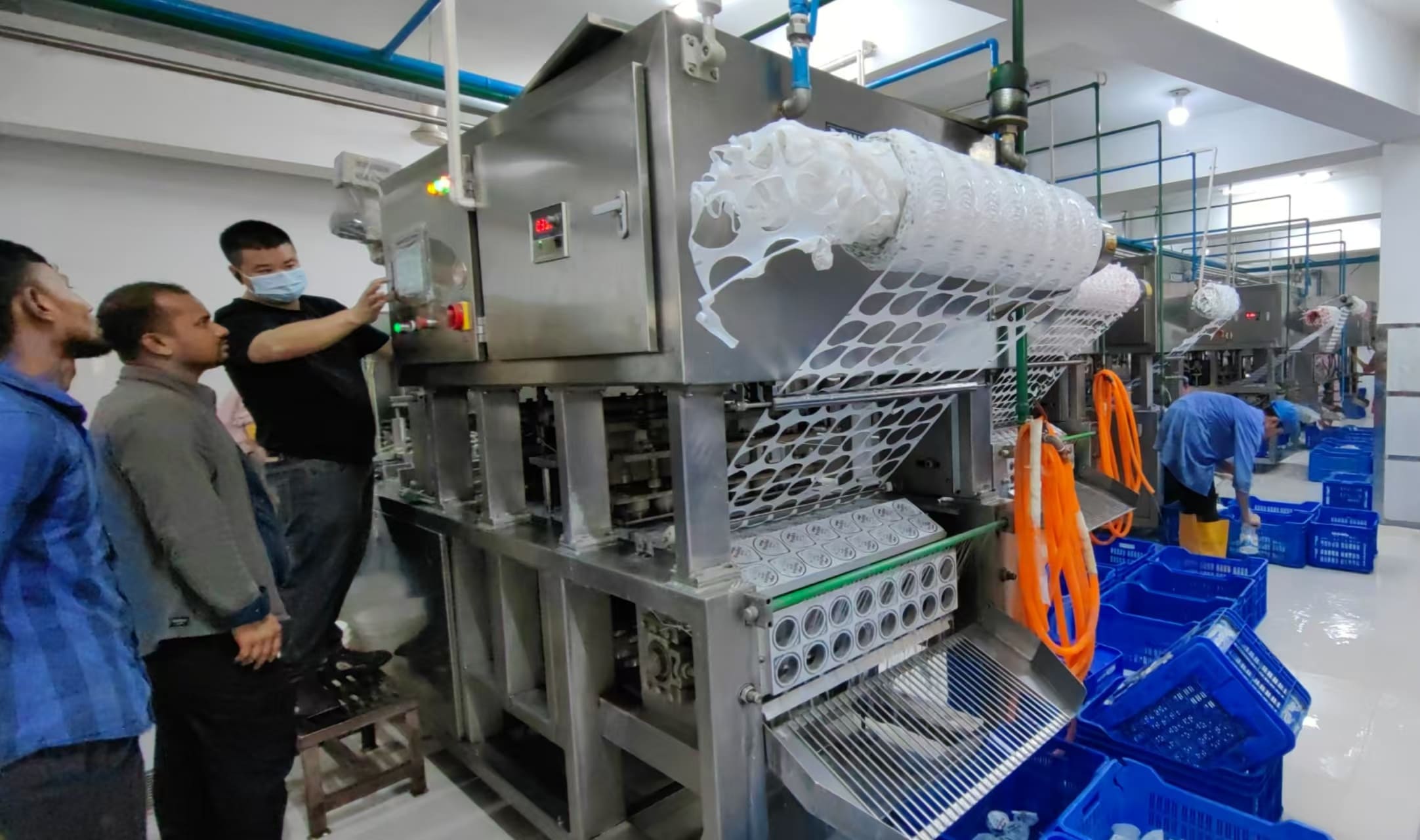
In these situations, I usually recommend a staged path: stabilize one core SKU first, collect real production data, and expand formats only after repeatability is proven. This method protects delivery reliability and cash flow, especially in export markets where shipment commitments are strict.
Choose diameter strategy first, validate good-cup output under real conditions, and expand in controlled phases. That is how jelly cup projects stay profitable.
Footnotes
-
cup diameter tolerance — https://www.engineeringtoolbox.com/tolerances-d_1211.html ↩
-
filling nozzle — https://en.wikipedia.org/wiki/Nozzle ↩
-
sealing film — https://www.sciencedirect.com/topics/engineering/sealing-film ↩
-
heat exchanger — https://en.wikipedia.org/wiki/Heat_exchanger ↩
-
PID control — https://en.wikipedia.org/wiki/PID_controller ↩
-
CIP valve — https://www.alfalaval.com/products/fluid-handling/valves/single-seat-valves/ ↩