
Spout Pouch Filling& Capping Machine.
Filling and capping systems for beverages, dairy and sauces in pre-made spout pouches. Designed around your pouch, spout, cap and product characteristics.
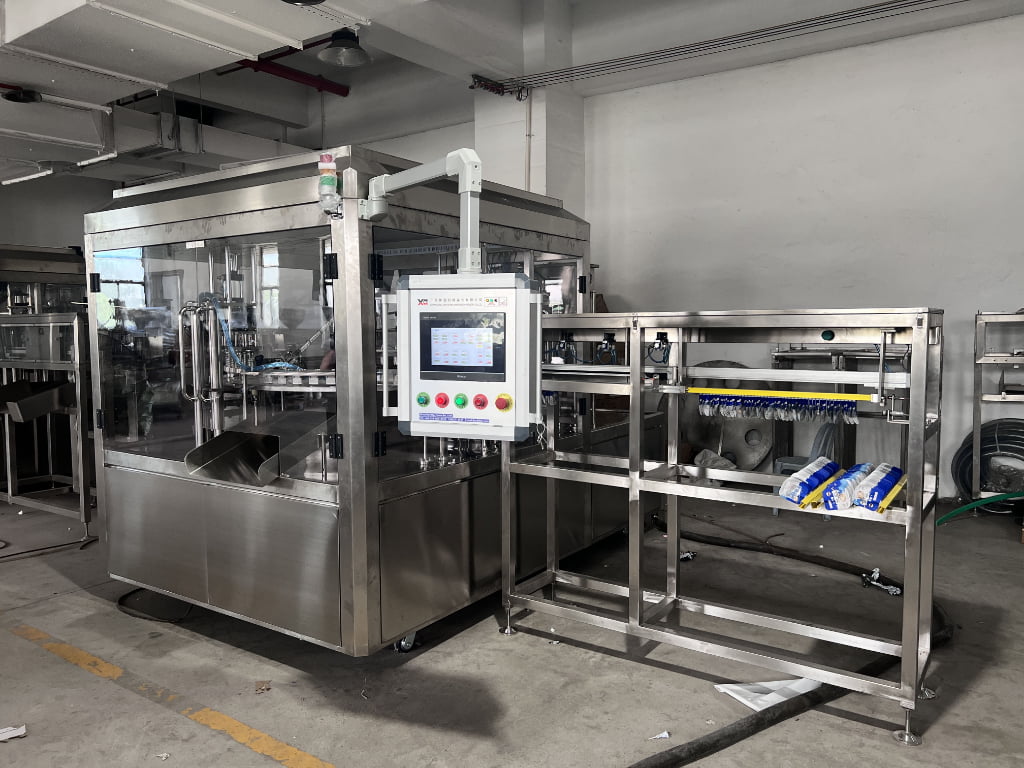
Shantou, China
floor area
experience
Built around what you pack.
Drinks and sauces need different dosing and handling arrangements. Start with the pouch format and the way your product flows.
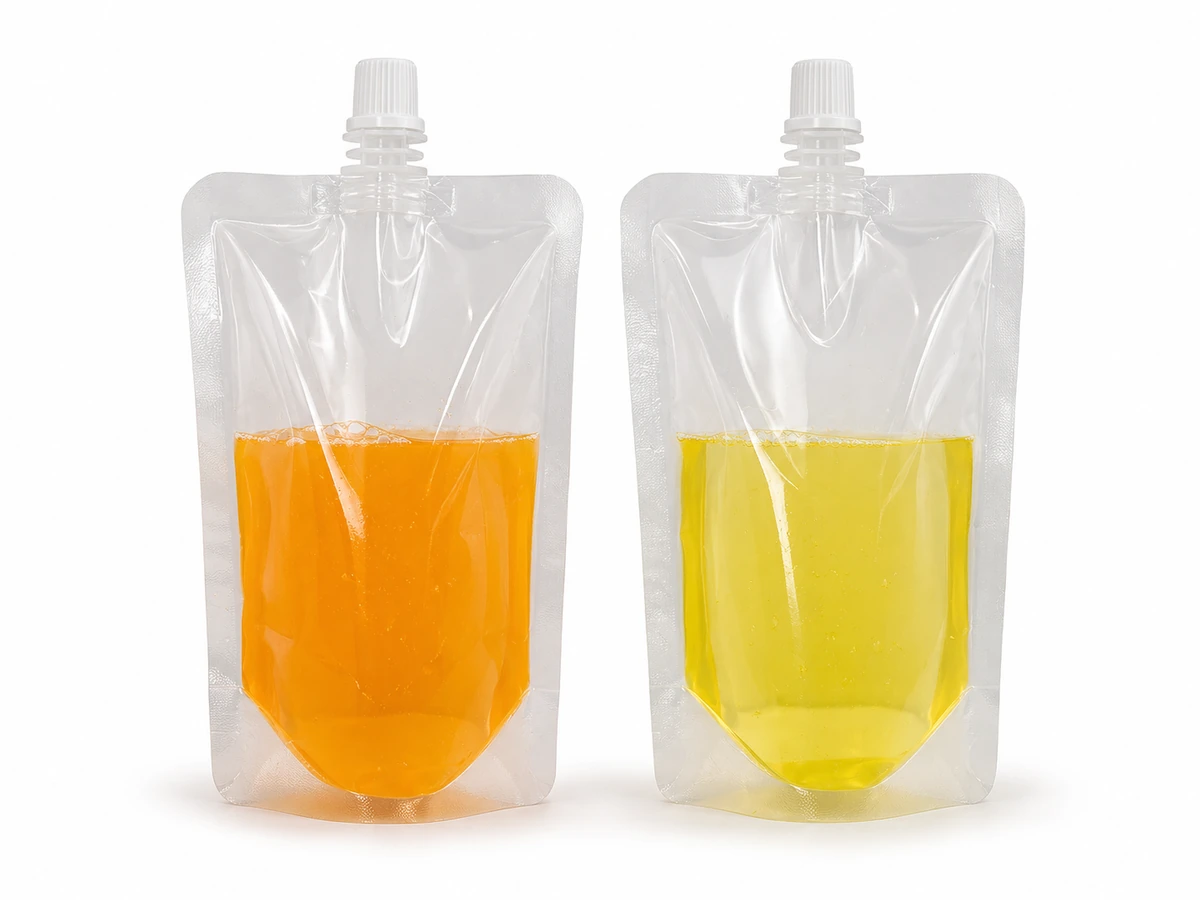
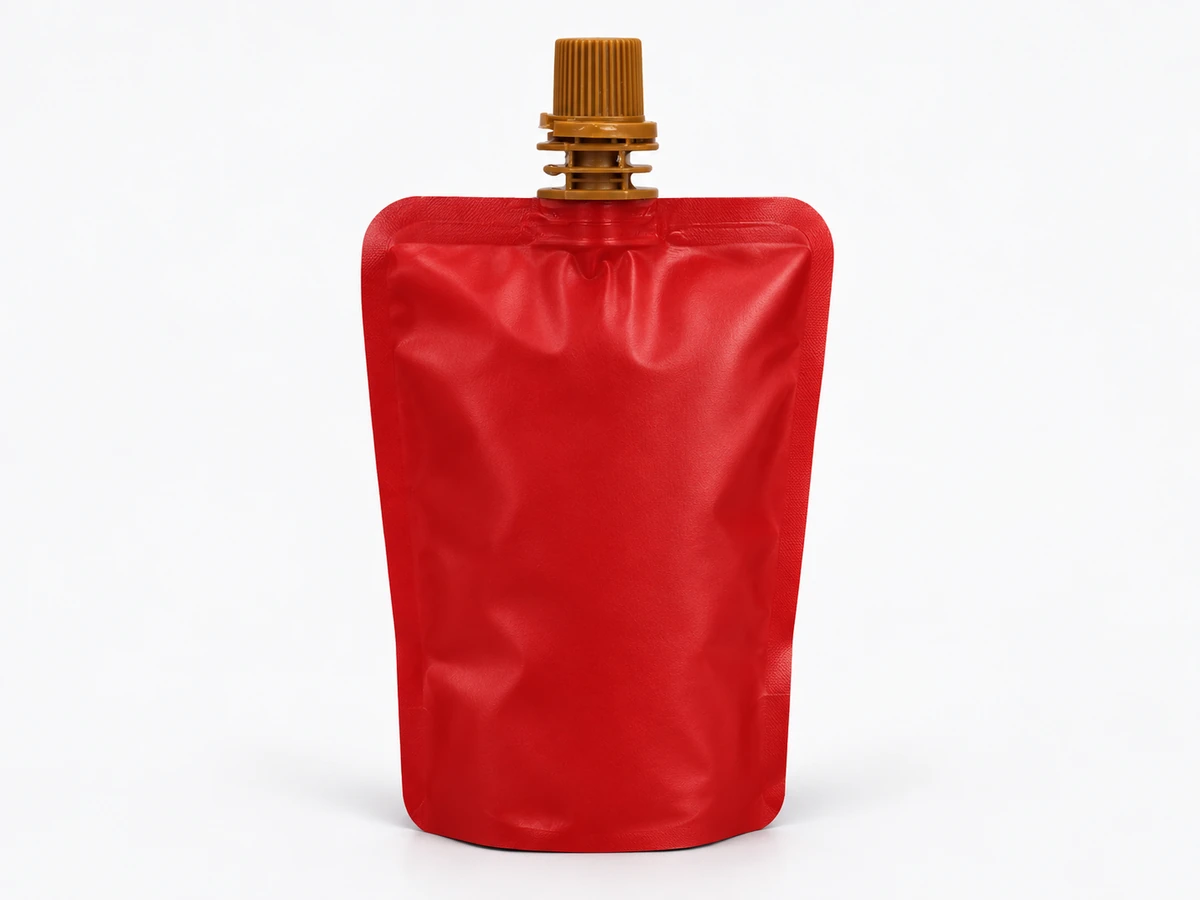
Product illustrations. Final suitability depends on the product, packaging material and machine configuration.
Choose a starting point.
Compare the equipment below, then share your packaging and output requirements to discuss a suitable configuration.

Spout pouch filling system
A filling and capping configuration for beverages, milk and sauces in pre-made pouches.
- Reference output
- 4,000–5,000 pouches/h
- Volume reference
- 100–2,000 ml
- Packaging
- Pre-made spout pouch
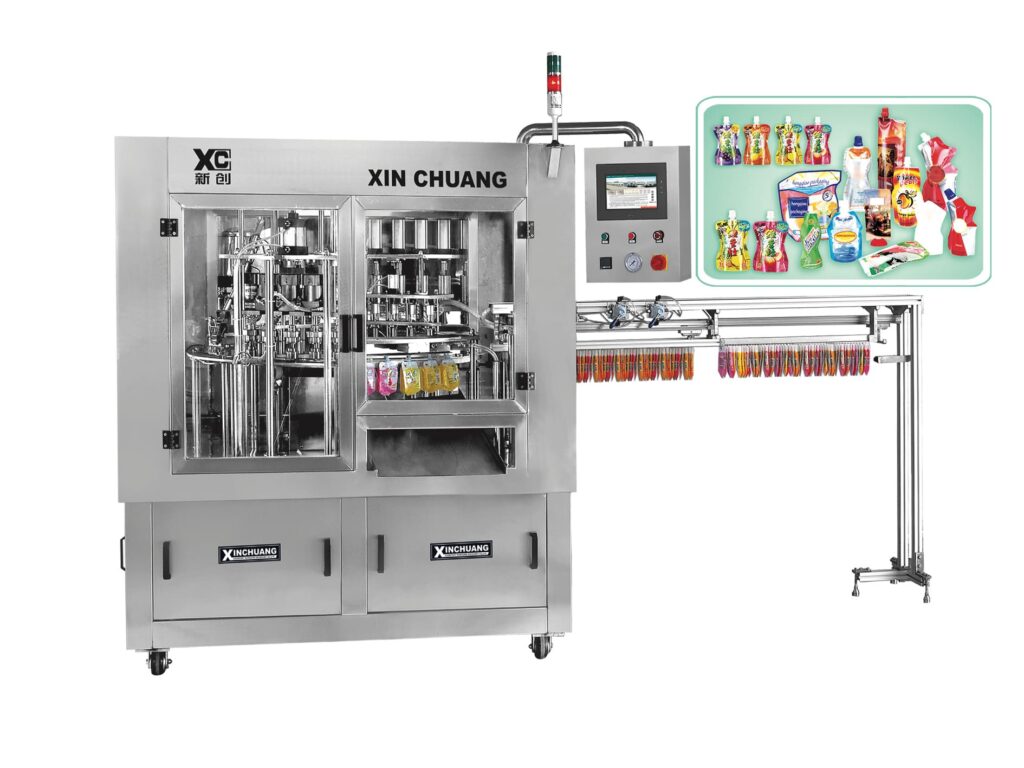
Automatic filling & capping
An enclosed configuration combining pouch handling, filling and cap application.
- Reference output
- 7,000–8,000 pouches/h
- Volume reference
- 50–3,000 ml
- Applications
- Beverages & dairy

Spout pouch production line
A line configuration planned around the filling system and connected production stages.
- Reference output
- 12,000–14,000 pouches/h
- Volume reference
- 100–5,000 ml
- Layout
- Project-specific
Reference specifications vary by model and configuration. Actual output depends on product properties, packaging dimensions, filling volume and the agreed station layout. Confirm final specifications with our team.
One pouch. A coordinated sequence.
The spout geometry, cap dimensions and product determine the station arrangement and handling method.
- 01
Pouch positioning
Locate and support the pre-made spout pouch for the filling sequence.
- 02
Product filling
Dose through the spout using a filling arrangement matched to the product.
- 03
Cap application
Apply the cap with the capping arrangement set for the chosen cap and spout.
- 04
Finished output
Discharge the capped pouch and connect to downstream handling as required.
The details make the difference.
Review these requirements with our team. Options are selected for your project and are not included in every machine.
Filling arrangement
- Product viscosity review
- Filling-volume setup
- Nozzle configuration
Pouch & cap handling
- Spout dimensions
- Cap feeding arrangement
- Capping setup
Cleaning & materials
- Product-contact materials
- Cleaning requirements
- CIP option review
Production integration
- Pouch feeding method
- Discharge arrangement
- Connected equipment layout
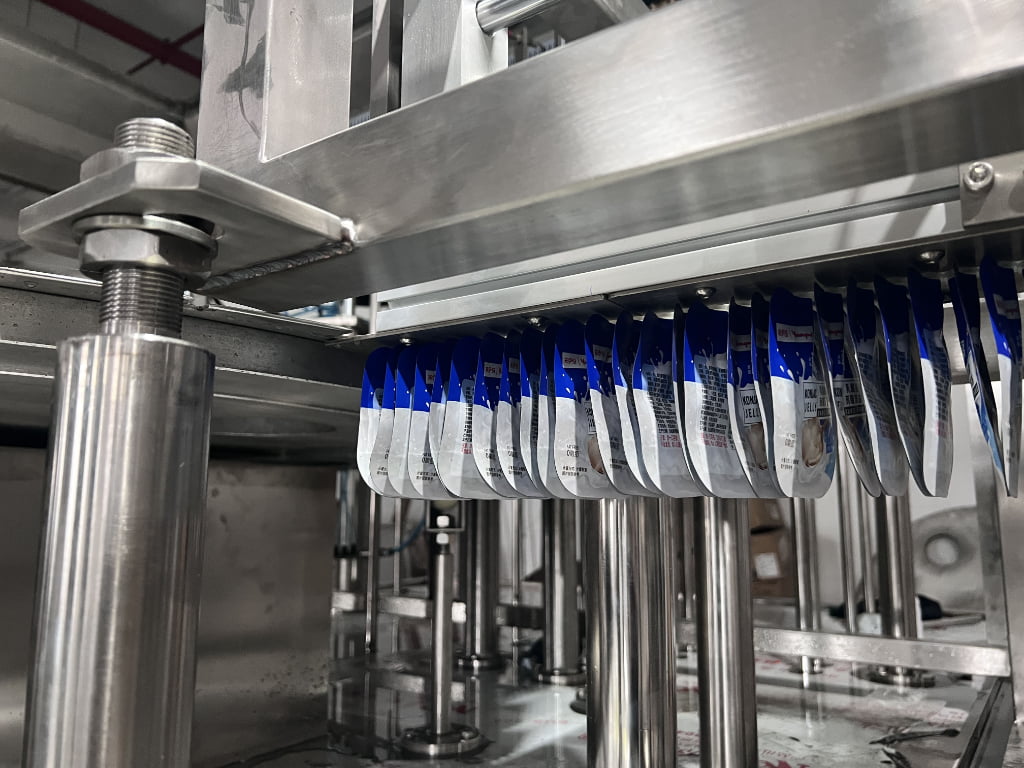
The small details start at the spout.
Send the complete pouch with its matching cap, together with your filling volume and product details. These samples help us review handling, filling and capping as a single system.
- Pouch dimensions and spout position
- Cap geometry and closure requirements
- Viscosity, temperature and filling volume
A few useful answers.
Start here, or contact us to discuss your product and packaging in more detail.
What products can the system fill?
Typical applications include juice, dairy drinks, yogurt and liquid or semi-liquid sauces. Product viscosity, temperature and particle content must be reviewed for the selected filling system.
Does the machine make the pouch?
These systems fill and cap pre-made spout pouches. Pouch manufacturing is a separate process.
Can it handle different pouch volumes?
Volume alone is not enough to confirm compatibility. The pouch dimensions, spout position and cap design also affect handling and changeover requirements.
Is the listed capacity guaranteed for every pouch?
No. The reference output is configuration-dependent. Filling volume, product flow, pouch handling and cap application all influence the achievable production rate.
What should I send for a quotation?
Please provide a pouch sample or drawing, matching cap, product description, filling volume and target output. Include any cleaning, temperature or line-integration requirements.
Your pouch. Your product. One considered system.
Send the pouch size, spout and cap details, filling volume and target output to discuss the right configuration.