When output rises, small filling errors become daily losses. Many buyers focus on speed first. Then they face leaks, waste, and customer complaints.
Choose a machine by product behavior, hygiene risk, and long-run stability, not by catalog speed. The best machine is the one that stays accurate after months of real production, not only in a demo.
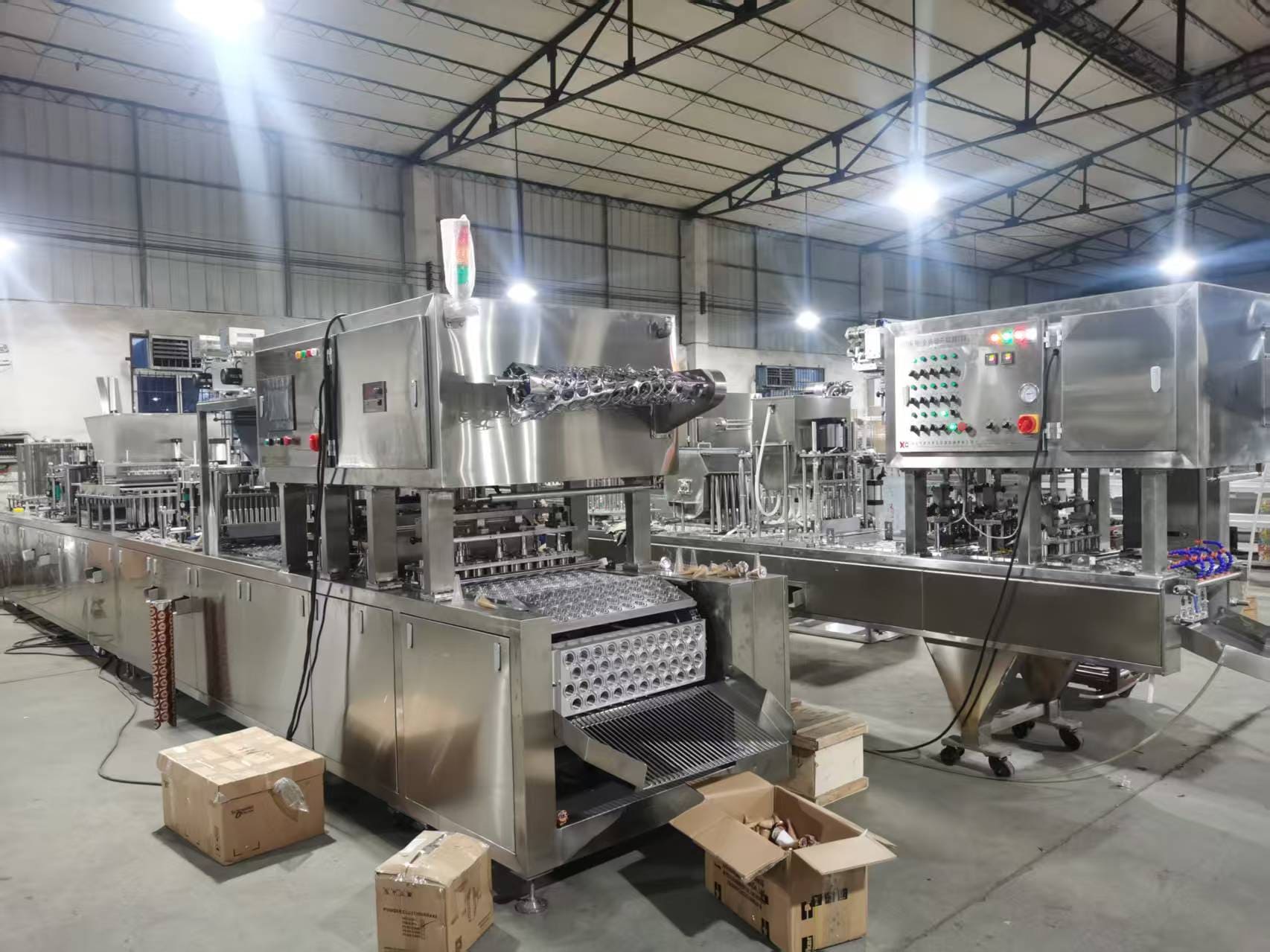
I have seen this many times in factory projects. A buyer asks for a fast machine. The machine runs well in a test. But after installation, real materials and real operators change everything. So in this article, I will show how we judge machine fit in real production, and where buyers often make expensive mistakes.
Why Do Fill Accuracy Claims Fail in Real Production?
A machine can show ±1g in a trial. But real lines still drift after one week. This is a very common problem in customer factories.
Fill accuracy fails when material condition, pump type, and operator habits are ignored. Accuracy is not one number. It is a system result that depends on product viscosity, temperature, CIP routine, and changeover discipline.
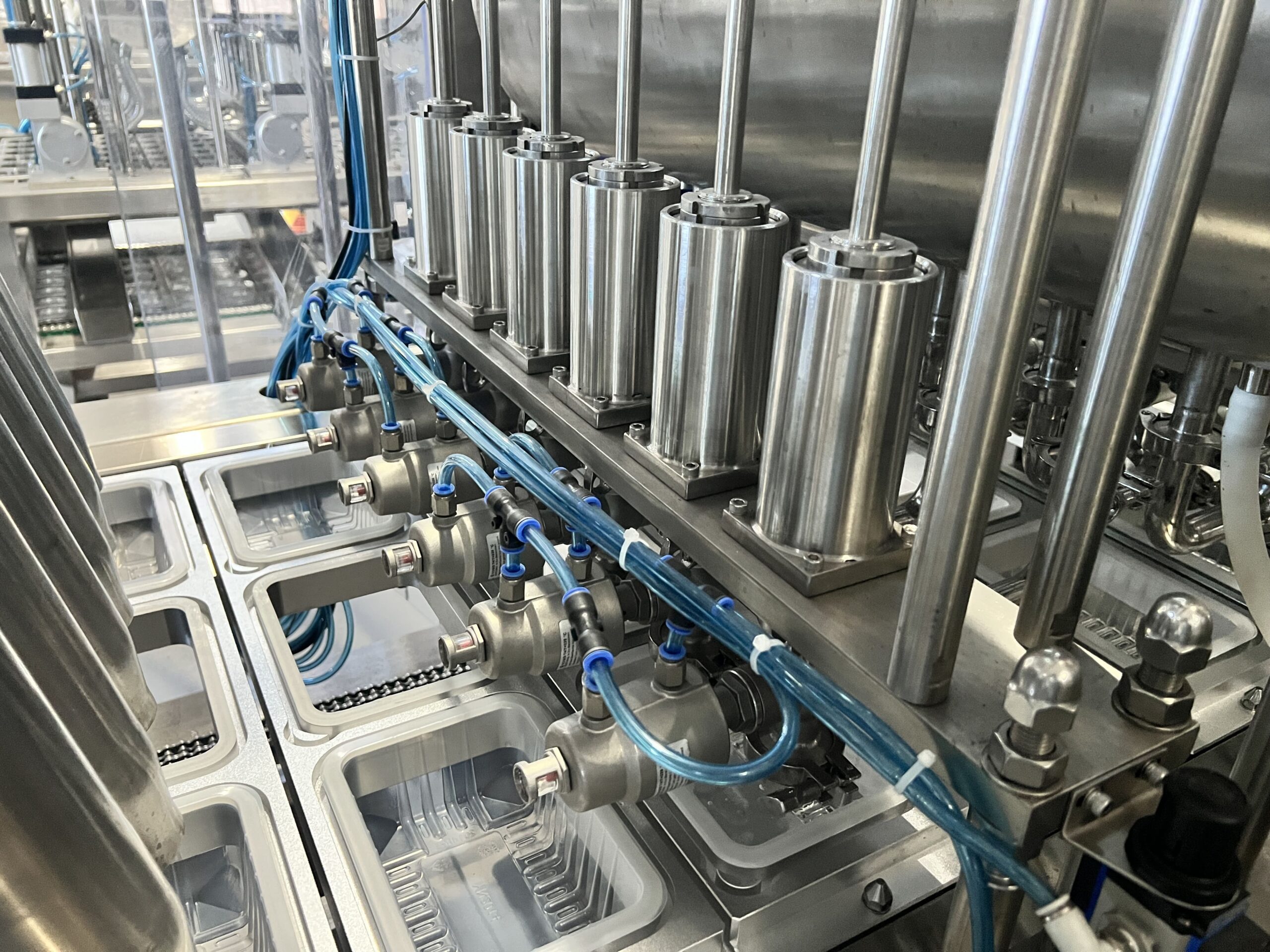
What we test before we promise accuracy
In our factory, we do not trust one short demo run. We run repeated tests with the customer’s real product or a close sample. We check cold and warm states. We check start-up and stable production stages. Many products look similar, but they flow very differently. Yogurt with fruit pieces behaves very differently from smooth yogurt. Chili sauce with seeds behaves very differently from thin sauce. If we skip this, the final line may pass acceptance but fail in daily production.
Why the same machine gives different results in different plants
I often explain this to buyers: the machine is one part, the process is the other part. In one project in North Africa, the customer had wide temperature swings between morning and afternoon. Viscosity changed. Fill weight changed. Their team first thought the load cell was faulty. It was not. The root cause was product condition drift and no fixed pre-run standard. After we added a short pre-run check and stable tank temperature control, the line became consistent.
Common buyer mistakes and real risks
- Buyers ask for high speed before stable dosing logic.
- Buyers focus on nozzle count but ignore product feeding design.
- Buyers underestimate operator training and cleaning routines.
- Buyers accept “demo accuracy” without multi-shift verification.
These mistakes lead to hidden costs: product giveaway, rework, complaint handling, and sealing defects caused by overflow contamination.
Quick decision table we use with customers
| Decision Factor | Good Sign | Risk Sign |
|---|---|---|
| Product viscosity stability | Controlled and measured by batch | Varies by shift, no record |
| Filling system choice | Matched to product behavior | Chosen only by low price |
| Acceptance test | Multi-batch and multi-hour | One short trial only |
| Operator routine | Clear SOP and checkpoints | Depends on one senior worker |
When this setup may not be suitable
If your product changes formula very often and you have no process control discipline, even a high-end machine will not keep stable accuracy. In that case, process control upgrade must come first.
Can One Machine Handle Yogurt, Sauce, and Jelly at the Same Time?
Many buyers ask for one machine for many products. This can work, but only under clear limits and design choices.
One machine can handle multiple products only when the filling system, cleaning logic, and changeover setup are designed around the hardest product, not the easiest one.

Start from the hardest product, not from the current product
In real projects, we always ask: which product is most difficult to fill and seal? Usually it is not water-like drinks. It is thick sauce, sticky jelly, or products with particles. If we design from easy products, later expansion fails. If we design from the hardest product, easier products can run with parameter adjustments.
Engineering trade-offs buyers must accept
A multi-product setup gives flexibility, but it adds complexity:
- More change parts
- Longer cleaning paths
- More parameter recipes
- Higher training demand
I remember one customer in Southeast Asia who wanted yogurt, pudding, and chili sauce on one line. We built a modular configuration, and it worked. But they accepted a slightly longer changeover and stricter cleaning protocol. That trade-off was clear from day one, so they were satisfied.
Common misunderstanding: “Modular” does not mean “no limits”
Some buyers think modular means everything is automatic and instant. In practice, each product family has practical boundaries. A line optimized for dairy hygiene and one optimized for high-particle sauce are not identical in details. You can combine use cases, but only with realistic scope and proper tooling sets.
Selection logic by product type
| Product Type | Main Technical Concern | Recommended Focus |
|---|---|---|
| Yogurt / dairy | Hygiene and gentle handling | CIP design, sanitary valves, stable temperature |
| Thick sauce | Flow resistance and consistency | Pump type, nozzle anti-drip, pressure control |
| Jelly / particles | Particle passage and sealing cleanliness | Nozzle diameter, anti-clog path, cup rim cleanliness |
Unsuitable scenarios
If your plant has very low technical staffing and no stable cleaning routine, a highly flexible multi-product setup may create frequent downtime. In that case, two simpler dedicated lines may be better than one complex line.
Is a Low Price Really Cheaper Over Three Years?
Many first quotes look attractive. But low CAPEX can become high total cost after installation.
The cheapest quote is often expensive in real operation. You should compare three-year total cost: downtime, spare parts, giveaway, operator time, and after-sales response speed.
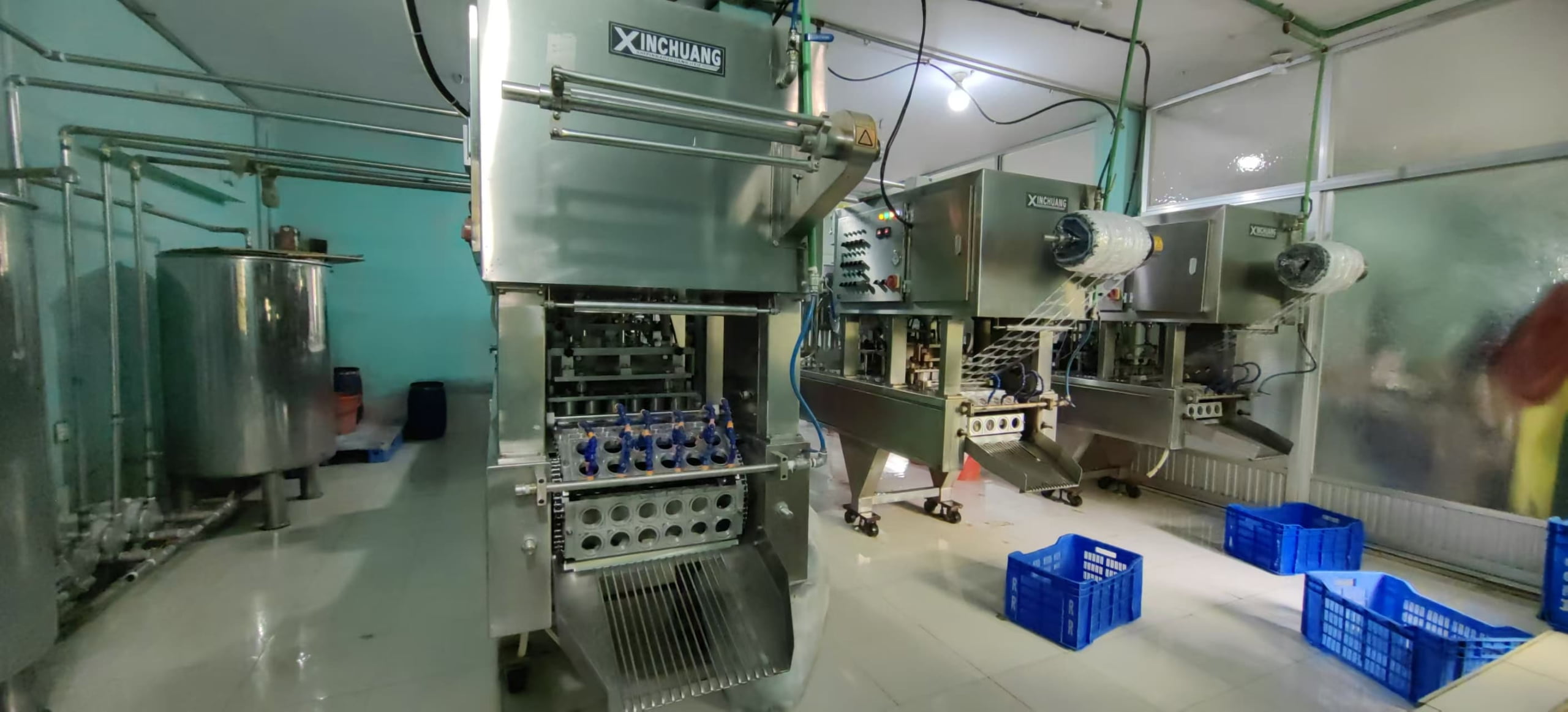
What I include in real cost reviews
When we discuss budget with buyers, I ask them to calculate these parts:
- Planned production output
- Expected giveaway per cup
- Changeover time per shift
- Unplanned downtime hours per month
- Spare parts lead time risk
- On-site support dependency
In one Middle East project, the buyer first selected a lower quote from another supplier. Six months later, they had frequent sealing head issues and long spare parts delays. They then asked us to retrofit key modules. Their real cost became much higher than choosing a stable setup from the start.
Why after-sales response is part of machine cost
For B2B production, support speed is not a “service bonus.” It is a production protection factor. If your machine stops and spare parts take too long, your order schedule breaks. Your customer trust drops. So support network, remote diagnosis ability, and parts stock policy must be checked before purchase.
Simple three-year cost view
| Cost Item | Low Initial Price Option | Stable Long-Run Option |
|---|---|---|
| Purchase price | Lower | Higher |
| Downtime risk | Higher | Lower |
| Product giveaway | Higher | Lower |
| Operator adjustment time | More frequent | More stable |
| Spare parts waiting risk | Higher | Lower |
| 3-year total outcome | Often higher | Often lower |
Risk warnings buyers should not ignore
- If quotation details are vague, hidden costs will appear later.
- If no clear acceptance standard is written, disputes are likely.
- If no training and maintenance plan is included, stability will drop fast.
When a low-cost option can still be reasonable
If your output target is small, SKU is simple, and downtime impact is low, a lower-cost option can be acceptable. But this should be a deliberate strategy, not a forced decision from incomplete analysis.
Conclusion
In my experience, the right machine is not the fastest or cheapest one. It is the one that keeps your output stable, clean, and predictable every day.