How Do You Choose the Right Blister Packaging Machine for Food?
Struggling with slow, inconsistent packaging for your food products? This inefficiency can hurt your brand and profits. A blister packaging machine1 automates the process, ensuring product safety and boosting your output.
The best way to choose a food blister packaging machine is to match the machine’s automation level and features to your specific product. Consider if your product is liquid or solid, your production volume, and your budget to select the right forming, filling, and sealing capabilities.
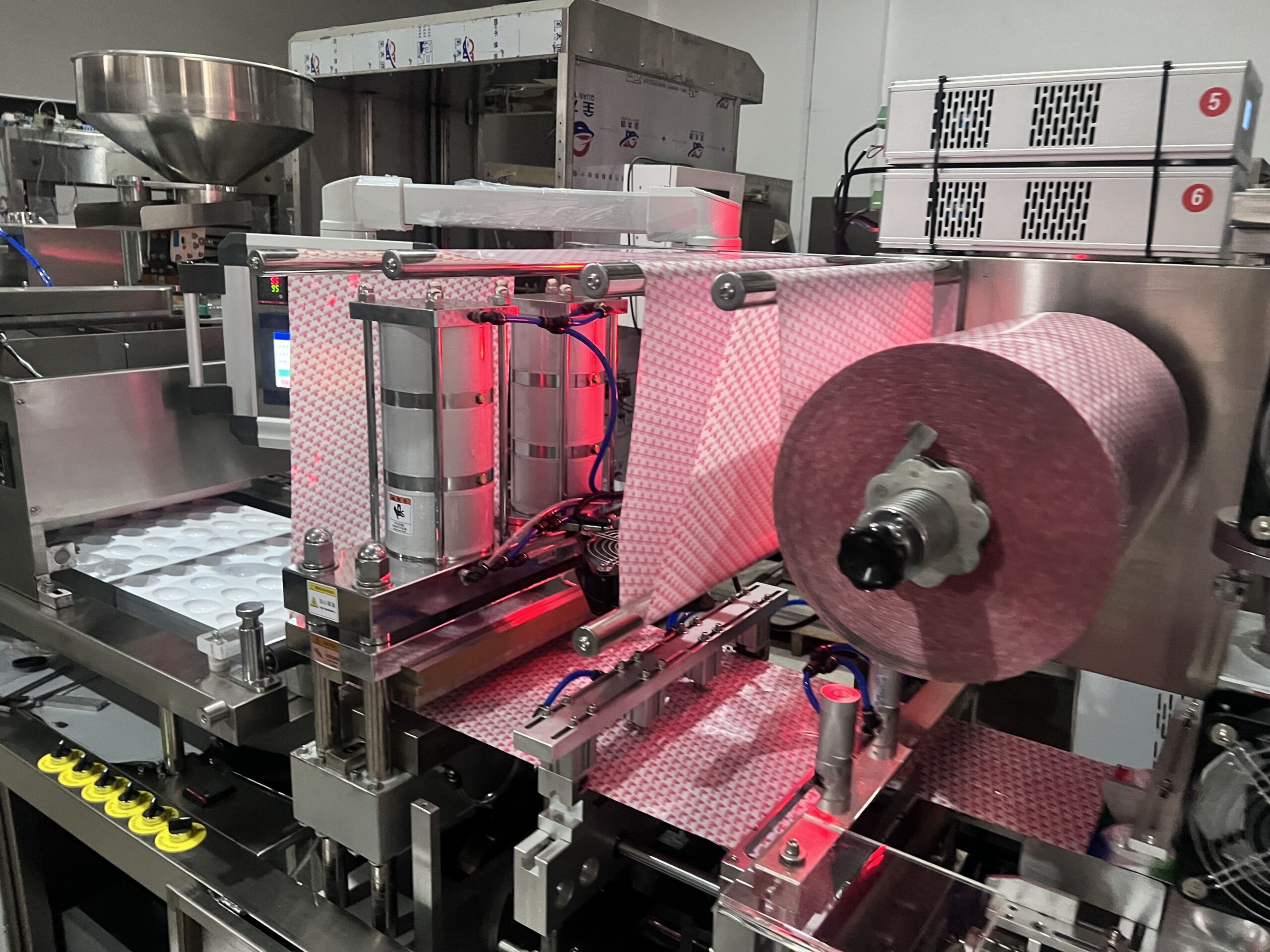
Choosing the right machine goes beyond just looking at the price tag or the speed. It’s about finding a perfect match for what you make. I’ve seen many businesses in places like Saudi Arabia and Indonesia transform their production lines by getting this choice right. Let’s break down the key factors you need to consider to ensure you invest wisely and see a real return.
Should You Choose a Semi-Automatic or Fully Automatic Machine?
You know a blister machine is the next step, but the options seem overwhelming. Choosing the wrong level of automation can either drain your budget or fail to meet your production demands.
The choice between semi-automatic and fully automatic depends on your product’s consistency. Fully automatic machines are perfect for easy-to-handle liquids like sauces or chocolate. Semi-automatic models are better for tricky products like sticky candies that require some manual assistance during filling.
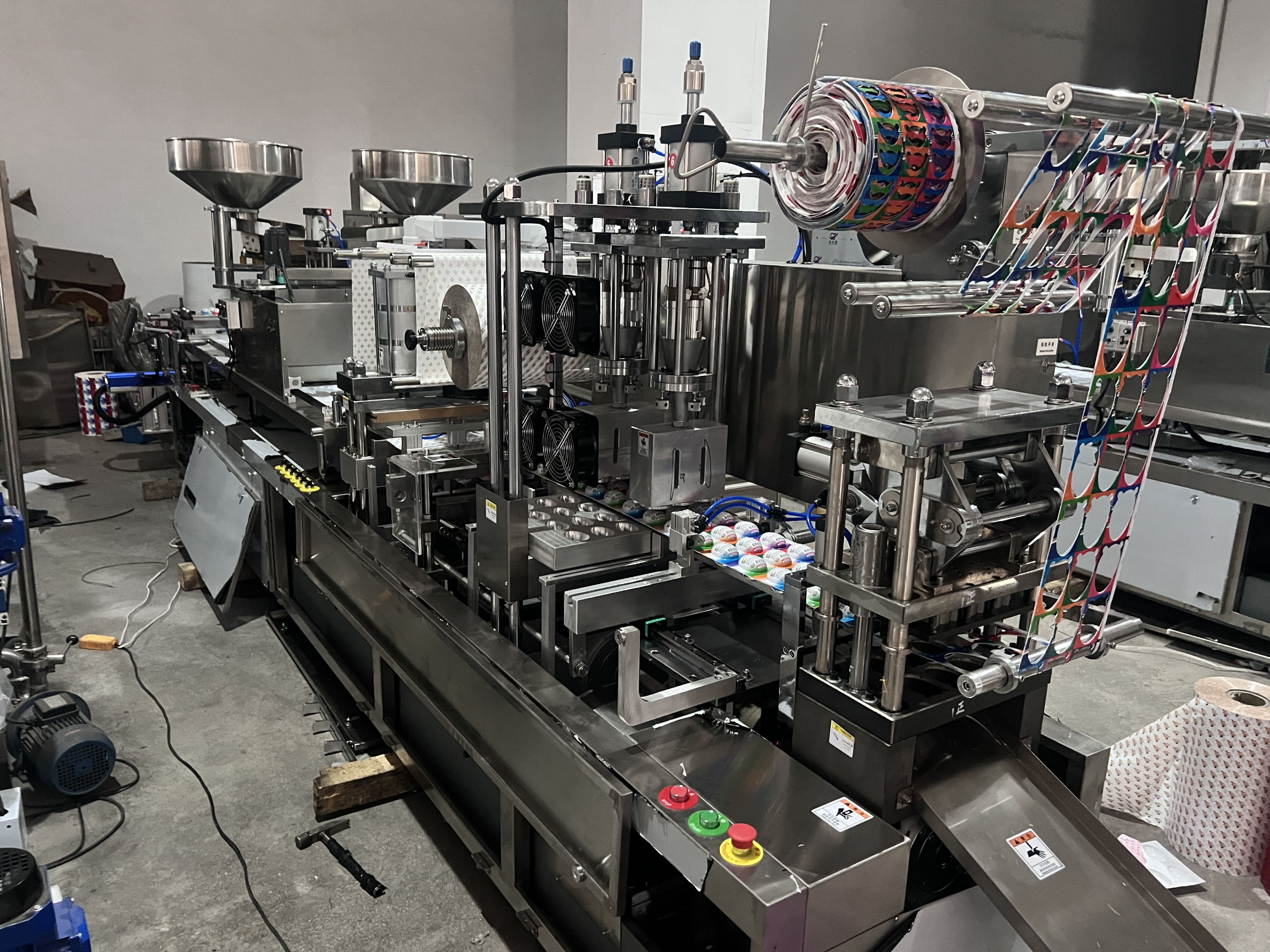
The core difference between these two types of machines almost always comes down to one critical step: the filling station2. How your product gets into the blister pocket determines the level of automation you need. I remember a client in Malaysia who produced high-end chocolates. For them, a fully automatic line was a no-brainer because the liquid chocolate could be dosed perfectly by pumps, ensuring high speed and consistency. On the other hand, a gummy candy producer in South Africa found a semi-automatic machine3 to be the ideal solution. Their sticky products were difficult for a machine to handle alone, so having an operator assist with placement was more efficient and cost-effective.
The Filling Station Defines the Machine
The heart of the automation question is the filling process.
- Fully Automatic: These machines use specialized dosing systems like pumps for liquids (sauces, jams, honey) or vibratory bowls for uniform solids (small candies, tablets). The entire process is hands-off, designed for high volume and speed.
- Semi-Automatic: Here, an operator manually places the product into the formed blister cavities. The rest of the process—forming, sealing, and cutting—is still automated. This is perfect for products that are irregularly shaped, sticky, or fragile.
Comparing Your Options
Let’s look at a simple breakdown to help you decide.
| Feature | Semi-Automatic Machine | Fully Automatic Machine |
|---|---|---|
| Best For | Sticky, irregular, or fragile items (gummies, jellies) | Liquids, pastes, uniform solids (sauces, chocolate) |
| Filling Method | Manual placement by an operator | Automated dosing by pumps or other systems |
| Production Speed | Moderate | High |
| Labor Cost | Higher (requires an operator for filling) | Lower (minimal supervision needed) |
| Initial Cost | Lower | Higher |
Ultimately, your product is the guide. Don’t pay for full automation if your product requires a human touch.
What Is the Standard Workflow of a Blister Packaging Machine?
Thinking about a new machine can feel complicated if you don’t know the process. If you misunderstand the workflow, you might buy a machine that doesn’t fit your production needs at all.
A blister packaging machine follows a clear, sequential workflow. It starts with forming the plastic sheet into pockets, then moves to filling the pockets with your product, sealing it with a lidding material, and finally, cutting the finished packages into individual units.
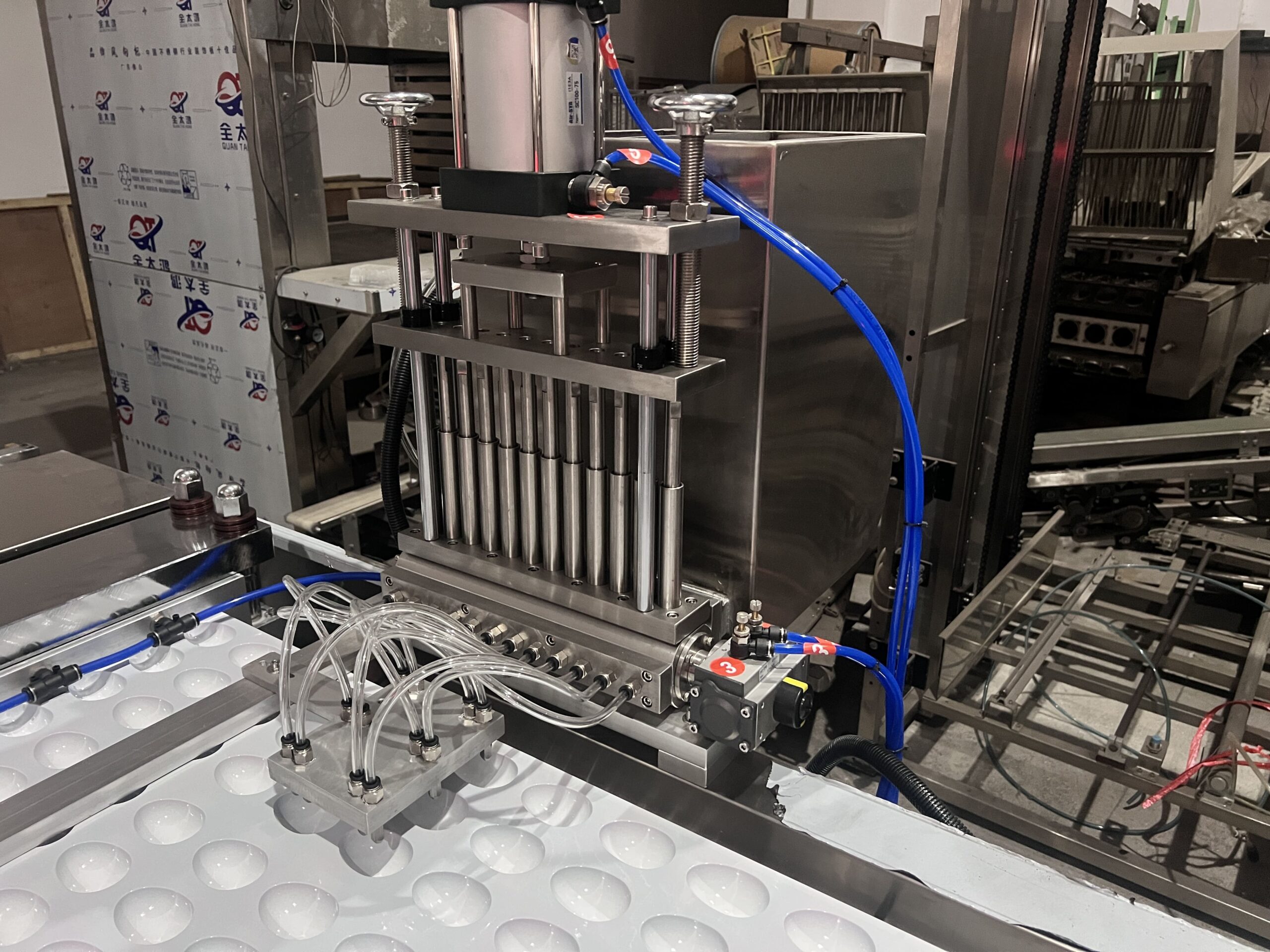
When I walk clients through our machines at trade fairs like the Canton Fair, I always emphasize how logical the process is. Each station is designed to perform one specific task perfectly before passing the product to the next. This modularity is great because it means we can customize the machine for different needs. For example, a customer in Algeria producing cheese portions needed a very specific shape and a strong seal, so we focused on customizing the forming and sealing stations. Another client in Vietnam who packaged honey sticks needed a high-precision liquid filler but a standard cutter. The beauty of this workflow is its flexibility. You can add or remove functions based on your product and budget, without compromising the core process.
Step-by-Step Production Cycle
The journey from raw material to finished product is a straight line. Here’s how it works:
- Forming Station: A roll of plastic film (like PVC or PET) is heated and then pressed into a mold to create the "blister" pockets that will hold your product.
- Filling Station: This is where your product is placed into the formed pockets. As we discussed, this can be done automatically for liquids and uniform solids, or manually for more complex items.
- Sealing Station: A lidding material, often aluminum foil or paper-backed foil, is placed over the filled pockets. Heat and pressure are applied to create a secure, airtight seal. For some applications using plastic lids, ultrasonic welding can be used for a stronger bond.
- Cutting Station: Finally, the continuous sheet of sealed blisters is fed into a cutting station4, which punches out the final, individual packages.
Can You Customize the Workflow?
Yes, absolutely. The standard workflow is a foundation we can build on.
- Need to print a date code? We can add a printing or embossing station after sealing.
- Worried about product integrity5? A camera inspection system can be integrated after filling to check for accuracy.
- On a tight budget? For some simple products, you might combine the sealing and cutting stations into a single unit.
The key is to define your needs first. This allows us to build a machine that does exactly what you need it to do, efficiently and reliably.
Conclusion
Choosing the right blister machine is about matching technology to your product. By understanding the automation levels and the core workflow, you can make a smart investment for your business.
-
Explore this link to understand the mechanics and benefits of blister packaging machines for food. ↩
-
Understand the critical function of the filling station in the blister packaging process. ↩
-
Learn about the benefits of semi-automatic machines and how they can suit specific product needs. ↩
-
Learn about the cutting station’s role in producing individual packages from sealed blisters. ↩
-
Explore methods to maintain product integrity during the blister packaging process. ↩