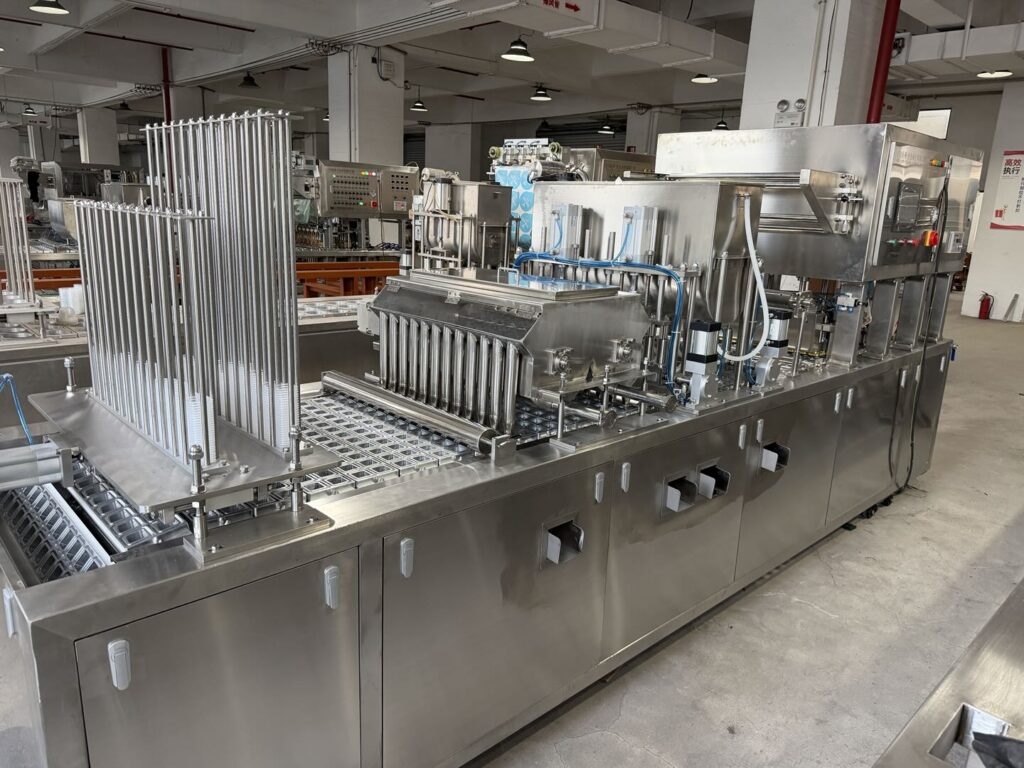
Many buyers choose a cup filling and sealing machine first, then ask later whether they should add a pasteurizer and cooling line. That sequence can create expensive pressure. If the product needs heat treatment but the workshop has no room for a water bath or tunnel section, the line becomes difficult to install. If the cup and sealing film cannot tolerate the thermal process, leakage can appear after heating and cooling. If the cooling section is too short, finished cups may stay warm during coding, packing, or storage. The filling machine may be well built, but the total line still fails the buyer’s real production goal.
The direct answer is: a cup filling and sealing machine needs a pasteurizer and cooling line when the product, shelf-life target, cup material, sealing film, filling temperature, and local food safety expectations require post-fill thermal processing and controlled temperature reduction. We should decide this from product-machine matching logic, not from a generic machine catalog.
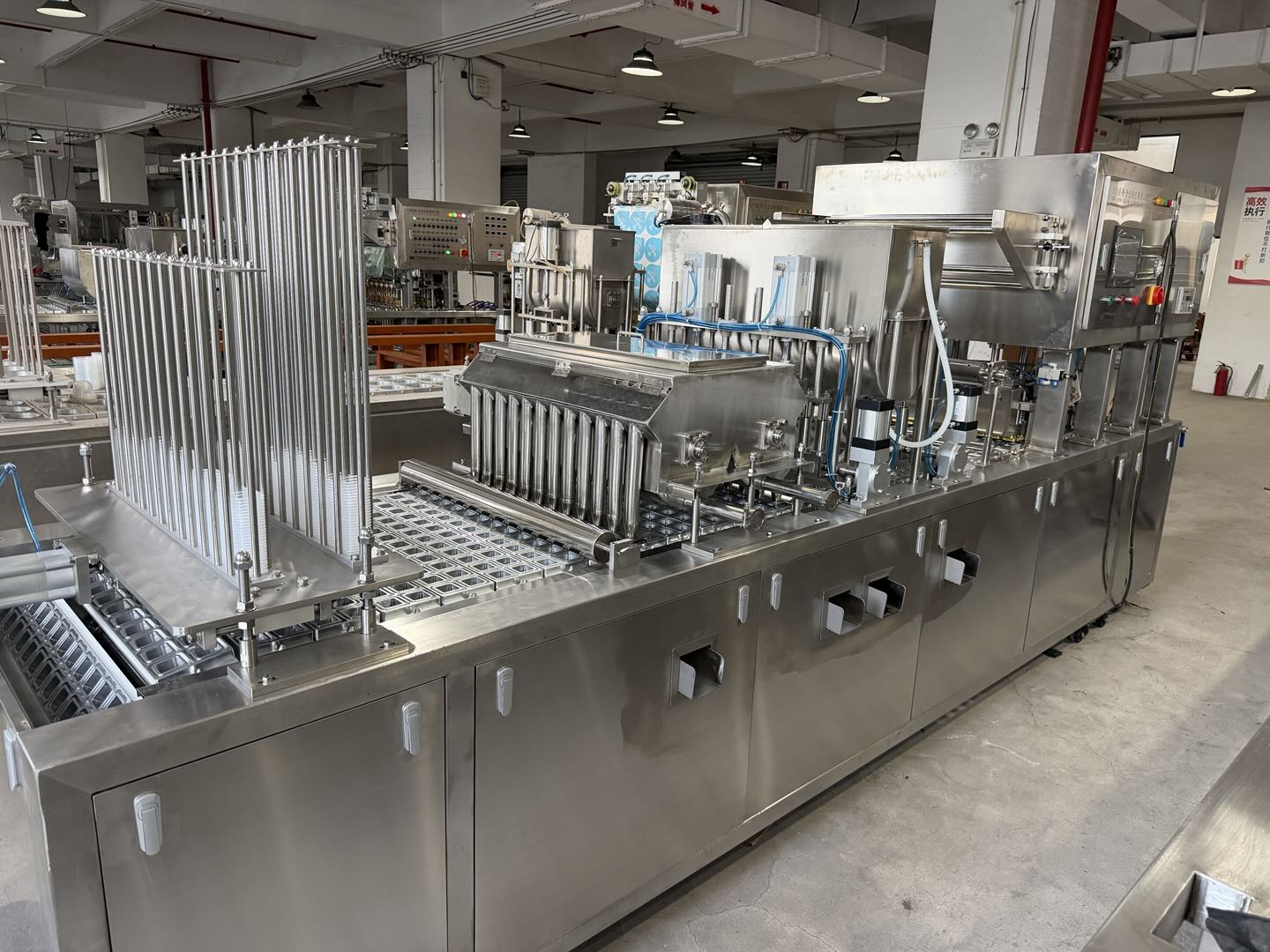
At Guangdong Xinchuang Machinery Industry Co., Ltd., we see this question from the factory floor. A cup filling and sealing machine is not only a filling station and a sealing station. It is part of a process that may include product preparation, mixing, heating, filling, sealing, cup discharge, pasteurization, cooling, drying, coding, packing, and future expansion. The same buyer decision logic also applies to our spout pouch filling and capping machine, ice pop or ice lolly tube filling and sealing machine, blister packing machine, pasteurizer, cooling line, and full line solution projects.
Several terms should be understood early. Pasteurization1 affects product safety planning and line length. Heat sealing2 affects whether the cup lid can survive filling, handling, heating, cooling, and transport. Food contact packaging materials3 must match the product, temperature, storage condition, and target market.
When does a cup filling line need pasteurization after sealing?
A cup filling line may need pasteurization when the product cannot rely only on raw material control, cold filling, preservatives, refrigeration, or short distribution time. Jelly cups, fruit cups, dairy-style desserts, flavored water cups, sauces, pudding, and other cup-packed foods can have different process needs. We cannot decide from the product name alone. The formula, pH, sugar, water activity, temperature, packaging material, shelf-life target, and market rules all matter.
Before we recommend a pasteurizer, buyers should confirm the product sample, target filling volume, cup size, cup material, sealing film, filling temperature, expected storage condition, and whether the product should be shelf-stable, chilled, or consumed quickly.
Sample checking is the practical starting point. A drawing tells us cup diameter and height, but a real cup shows rim flatness, wall stiffness, stack behavior, sealing area, and deformation risk. The sealing film sample shows whether the lid bonds well and whether the film wrinkles, shrinks, or peels after heat exposure. The product sample shows viscosity, pulp, particles, foam, and how it behaves when heated or cooled.
We also check filling volume together with headspace. If the cup is filled too high, product can contaminate the sealing rim and weaken the seal. If there is too much headspace, the finished pack may look poor or behave differently during heat treatment. Filling volume is not only a dosing number. It is part of the sealing and pasteurization decision.
Not suitable when: the buyer expects a pasteurizer to solve an unsafe formula, unsuitable cup material, weak seal, dirty filling environment, or undefined shelf-life requirement. Pasteurization is a process decision, not a patch for every product risk. The product and package should be checked together before we add heat treatment equipment.
How do cup size, filling volume, and sealing material affect pasteurizer design?
Cup size affects the holder, conveyor width, water flow, line footprint, and handling method. A small jelly cup, a taller drink cup, a sauce cup, and a dessert cup can need different support during heating and cooling. If the cup floats, tips, deforms, or traps water near the lid, the downstream line becomes unstable. We prefer to see real samples before finalizing lane width, basket logic, guide rails, or transfer points.
Cup size, filling volume, and sealing material decide whether the cup can pass through pasteurization and cooling without leakage, deformation, lid peeling, poor appearance, or difficult drying before coding and packing.
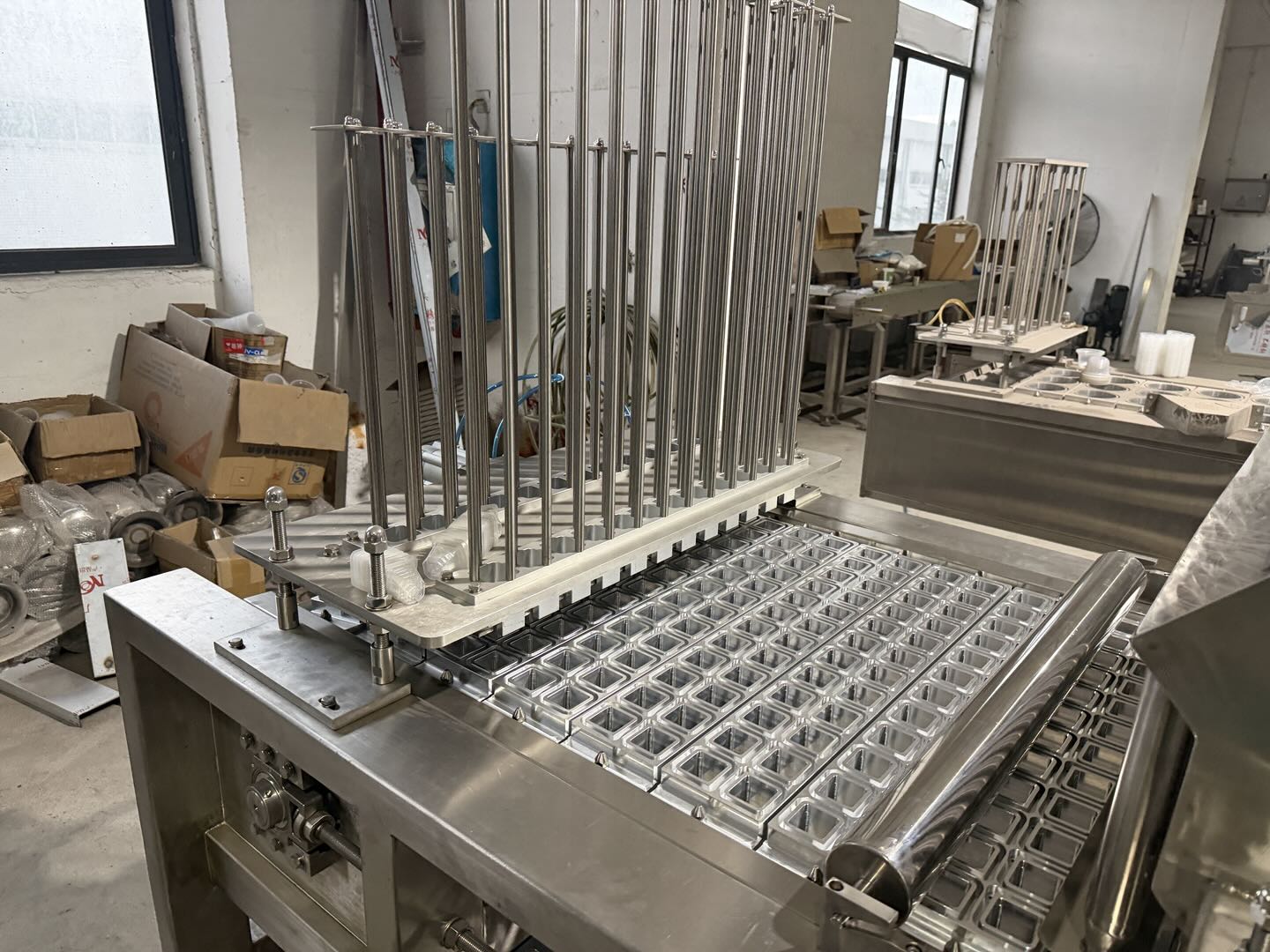
Sealing material is often the hidden risk. A lid that seals during a short room-temperature test may still fail after heating and cooling. The sealing layer, cup rim, pressure, dwell time, temperature window, and product contamination all affect the final result. If the cup is PP, PET, paper-based, aluminum-compatible, or another structure, the process window may change. We avoid one universal answer because buyers use different cups and films in different markets.
Cup and seal checklist before adding pasteurizer
| Item to Confirm | Why It Matters | Factory Check |
|---|---|---|
| Cup diameter and height | Affects holders, rails, tunnel width, and transfer | Measure real cups, not only drawings |
| Cup rim flatness | Affects seal strength before heat treatment | Check samples from different stacks |
| Filling volume and headspace | Affects leakage, appearance, and thermal behavior | Run fill tests with target product |
| Sealing film structure | Affects heat seal and pasteurization tolerance | Test seal after heating and cooling |
| Product viscosity or particles | Affects filling nozzle, rim cleanliness, and cleaning | Check product or realistic substitute |
Should buyers order a single cup machine or a full line with pasteurizer and cooling?
A single cup filling and sealing machine can be the right choice when the factory already has stable product preparation, defined food safety control, existing pasteurization or refrigeration, and enough downstream handling capacity. In that case, the buyer mainly needs the cup machine to match cup size, filling volume, sealing material, filling accuracy, and changeover requirements.
A full line solution is better when the buyer needs product preparation, filling, sealing, pasteurization, cooling, drying, coding, packing flow, factory layout, utility planning, and future expansion designed as one production system.
The buyer decision logic should follow the slowest and most sensitive process step. If pasteurization takes longer than filling, the cup filling machine should not be selected by filling speed alone. If cooling needs more time or more water flow, the cooling section may define the real footprint. If packing is manual, operator rhythm may decide stable output. A production line is only as strong as its bottleneck.
For related planning, buyers can review our guide on choosing a jelly cup filling and sealing machine without expensive mold changes. If leakage is the main concern, see how to reduce seal leakage on jelly cup machines. If the project may use pouches instead of cups, compare the decision logic with spout pouch filling and capping line planning.
| Project Situation | Better Choice | Buyer Decision Logic |
|---|---|---|
| Existing chilled factory with downstream process | Single cup filling and sealing machine | Lower scope and easier integration |
| New jelly, dessert, or beverage cup project | Full line review | Product, heat treatment, cooling, and layout must match |
| Post-fill heat treatment required | Cup machine plus pasteurizer and cooling line | Seal and cup material must tolerate the process |
| Multiple cup sizes planned | Format planning before order | Molds, rails, holders, and changeover limits should be clear |
| Limited workshop space | Layout review first | Operator access, drainage, service access, and future expansion matter |
How should buyers plan capacity, layout, and utilities?
Capacity planning should begin with the whole line, not the filling station alone. A buyer may ask for a fast cup filling and sealing machine, but real daily output also depends on product preparation, cup feeding, filling stability, seal quality, pasteurization residence time, cooling performance, drying, coding, packing, cleaning, and operator support. If any downstream section is slower, the line output follows that bottleneck.
Buyers should plan capacity from the required finished product condition, not only from machine speed. The finished cup must be filled, sealed, heated if needed, cooled enough for handling, dried enough for coding, and ready for packing.
Factory layout is a practical engineering question. A pasteurizer and cooling line need space, water supply, drainage, access for cleaning, space for operators, room for electrical cabinets, and a safe finished product path. If the line turns too tightly or the workshop has poor drainage, daily operation becomes harder. If the cooling line is placed far from packing, finished product movement becomes inefficient.
Utilities should be discussed early. Depending on the process, the line may need electricity, compressed air, water, drainage, heating source, cooling water or chilled water, and enough ventilation. We do not promise one fixed utility package without checking the product and line scope. The correct design depends on product, cup size, filling volume, sealing material, process target, and local factory conditions.
What should buyers prepare before requesting a final quotation?
Before final quotation, buyers should prepare cup samples, sealing film, target filling volume, product sample or realistic substitute, viscosity or particle information, filling temperature, expected storage condition, desired shelf-life direction, daily output target, voltage, air supply, water and drainage condition, workshop layout, packing method, and future product plan. These details help us recommend a single machine, a cup line with pasteurizer and cooling, or a broader full line solution.
Future expansion should also be discussed before the first order. If the buyer may add a larger cup, smaller cup, thicker product, different sealing film, second flavor, spout pouch format, ice lolly tube product, blister pack, or more automation later, we should define what can be changed with format parts and what requires a different machine structure. This is the practical way to avoid unrealistic upgrade expectations after delivery.
After-sales support belongs in the same decision. A cup filling and sealing line with pasteurizer and cooling includes filling nozzles, pumps, cup molds, sealing plates, heaters, sensors, conveyors, water sections, valves, filters, controls, and wear parts. For export buyers, we should prepare spare parts lists, remote troubleshooting logic, commissioning guidance, operator training, and maintenance routines. A stable line is easier to support when the machine-product matching logic is clear from the beginning.
Conclusion
A cup filling and sealing machine needs a pasteurizer and cooling line when the product and package require controlled heat treatment after sealing and controlled cooling before handling or packing. The decision should start with real product samples, cup size, filling volume, sealing material, shelf-life direction, capacity planning, factory layout, utilities, and future expansion. In our factory view, the right answer is not single machine or full line by default. The right answer is the line scope that matches the product, package, process, buyer decision logic, and after-sales support plan.
- Pasteurization is a heat treatment process used to reduce harmful microorganisms in food and beverage products; in cup lines it affects process planning, layout, and cooling needs. Return
- Heat sealing depends on compatible materials, temperature, pressure, and dwell time; it is central to cup lid strength before and after thermal processing. Return
- Food contact packaging materials should be selected according to product contact, temperature exposure, storage condition, and target market requirements. Return