Many food factories ask for a blister packing machine after they already have a product, a tray idea, and a launch date. The pressure is real: if the blister depth is wrong, the product moves; if the sealing material does not match, the package leaks; if the loading area is too short, operators cannot keep up. A wrong machine decision can turn a clean packaging plan into daily stoppages, rejected packs, and expensive mold changes.
The best way to choose a blister packing machine for food products is to start from real samples, not from catalog speed. We should confirm product size, product fragility, filling or loading method, forming film, sealing film, blister depth, cutting style, capacity target, factory layout, and future product expansion before confirming the final machine.
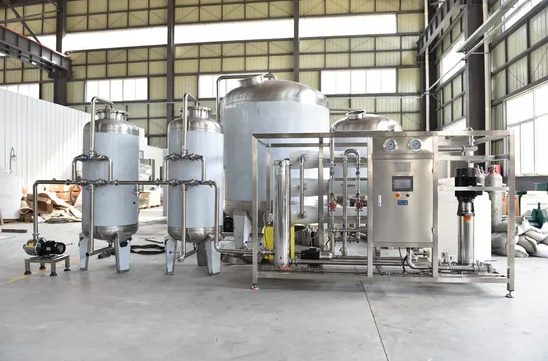
A blister pack is not only a visible plastic cavity. It is a system of forming, loading or filling, sealing, cutting, inspection, and downstream handling. In our factory work at Guangdong Xinchuang Machinery Industry Co., Ltd., we treat blister packaging as a product-machine matching problem. The same buyer logic also applies when we design a cup filling and sealing machine, a spout pouch filling and capping machine, an ice lolly tube filling and sealing machine, a pasteurizer, a cooling line, or a full line solution. The machine must follow the product and the factory process, not the other way around.
For technical terms, thermoforming1, heat sealing2, and food contact packaging materials3 are worth checking early because they affect package safety, sealing quality, and machine design.
What product details should we confirm before choosing the blister machine?
If the product sample is not clear, the blister machine proposal cannot be accurate. A biscuit, a jelly cup accessory, a sauce portion, a spoon set, a small frozen item, and a prepared food component may all need different cavity depth, loading space, sealing pressure, and cutting method. Even when two products have the same outer size, their handling behavior can be different.
Before we choose the machine, we should confirm product length, width, height, weight, surface condition, fragility, stickiness, loading direction, and whether the product needs manual loading, automatic loading, filling, or a combined station.
Sample checking is the most important step. A drawing tells us the target dimension, but a sample shows product tolerance and real handling behavior. If the product is soft, it may deform in the cavity. If it is brittle, a fast loading device may damage it. If it has oil, powder, water, or sauce on the surface, the seal area may be contaminated unless the product position and loading control are designed carefully.
This is why we ask buyers to send samples whenever possible. We do not only check whether the product fits into one cavity. We check whether operators can place it repeatedly, whether automatic feeding is realistic, whether the product moves before sealing, whether the formed cavity gives enough support, and whether the final pack can pass handling after cutting.
Not suitable when: one blister packing machine is expected to run many unrelated products with different depth, shape, loading method, and sealing material without changing molds or format parts. Some flexibility can be designed, but forming molds, sealing plates, cutting tools, guides, and feeding devices are normally built around a defined product family.
How do forming material and sealing film affect the final decision?
Many buyers focus on the machine frame first, but packaging material often decides whether the machine can run stably. The forming film must be suitable for the target cavity depth and product weight. The sealing film must match the forming film and the desired seal strength. If the material combination is wrong, increasing temperature or pressure may not solve the problem.
Forming material and sealing film decide forming temperature, forming pressure, cavity stability, seal window, trimming quality, and storage behavior. We should test the actual film and lidding material before final mold and heating design.
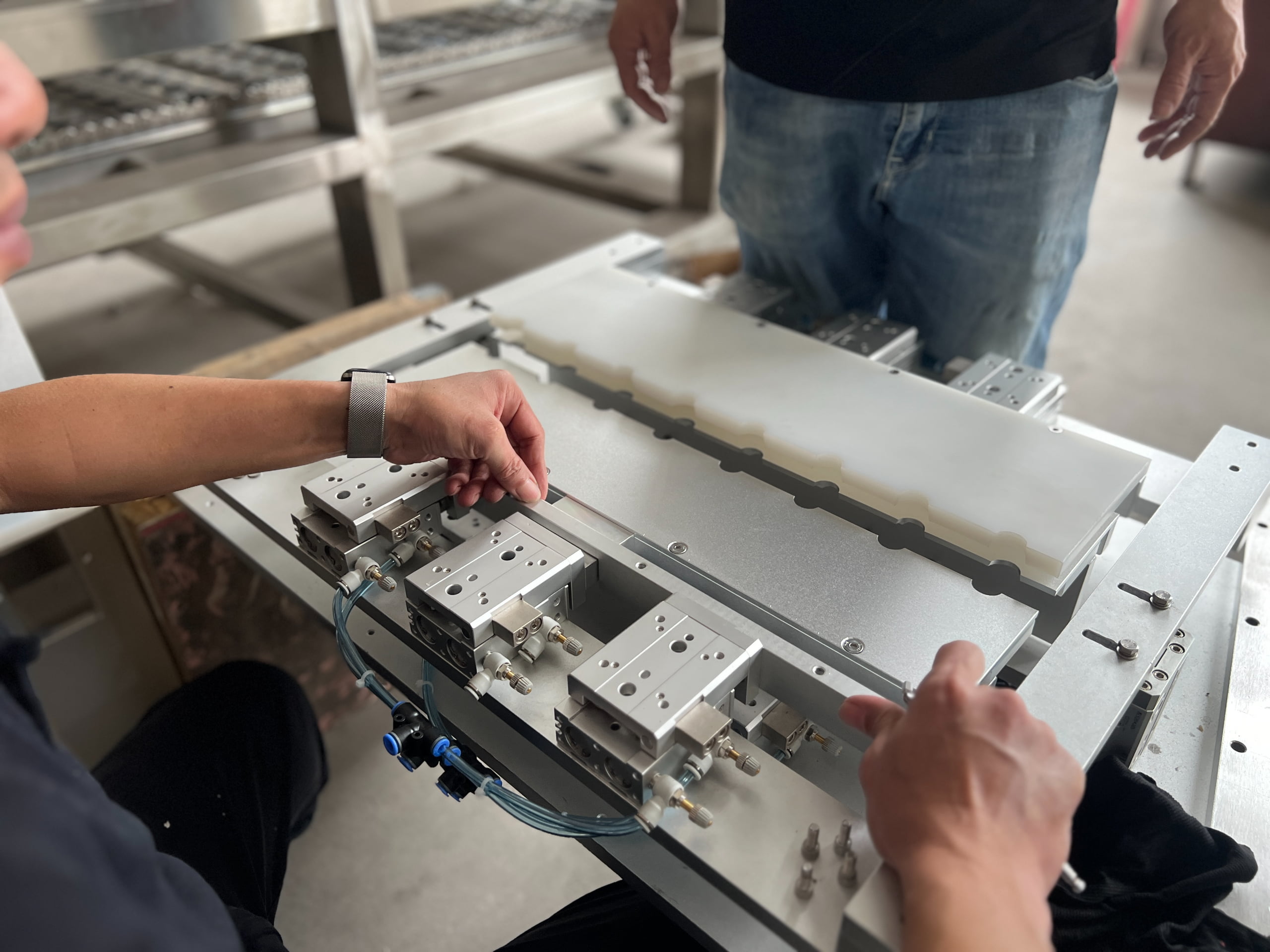
For food products, the packaging material must also match product contact requirements and local market rules. We avoid giving one universal material answer because different products have different moisture, oil, oxygen, storage, and temperature conditions. A dry snack does not need the same barrier logic as a chilled sauce, dairy product, or frozen item.
Sealing material is also connected with filling volume and product position. If a buyer wants to fill liquid, paste, sauce, or small granules into a formed blister, the fill volume must leave enough headspace and keep the sealing edge clean. The same logic applies to cup and spout pouch projects: if the product contaminates the sealing area, leakage risk rises even when the machine is well built.
Material and package checklist
| Item to Confirm | Why It Matters | Factory Check |
|---|---|---|
| Forming film type | Affects cavity strength and forming temperature | Test film with target cavity depth |
| Sealing film or lid | Affects leak prevention and peel behavior | Check heat, pressure, and dwell range |
| Product contact requirement | Affects material selection | Confirm local food packaging rules |
| Cavity depth | Affects product support and mold cost | Validate with product sample |
| Cutting style | Affects finished pack edge and downstream packing | Confirm single pack, strip, or sheet format |
Should buyers choose a single blister machine or a full line solution?
A single blister packing machine is a good choice when the factory already has upstream product preparation and downstream packing. For example, if the product is already portioned, cooled, inspected, and ready for loading, the blister machine can focus on forming, loading support, sealing, and cutting.
A single machine is suitable for an existing factory with stable product preparation and packing flow. A full line solution is better when the buyer also needs product preparation, filling, pasteurization, cooling, inspection, conveying, cartoning, or future capacity expansion planned together.
For some food products, the blister machine is only one part of the process. If the product must be cooked, pasteurized, cooled, or held at a controlled temperature before packing, the upstream process should be discussed at the same time. A pasteurizer or cooling line cannot be added casually after layout is fixed. It needs space, drainage, utilities, operator access, and maintenance clearance.
The same decision logic applies across our main product lines. A buyer choosing a cup filling and sealing machine must plan cup size, filling volume, sealing film, and mold changes. A buyer choosing a spout pouch filling and capping machine must plan pouch size, cap torque, product viscosity, and leakage control. A buyer choosing an ice lolly tube filling and sealing machine must plan tube size, filling volume, sealing material, pasteurization, and cooling. Blister packaging is no different: the machine must be chosen by the product and line process.
| Project Situation | Better Choice | Buyer Logic |
|---|---|---|
| Existing food factory with ready products | Single blister packing machine | Lower scope and easier installation |
| New product line | Full line solution | Process, layout, and utilities must match |
| Liquid or paste filling into blisters | Integrated filling and sealing design | Filling volume and seal cleanliness are linked |
| Multiple future pack sizes | Modular format planning | Molds and changeover parts should be planned early |
| Limited workshop space | Layout review before order | Operator access and maintenance cannot be ignored |
How should buyers plan capacity, layout, and future expansion?
Capacity planning should be realistic. A machine running fast in a short test does not mean the factory can sustain the same output every shift. Operators need time to load products, inspect materials, remove finished packs, change film rolls, clean surfaces, and handle small stops. If the loading method depends on people, human working rhythm must be part of the capacity plan.
Buyers should plan capacity by the whole line, not only by the blister machine. The real output depends on product preparation, loading method, forming stability, sealing quality, cutting, inspection, finished pack handling, and available operators.
Factory layout affects daily performance. We need space for film roll loading, product staging, rejected pack handling, finished pack movement, electrical cabinets, air supply, cleaning, and service access. If the machine is squeezed into a narrow corner, maintenance becomes slow and operators may block each other during production. A compact layout can be useful, but it should not destroy access.
Future expansion should be discussed before mold design. If the buyer wants to add a larger product, a deeper cavity, another sealing material, or automatic loading later, the first machine should be planned with those limits in mind. It is not always possible to upgrade everything after delivery, so we prefer to define the product family and future direction during the quotation stage.
What should buyers prepare before asking for a final quotation?
Before final quotation, buyers should prepare product samples, target blister size, forming material, sealing material, loading method, filling volume if any, required finished pack format, expected capacity, voltage, air supply condition, factory layout, and future product plan. These details help us avoid a generic proposal and move toward a practical factory solution.
After-sales support should also be part of the decision. A blister packing machine includes molds, heaters, sensors, cutters, chains, controls, and wear parts. Buyers should know which parts are format-specific, which parts are consumable, and how operators will be trained. For export projects, remote commissioning guidance, clear spare parts lists, and troubleshooting logic are important for reducing downtime after installation.
In our factory view, the right blister packing machine is the one that matches the product, material, capacity, layout, and future plan. Speed matters, but it comes after the buyer confirms what the machine must actually handle. When we begin with samples and line logic, the final machine is more stable and easier to support.
Conclusion
To choose a blister packing machine for food products, start with product samples and package materials. Confirm product size, cavity depth, filling or loading method, forming film, sealing film, capacity target, factory layout, and future expansion before final design. This buyer decision logic reduces mold-change risk, leakage risk, and layout mistakes while helping the factory choose between a single machine and a full line solution.
- Thermoforming is a manufacturing process where heated plastic sheet is shaped over a mold; it is relevant to formed blister cavities. Return
- Heat sealing uses controlled heat, pressure, and dwell time to join compatible materials; it is central to blister pack seal quality. Return
- Food contact packaging materials should be selected according to product contact, temperature, storage, and market requirements. Return