
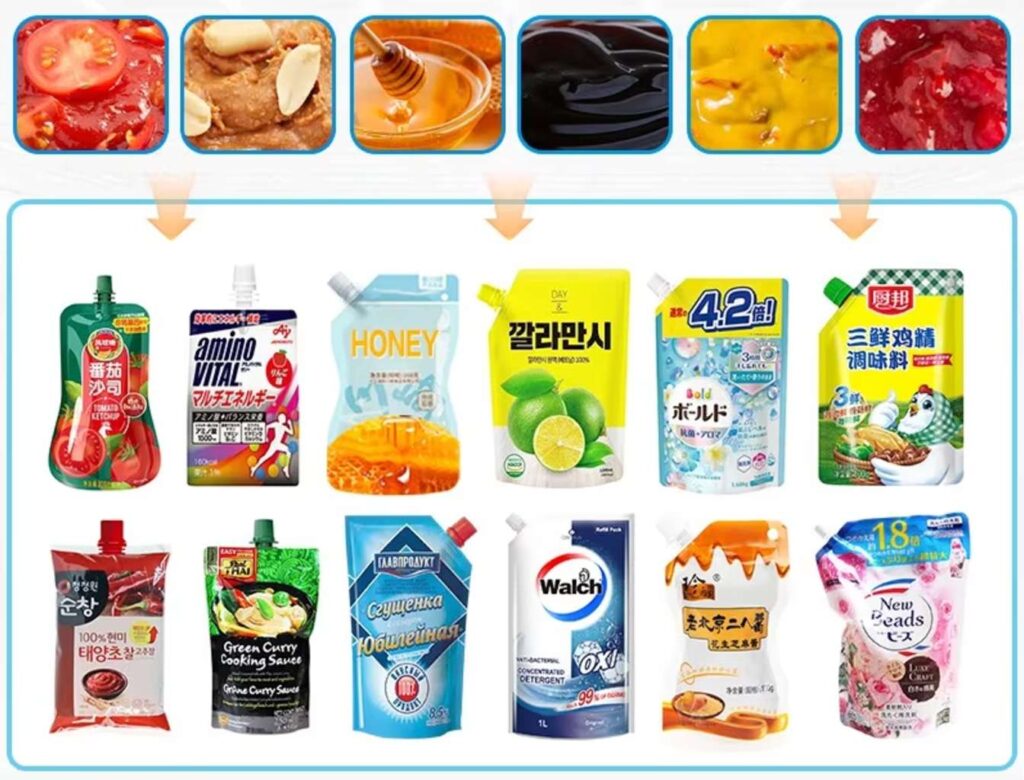
Many buyers ask whether a spout pouch filling and capping machine can fill thick sauce, yogurt, juice, jelly, dairy products, or other semi-liquid products. This is the right question, but viscosity is not the only point. Buyers also need to confirm whether the pouch is pre-made, whether filling is through the spout, what the pouch volume is, and how stable the cap tightening must be.
The direct answer is: for Xinchuang spout pouch filling and capping machines, the product must have flowability, and piston pump filling can handle many liquid and viscous products depending on final product characteristics. The machine fills through the pouch spout, so it is mainly suitable for pre-made spout pouches in smaller packaging ranges such as about 100 ml to 500 ml. Very large packages above around 2 kg are usually filled from the open bag mouth and sealed afterward, so they belong to a filling and sealing machine, not a spout pouch filling and capping machine.
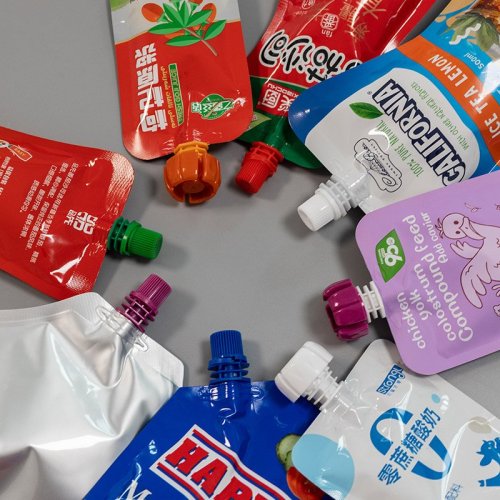
At Guangdong Xinchuang Machinery Industry Co., Ltd., we usually separate three questions before recommending a machine. First, is the pouch a pre-made spout pouch? Second, will the product be filled through the spout? Third, does the product have enough flowability for piston pump filling? Once these points are clear, we can discuss filling volume, filling accuracy direction, cap feeding, servo torque capping, layout, and output.
Useful technical terms for this topic include viscosity1, piston pump2, torque3, flexible packaging4, and screw cap5. These concepts help buyers understand why a spout pouch project is not only a simple liquid filling question.
Quick Answer: Can one machine fill both thin and thick products?
Yes, one spout pouch filling and capping machine can often fill different flowable products when the filling system, pump size, nozzle, and cleaning method are matched correctly. Juice, yogurt, sauce, dairy products, semi-liquid jelly, and similar products can be discussed under the same machine category if they are filled through a pre-made spout pouch.
The key word is flowability. A product can be thin or thick, but it must still move through the filling path in a controlled way. Piston pump filling is suitable for many viscous products, but final confirmation should be based on product sample checking, filling volume, temperature, particles, and cleaning requirements.
Buyers should not judge only by product name. “Sauce” may be thin or thick. “Yogurt” may be drinkable or very dense. “Jelly” may be flowable or contain gel pieces. The same word can represent different filling behavior. This is why product samples are more useful than a simple product category.
Why does pre-made spout pouch structure matter?
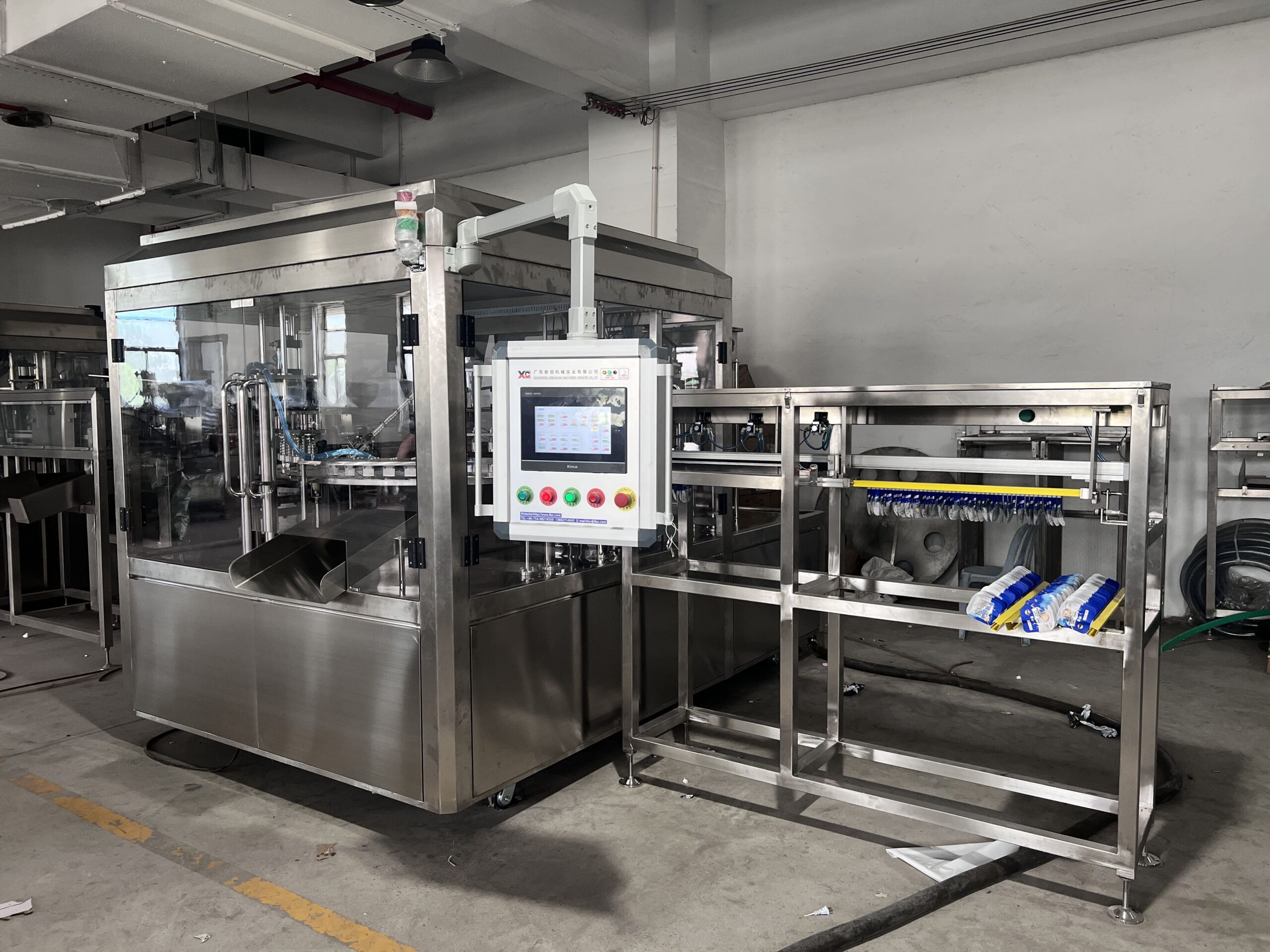
Xinchuang spout pouch filling and capping machines are designed for pre-made spout pouches. The pouch already has the spout installed before it enters the machine. The machine holds the pouch, fills through the spout, and then caps the spout. This is different from a machine that fills through an open bag mouth and then seals the bag.

If the package is a pre-made spout pouch, filling through the spout and then capping is the correct machine logic. If the package is a large open-mouth bag that needs filling and heat sealing afterward, it is not the same machine type.
This distinction prevents quotation mistakes. A buyer may say “pouch filling machine,” but the supplier must know whether the package is a spout pouch, stand-up pouch, open-mouth bag, or another format. The feeding method, filling path, closing method, and suitable volume range are different.
What volume range is usually suitable?
Spout pouch filling and capping machines are especially suitable for smaller pouch volumes, commonly around 100 ml to 500 ml depending on pouch design, product type, and required output. This range is common for juice, yogurt, sauce, puree, dairy drinks, jelly pouch products, and similar consumer packages.
For very large packages, especially above around 2 kg, buyers should be careful. Those products are often filled from the bag opening and sealed afterward, so the correct equipment is usually a filling and sealing machine rather than a spout pouch filling and capping machine.
| Package Situation | Better Machine Type | Factory Reason |
|---|---|---|
| 100 ml to 500 ml pre-made spout pouch | Spout pouch filling and capping machine | Fill through the spout, then cap the spout |
| Juice, yogurt, sauce, dairy, flowable jelly | Piston pump spout pouch filling and capping machine | Flowable products can be filled through the product path |
| Large package above around 2 kg | Open-mouth filling and sealing machine | Usually filled from the bag mouth and sealed afterward |
| Product with large particles or poor flowability | Sample-based confirmation needed | Spout size, pump path, and nozzle may limit filling |
How does piston pump filling handle viscosity?
A piston pump fills by drawing a measured amount of product into a chamber and pushing it out through the filling path. This principle is useful for many products with different viscosities because the filling amount can be controlled mechanically or through the machine’s configured filling system.
In practical terms, if the product has flowability, piston pump filling can often handle it, whether the product is relatively thin or thick. But the machine design still needs to match viscosity, temperature, particles, filling volume, and cleaning method.
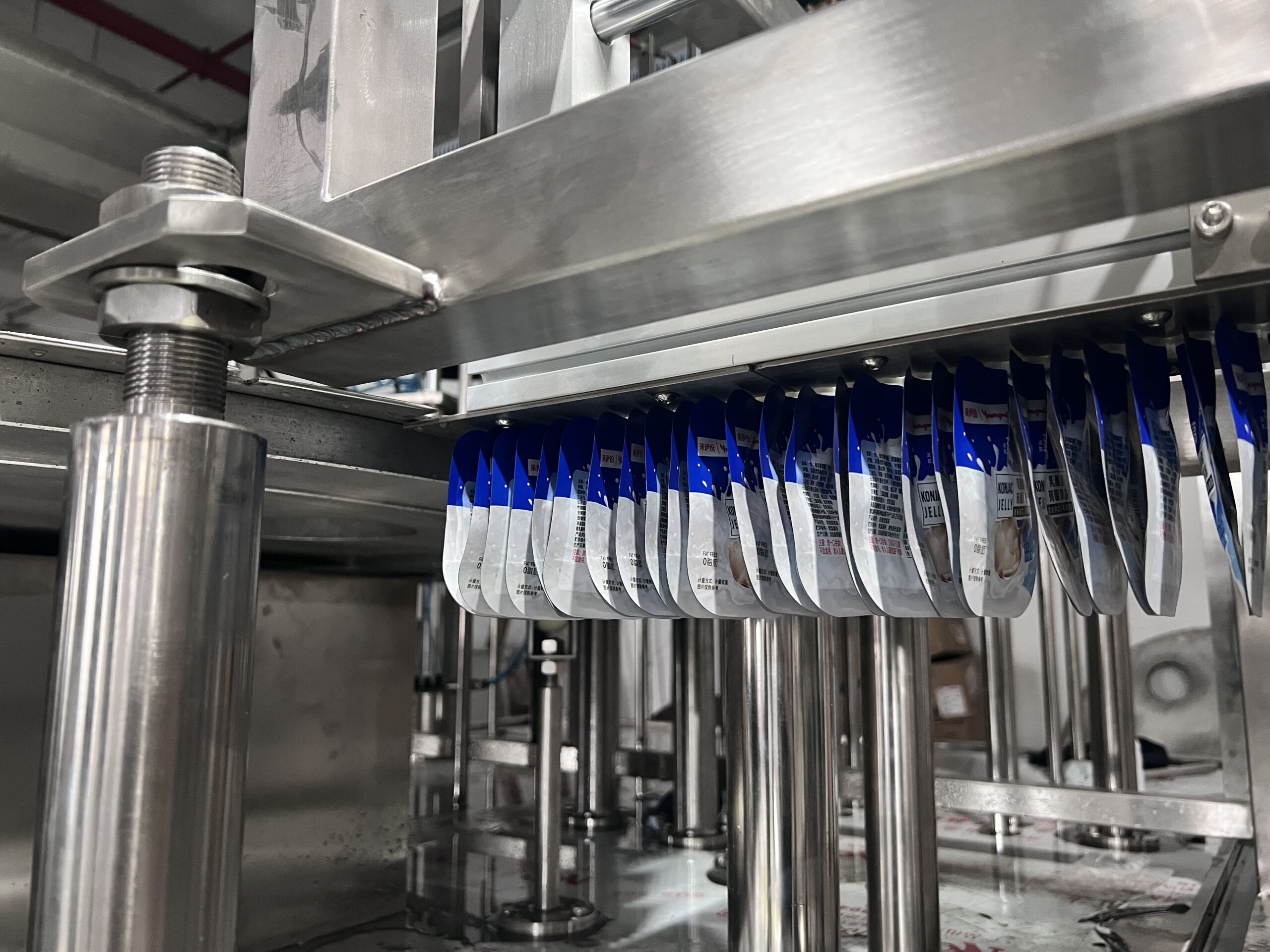
Viscosity affects filling speed. A thinner juice may fill quickly. A thick sauce may require slower filling, larger product path, different nozzle design, anti-drip control, and stronger cleaning planning. If the product contains particles, the pump and nozzle must be checked carefully because the spout opening is limited.
Temperature also matters. Some sauces or dairy products flow better when warm. Some products become thicker when cooled. A product sample should be tested under realistic production temperature, not only at room temperature in an office.
Why does servo torque capping matter?
After filling, the pouch must be capped reliably. If the cap is too loose, leakage risk increases. If the cap is too tight, the spout or cap may deform, or consumers may find it difficult to open. This is why capping stability is not a minor detail.
Xinchuang spout pouch filling and capping machines use servo motor control for capping torque, which allows more precise torque control and supports stable capping quality. Buyers should confirm cap size, cap thread, spout design, required tightness, and leakage testing method before final confirmation.
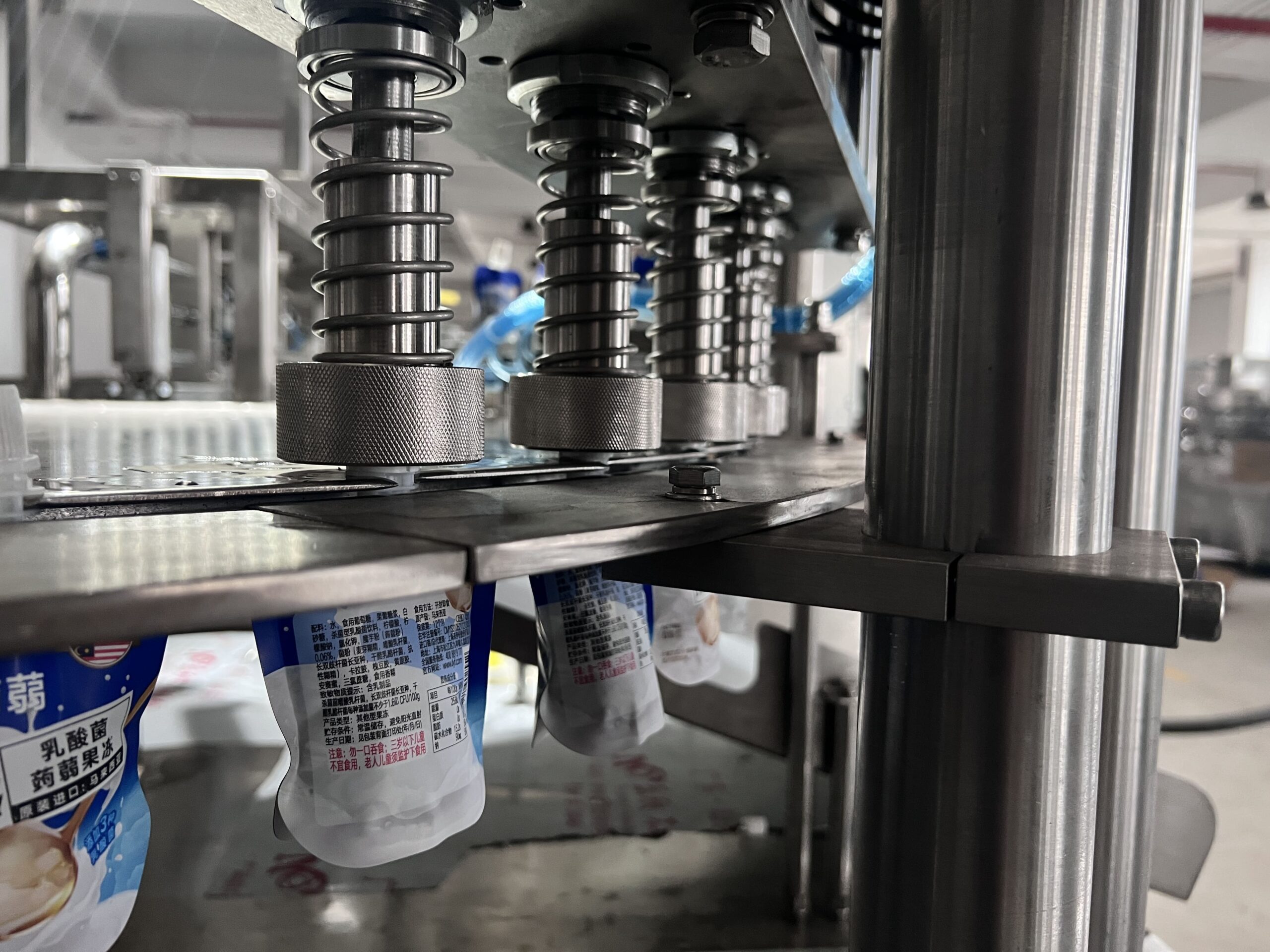
Cap feeding should also be checked. A cap that looks normal may not feed smoothly if its shape, weight, or thread design is inconsistent. For export projects, buyers should send real pouch and cap samples before final machine design. Drawings help, but samples reveal feeding, filling, and capping behavior.
Buyer Checklist: What should be confirmed before quotation?
Before requesting a quotation, buyers should confirm pouch volume, pouch shape, spout position, spout inner diameter, cap size, cap type, product viscosity, product temperature, whether particles are included, target output, cleaning method, filling accuracy expectation, and future product plan.
The most useful buyer question is not “Can it fill sauce?” but “Can my exact sauce sample flow through this spout, pump, nozzle, and filling path at my required output?”
| Item to Confirm | Why It Matters | Factory Check |
|---|---|---|
| Pre-made spout pouch | Machine fills through the spout | Send pouch samples before order |
| Pouch volume | Affects filling time and machine suitability | Common range is often about 100 ml to 500 ml |
| Product viscosity | Affects pump, nozzle, speed, and anti-drip | Check real product sample and temperature |
| Particles | May block spout, pump, or nozzle | Confirm particle size and concentration |
| Cap and spout design | Decides capping torque and leakage risk | Test with real cap and pouch samples |
| Cleaning requirement | Thick products need better cleaning planning | Confirm product changeover and sanitation method |
Factory Insight: When is this machine not suitable?
Not suitable when: the buyer needs to fill very large bags above around 2 kg through an open bag mouth and then seal the bag. That is a different packaging logic and should be discussed as a filling and sealing machine, not a spout pouch filling and capping machine.
It may also be unsuitable when the product cannot flow through the spout, contains large particles, or requires a filling opening larger than the spout can provide. In those cases, the package design and filling method should be reconsidered before choosing equipment.
For related planning, buyers can review how to choose a spout pouch filling and capping machine, understand how spout pouches are filled, compare leakage prevention in spout pouch leakage control, and read why buyers should send samples before choosing a filling machine.
Conclusion
Viscosity affects spout pouch filling and capping machine selection because it changes filling speed, pump configuration, nozzle design, anti-drip control, cleaning method, and output rhythm. But viscosity should be checked together with pouch type, pouch volume, spout size, cap design, and filling method.
For Xinchuang spout pouch projects, the machine fills through the spout of a pre-made pouch and then uses servo torque control for stable capping. It is mainly suitable for smaller flowable products such as juice, yogurt, sauce, dairy, semi-liquid products, and jelly pouch products in ranges such as about 100 ml to 500 ml depending on final requirements. Larger open-mouth bags belong to a different machine category and should be planned separately.
- Viscosity describes resistance to flow; in filling machines, it affects speed, nozzle choice, dripping, and pump configuration. Return
- A piston pump can meter product volume mechanically; final suitability depends on product flowability, particles, and cleaning needs. Return
- Torque is the rotational force used for capping; stable torque control helps reduce loose caps and over-tightening. Return
- Flexible packaging includes pouches and similar formats; machine selection depends on the exact pouch structure. Return
- A screw cap must match the spout thread and tightening requirement; real cap samples should be tested before final design. Return