
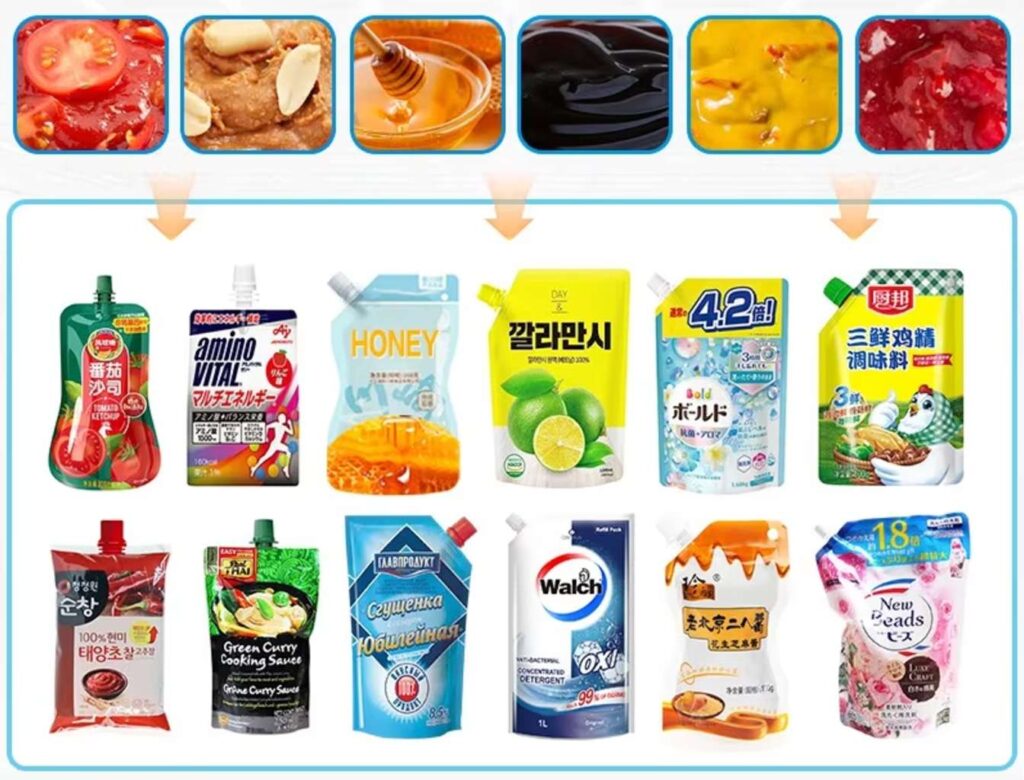
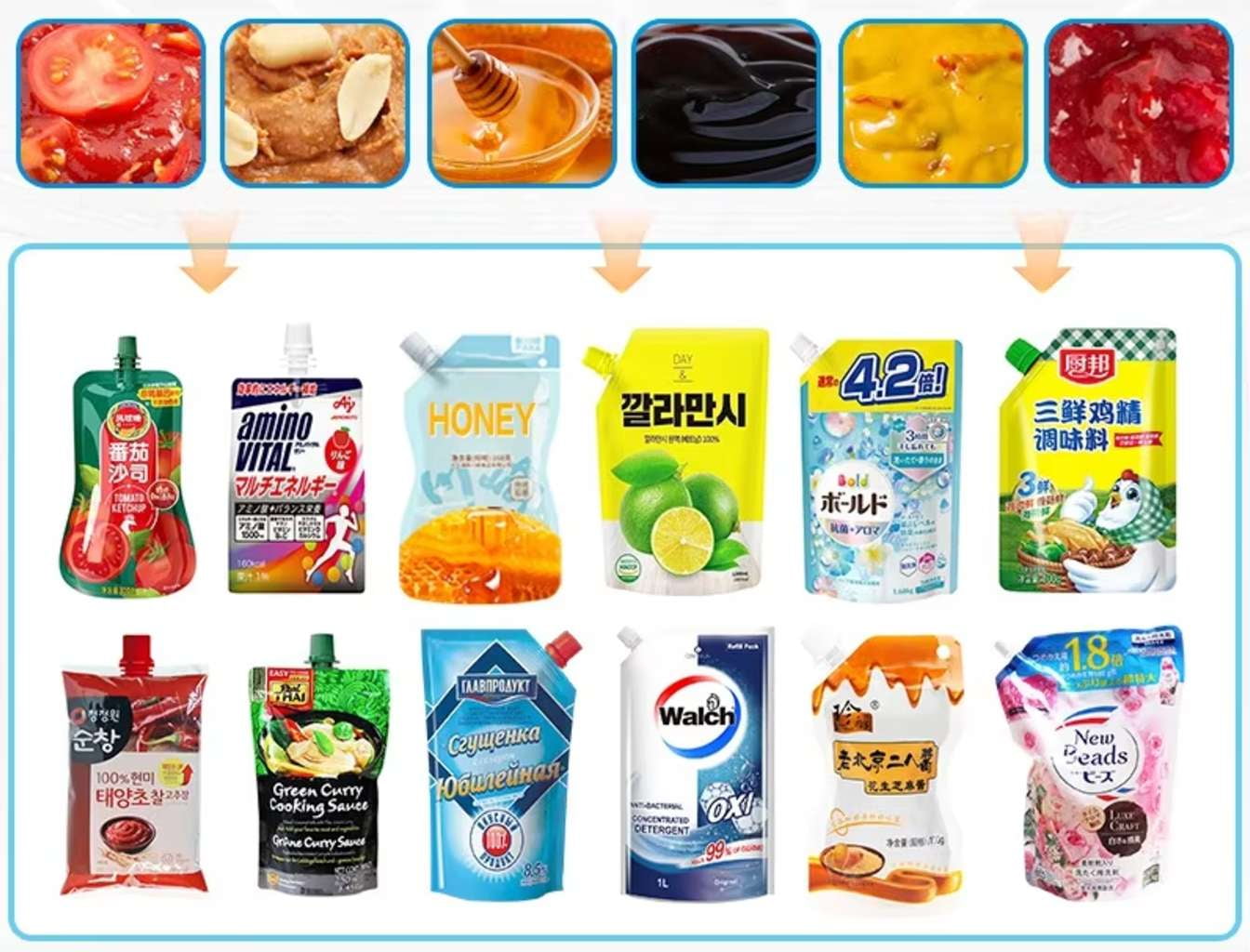
Many buyers ask for a spout pouch filling and capping machine by sending only a pouch photo, a target capacity, or a product name such as juice, sauce, yogurt, or jelly drink. These details are useful, but they are not enough for machine selection. The first question is whether the pouch is a pre-made spout pouch and whether the product should be filled through the spout.
The direct answer is: a spout pouch filling and capping machine is suitable when the pouch is already pre-made with a spout, and the product is filled through that spout before cap tightening. It is usually more suitable for smaller packaged products such as juice, yogurt, jelly drink, and sauce in the approximate 100 ml to 500 ml range, depending on pouch design and production requirements.
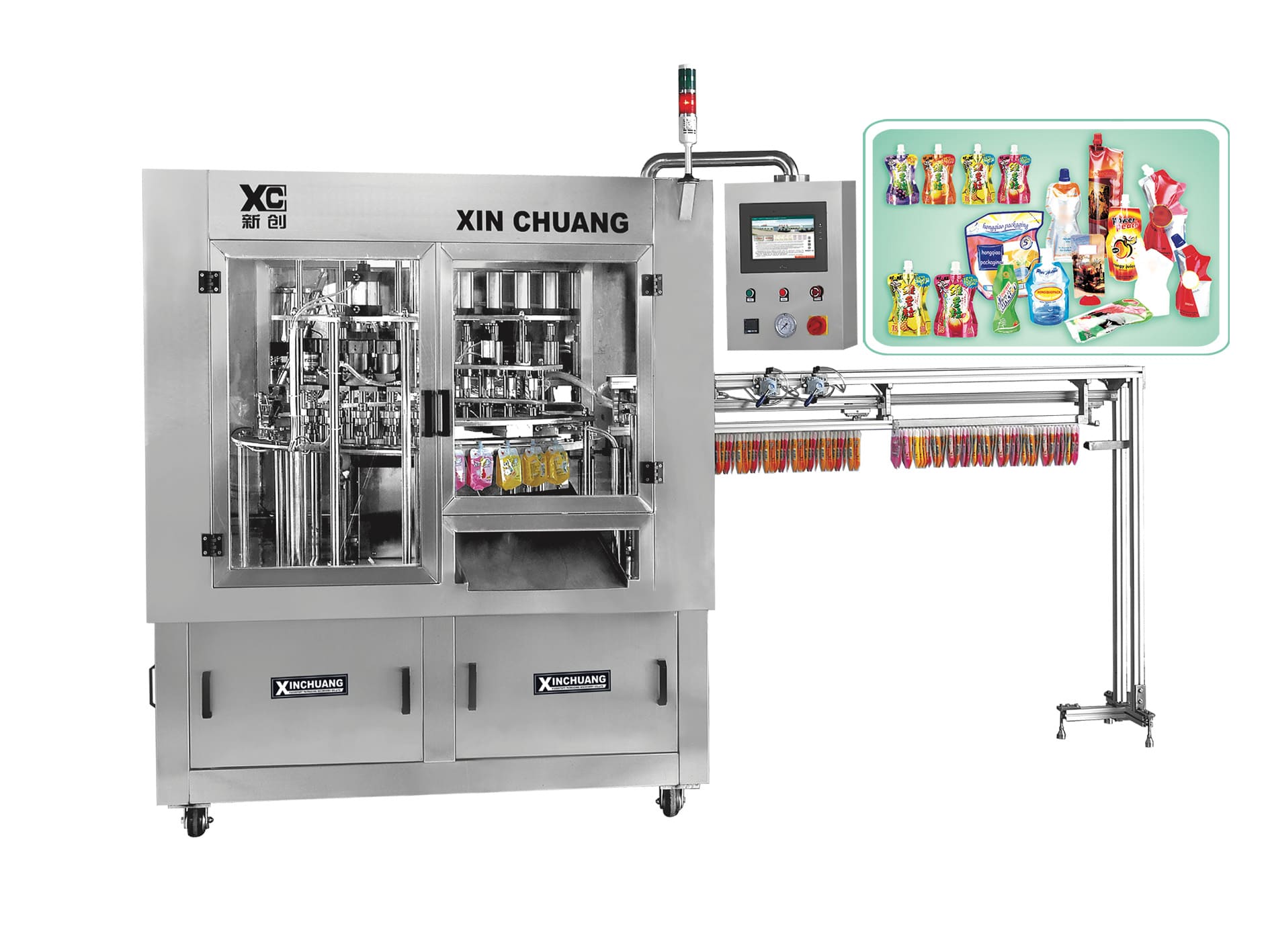
At Guangdong Xinchuang Machinery Industry Co., Ltd., we separate spout pouch projects from ordinary open-mouth pouch projects. A spout pouch filling and capping machine fills from the spout and then tightens the cap. A large open-mouth pouch filling and sealing machine fills from the top opening and then seals the pouch body. These are different machine types, with different structures, different suitable products, and different buying logic.
Several technical terms help buyers understand the machine decision. A spout pouch1 is different from a simple flat pouch. A piston pump2 is commonly used when filling flowable liquid or semi-liquid products. Product viscosity3, servo-controlled torque4, and cap design all affect real operation. For some product lines, clean-in-place5 should also be discussed early.
Quick Answer: When is this machine the right choice?
A spout pouch filling and capping machine is the right choice when the buyer uses a pre-made pouch with a fixed spout and wants the product filled through the spout before automatic cap tightening. It is commonly used for smaller packages of juice, yogurt, jelly drink, sauce, dairy drinks, and other flowable products.
For most projects, the practical filling-volume range is around 100 ml to 500 ml. The final range still depends on pouch shape, spout diameter, cap type, product flowability, target output, and machine configuration.
If the package is much larger, such as more than two kilograms, the buyer should confirm the pouch structure carefully. Many large pouches are filled from the open mouth and then sealed. That machine is usually a pouch filling and sealing machine, not a spout pouch filling and capping machine.
Why does the pouch structure decide the machine type?
The most important difference is the filling path. A spout pouch filling and capping machine fills from the spout. The pouch must already be made with the spout before entering the machine. The machine holds or positions the pouch, opens or aligns the spout area, fills the product through the spout, and then tightens the cap.
If the pouch is filled through the top opening and then heat sealed, it belongs to a different machine category. Buyers should not compare these two machine types only by price, because the pouch structure, filling path, sealing logic, and automation method are different.
This distinction prevents expensive mistakes. Some buyers ask for one machine to handle both small spout pouches and large open-mouth pouches. In many cases, that is not practical. The holding method, filling nozzle position, capping mechanism, sealing method, and discharge route are not the same.
Not suitable when: the buyer plans to fill a large pouch from the top opening and seal the pouch body after filling. That type of package should be reviewed as pouch filling and sealing, not spout pouch filling and capping.
Spout pouch or open-mouth pouch?
| Project Condition | Better Machine Type | Buyer Decision Logic |
|---|---|---|
| Pre-made pouch with spout and cap | Spout pouch filling and capping machine | Product fills through the spout, then cap is tightened |
| Small juice or sauce pouch around 100-500 ml | Spout pouch filling and capping machine | Good fit for smaller retail pouch packaging |
| Large pouch above around 2 kg | Usually pouch filling and sealing machine | Often filled from the open mouth and sealed afterward |
| Product needs resealable cap | Spout pouch filling and capping machine | Cap function is part of package convenience |
| Flat pouch without spout | Pouch filling and sealing machine | No cap tightening station is needed |
Can thick sauce or yogurt be filled through the spout?
Many buyers worry that thick products cannot be filled by a spout pouch machine. The real question is not only whether the product is thin or thick. The more important question is whether the product has flowability and whether the spout diameter, filling nozzle, pump structure, and product path match the product.
For Xinchuang spout pouch filling and capping machines, the filling principle uses a piston pump. As long as the material has flowability, both low-viscosity and higher-viscosity products can be considered, including juice, yogurt, sauce, dairy drinks, and semi-liquid products. Final design should still be confirmed after checking the product sample.
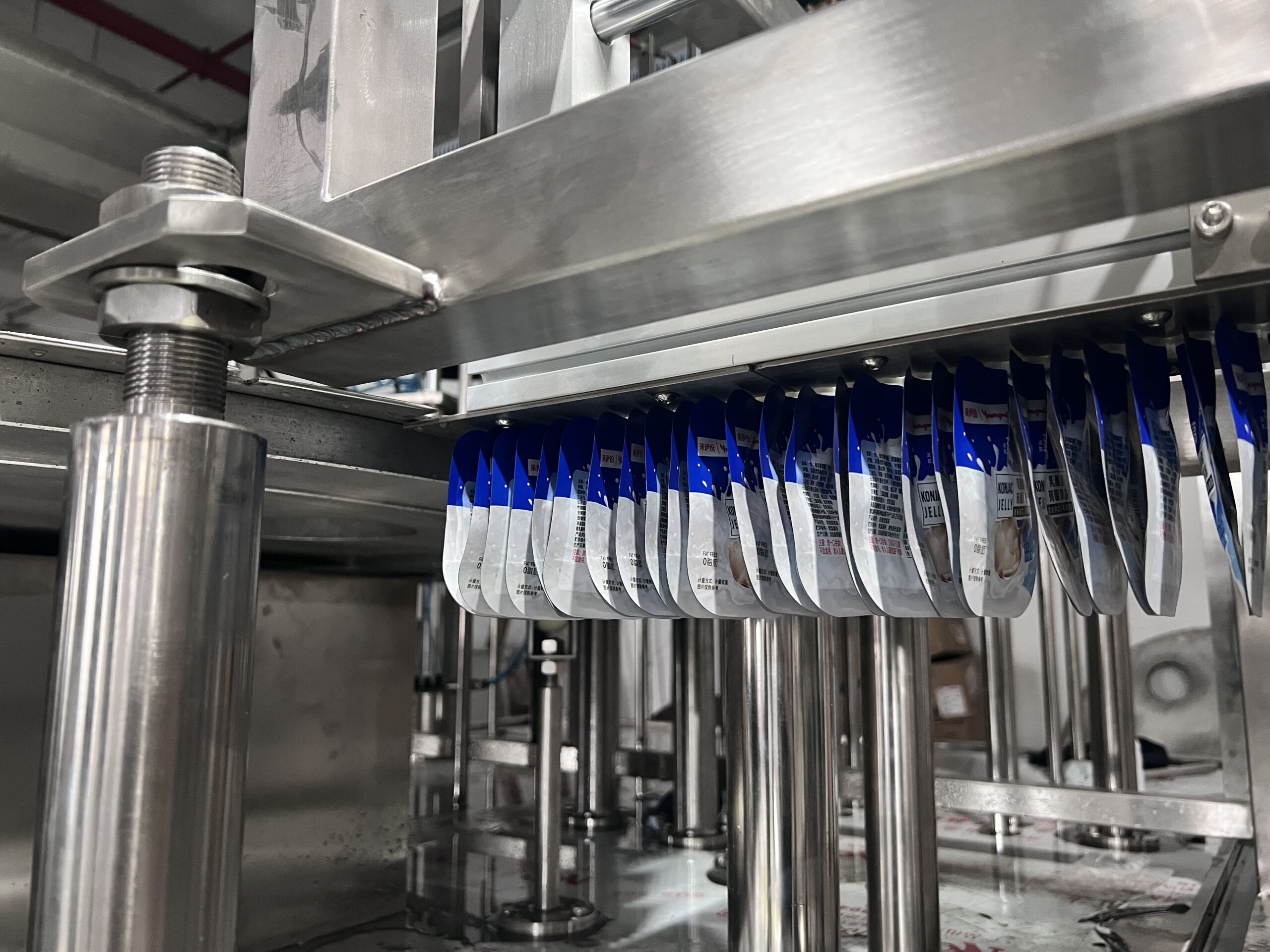
For thick sauce, the buyer should prepare product samples or at least describe viscosity, particles, temperature, and whether the product separates during holding. For yogurt or dairy drinks, hygiene, cleaning, and product temperature should be discussed together. For juice, foam, pulp, and filling accuracy may matter more.
A water test is not enough for final confirmation. Water can make a machine look easy, but real sauce or yogurt may behave differently. It may drip, foam, leave residue, or require slower filling through a small spout. Practical machine planning should be based on the real product or a close substitute.
Why is servo torque control important for capping?
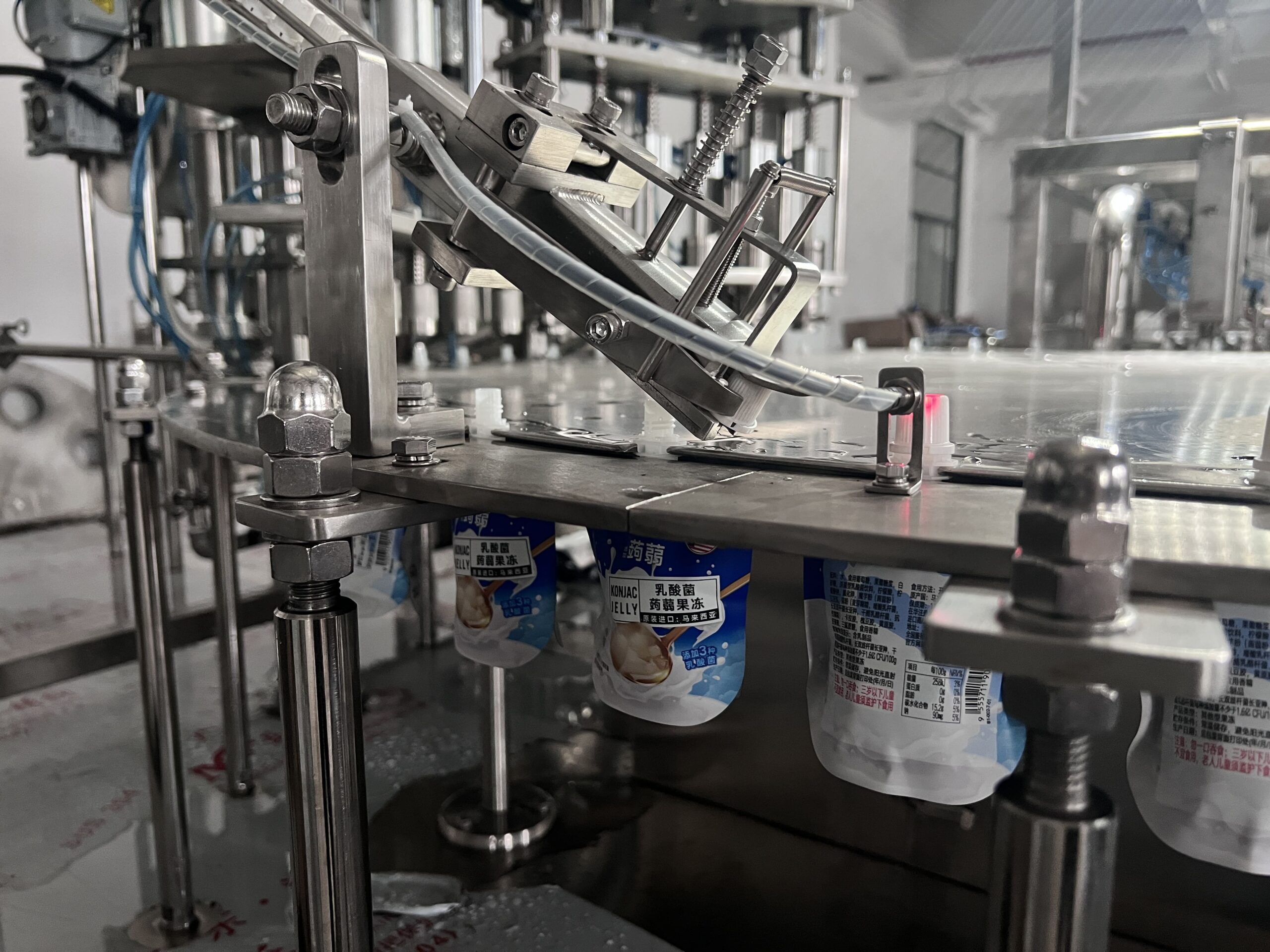
The capping station is not just a cap feeder and a rotating head. Cap tightening affects leakage control, consumer opening feel, package appearance, and transport safety. If the cap is too loose, leakage risk increases. If it is too tight, the cap or spout may deform, and consumers may have difficulty opening the package.
Xinchuang uses servo motor control for capping torque, so the tightening force can be controlled more precisely. This improves capping stability and helps the machine adapt to real cap and spout conditions.
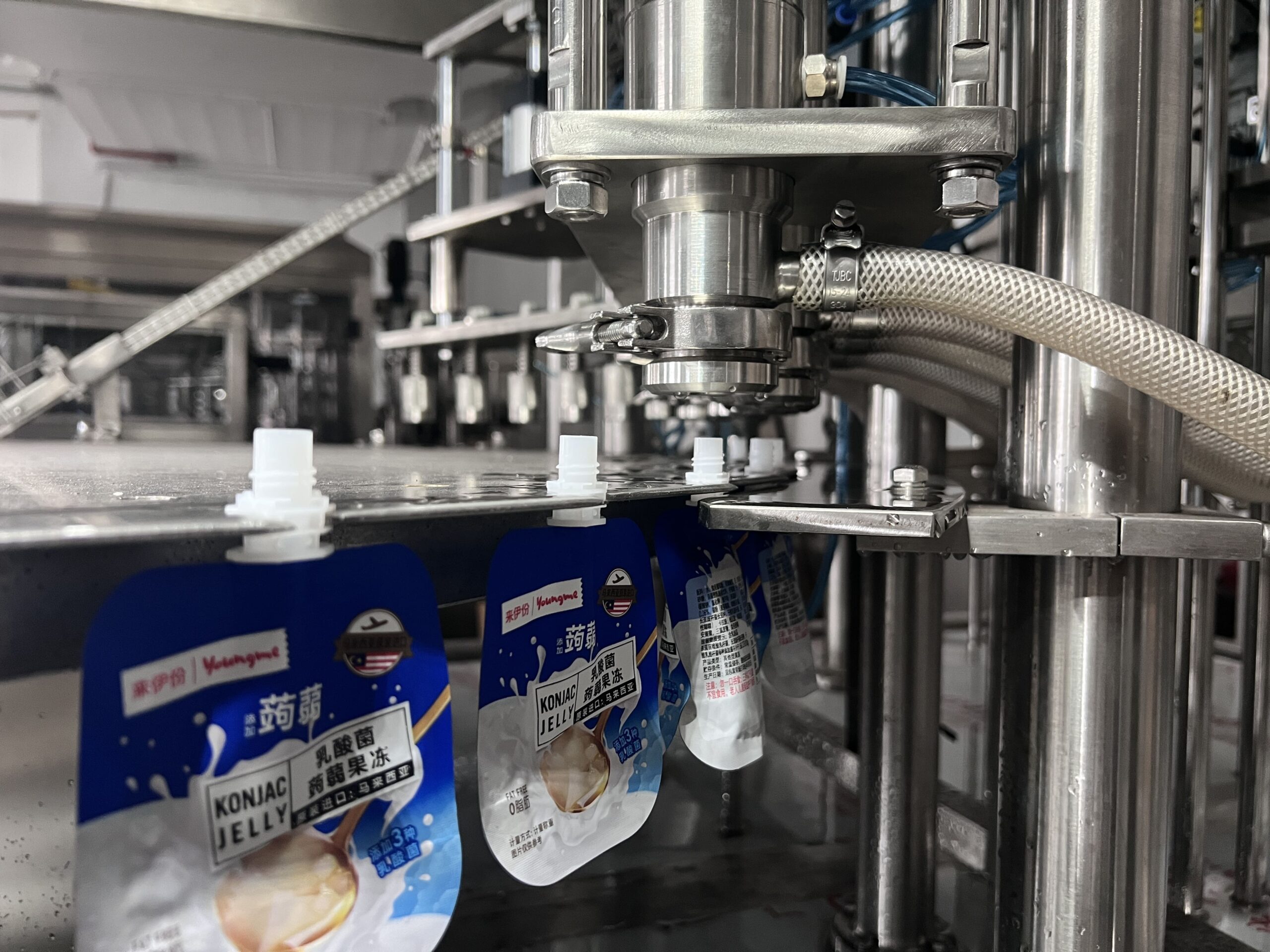
Buyers should provide real caps and spout pouch samples before final machine confirmation. Cap thread design, cap material, spout hardness, pouch flexibility, and transport requirement all affect the correct torque range. The capping system should be adjusted according to actual packaging materials, not only a drawing.
For export projects, stable capping is especially important because packages may travel long distances and pass through different storage and handling conditions. A stable servo capping system can reduce daily adjustment pressure for operators.
Buyer Checklist: What should be confirmed before quotation?
Before requesting a final quotation, buyers should prepare a real pouch sample, cap sample, product sample, filling volume, target output, product viscosity, whether the product contains particles, temperature during filling, hygiene requirement, factory layout, voltage, compressed air condition, cleaning plan, and future product plan.
The quotation becomes more accurate when the buyer confirms whether the package is filled through the spout or through the top opening. This single point decides whether the project belongs to spout pouch filling and capping or pouch filling and sealing.
| Item to Confirm | Why It Matters | Factory Check |
|---|---|---|
| Pouch type | Decides spout filling/capping or open-mouth filling/sealing | Send real pouch sample |
| Filling volume | Decides pump size, filling time, and output rhythm | Confirm ml or grams per pouch |
| Product flowability | Decides piston pump setup and filling speed | Check viscosity, particles, temperature, and dripping behavior |
| Cap and spout design | Decides cap feeding, alignment, and torque control | Send real cap and spout pouch samples |
| Target output | Decides automation level and line layout | Confirm pouches per hour and shifts |
| Cleaning plan | Affects tank, pump, nozzle, and product path design | Discuss product changeover and hygiene requirement |
For related production planning, buyers can also review our articles on jelly cup production line planning, yogurt cup filling and sealing machine selection, and pasteurizer and cooling line decisions. These topics are different from spout pouch packaging, but the factory planning logic is similar: product sample, packaging material, process requirement, output, utilities, and future expansion should be checked early.
Factory Insight: What do buyers often misunderstand?
One common misunderstanding is treating all pouch machines as the same. In real factory discussions, the spout pouch filling and capping machine is built around the spout and cap. A large pouch filling and sealing machine is built around the open pouch mouth and heat sealing area. The machine names may sound similar, but the packaging process is different.
Another common misunderstanding is judging thick products too simply. If the material has flowability, piston filling can often handle both thin and thick products, but the final design must still match the real product, spout diameter, filling volume, and cleaning requirement.
Buyers also underestimate capping stability. A low-cost capping design may work in a short test, but daily production needs repeatable torque, stable cap feeding, and easy adjustment. Servo-controlled torque is valuable because it gives the factory better control over tightening quality.
Conclusion
To choose a spout pouch filling and capping machine, start with pouch structure. If the pouch is pre-made with a spout and the product is filled through the spout, this machine type may be suitable, especially for smaller juice, yogurt, jelly drink, sauce, and semi-liquid products around 100 ml to 500 ml. If the package is a large open-mouth pouch, especially above around two kilograms, the buyer should usually review pouch filling and sealing equipment instead.
For Xinchuang projects, the practical selection logic is clear: confirm the pouch sample, cap sample, filling volume, product flowability, viscosity, target output, cleaning requirement, capping torque needs, and factory layout. Then the engineering team can match piston filling, servo torque capping, automation level, and line planning to the real product instead of giving a generic machine price.
- A spout pouch is a flexible package with a spout and cap; this package type is suitable when buyers need resealable small-volume packaging. Return
- A piston pump moves product by piston displacement and is often used for controlled filling of flowable liquids or semi-liquids. Return
- Viscosity describes resistance to flow; in filling projects it affects pump selection, filling speed, nozzle design, and dripping control. Return
- Torque is rotational force; in capping it affects cap tightness, leakage risk, package deformation, and opening feel. Return
- Clean-in-place refers to cleaning internal product-contact paths without full disassembly; whether it is needed depends on product hygiene and changeover requirements. Return