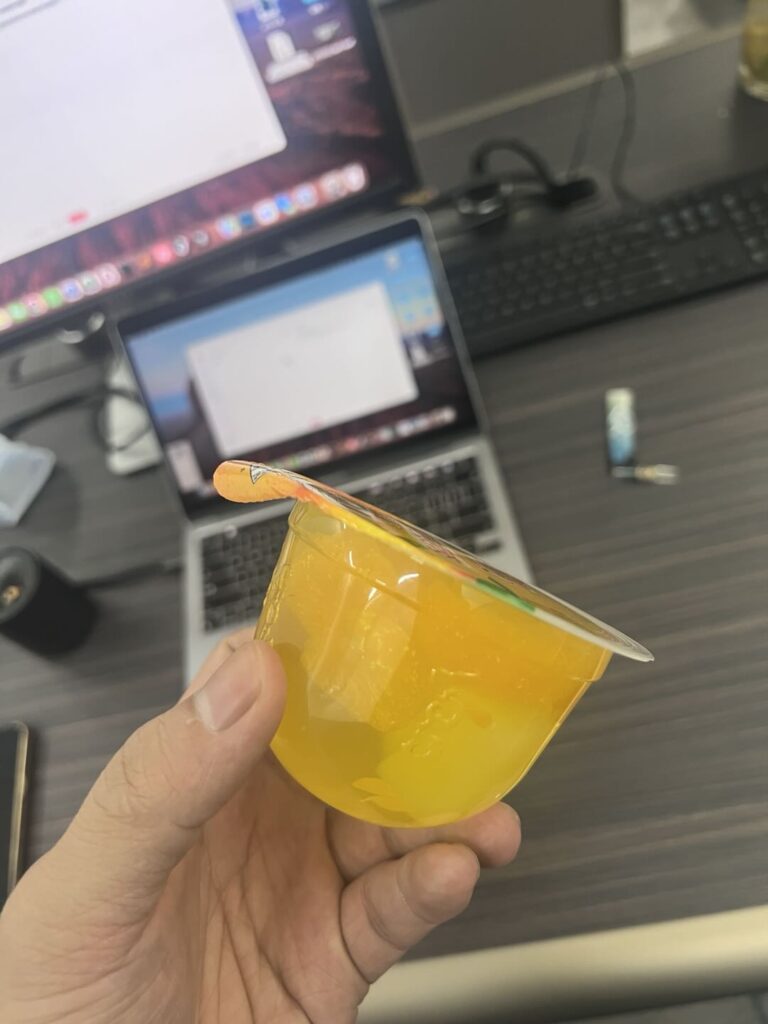
Many buyers ask about a jelly cup production line by starting with three questions: how much does the line cost, how much factory space is needed, and how many workers are required. These are useful questions, but they are not the first questions we should solve. A jelly project should begin with hourly output, cup size, filling volume, product variety, formula acidity, automation level, and the factory layout.
The direct answer is: buyers should plan a jelly cup production line by confirming target cups per hour, number of jelly types, cup diameter, filling volume, sealing material, material contact standards, utility conditions, labor arrangement, and future expansion. Price, space, and workers can only be estimated properly after these basic production requirements are clear.
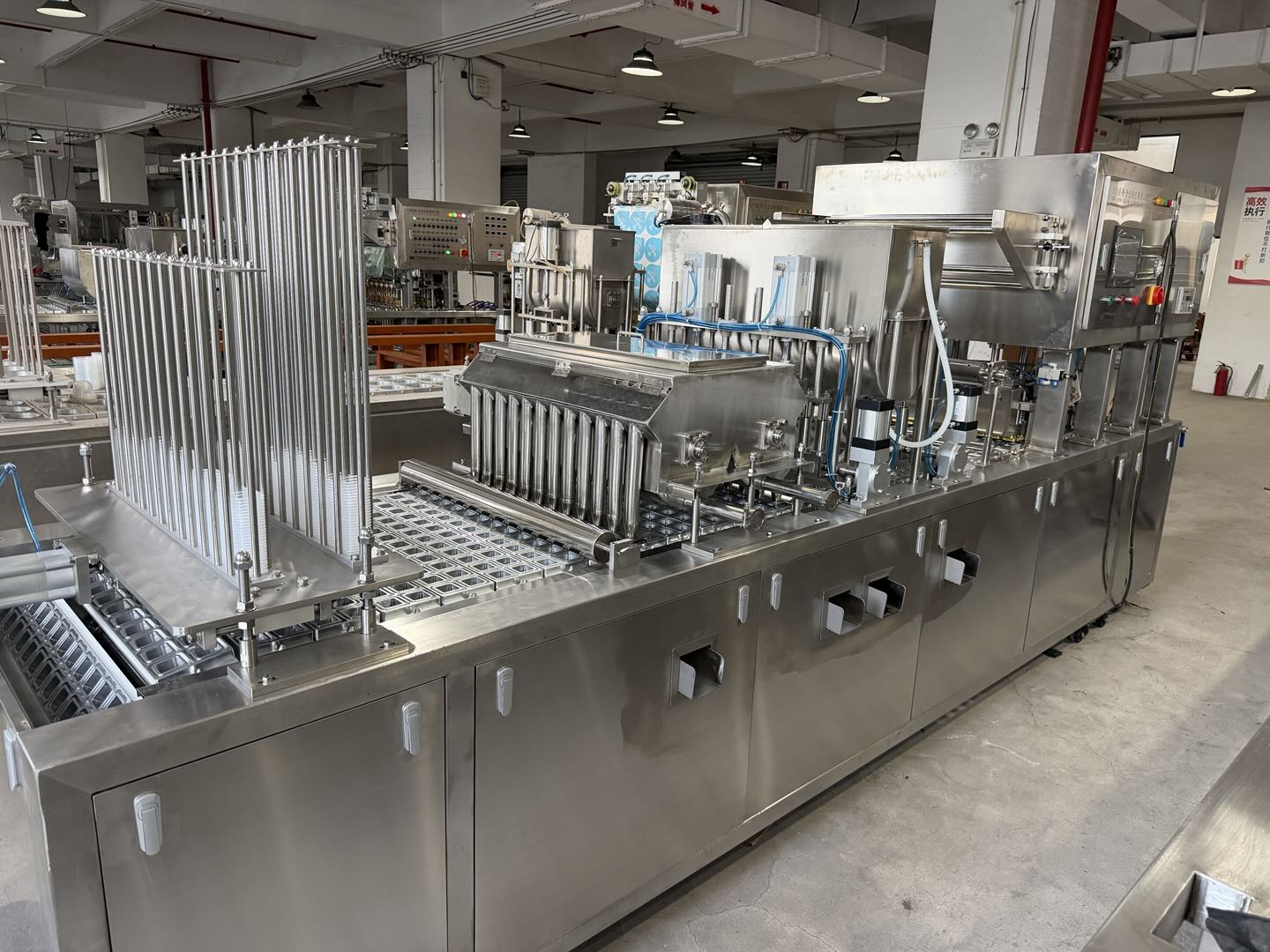
At Guangdong Xinchuang Machinery Industry Co., Ltd., we look at jelly projects from the factory floor. A jelly cup production line is not only one filling machine. It may include cooking or mixing, product holding, transfer pump, cup dropping, filling, heat sealing4, date coding, pasteurizing5 or cooling, conveying, inspection, and carton packing. The same planning logic also applies to yogurt cup filling machines, pudding cup machines, sauce cup machines, spout pouch filling and capping machines, ice pop tube filling and sealing machines, pasteurizers, cooling lines, and complete production line solutions.
Jelly also has a material-selection issue that many startup buyers underestimate. Some jelly formulas are acidic, and acidic products can be more demanding on product-contact parts, tanks, pipelines, filling nozzles, and cleaning areas. For basic technical understanding, buyers can review industry terms such as stainless steel1, 316 stainless steel2, and food contact materials3. These terms do not replace project confirmation, but they help buyers understand why material selection matters in acidic jelly production.
Why should hourly output come before machine price?
When a buyer asks, “How much is one jelly production line?”, the first factory-side question should be: how many cups do you need per hour? Output decides the whole structure of the line. It affects the number of filling lanes, tank size, conveying rhythm, sealing cycle, cooling or pasteurizing length, packing pressure, and labor arrangement.
For jelly cup production, hourly output is the base number behind price, space, and labor. Without a clear output target, the quotation can only be rough because the line may be too small, too large, or not suitable for daily production.
A low-output startup line may only need a compact automatic cup filling and sealing machine with simple conveying. A higher-output factory may need more filling heads, automatic cup feeding, stronger electrical configuration, better product transfer, more stable sealing control, and a layout that supports future expansion. Two lines may look similar in photos but have different internal specifications and different long-term production value.
Buyers who are still comparing general cup equipment can also read our guide on choosing a cup filling and sealing machine without costly mistakes. The same rule applies to jelly: catalog speed is less important than stable output under real product conditions.
How do jelly types and cup sizes change the line design?
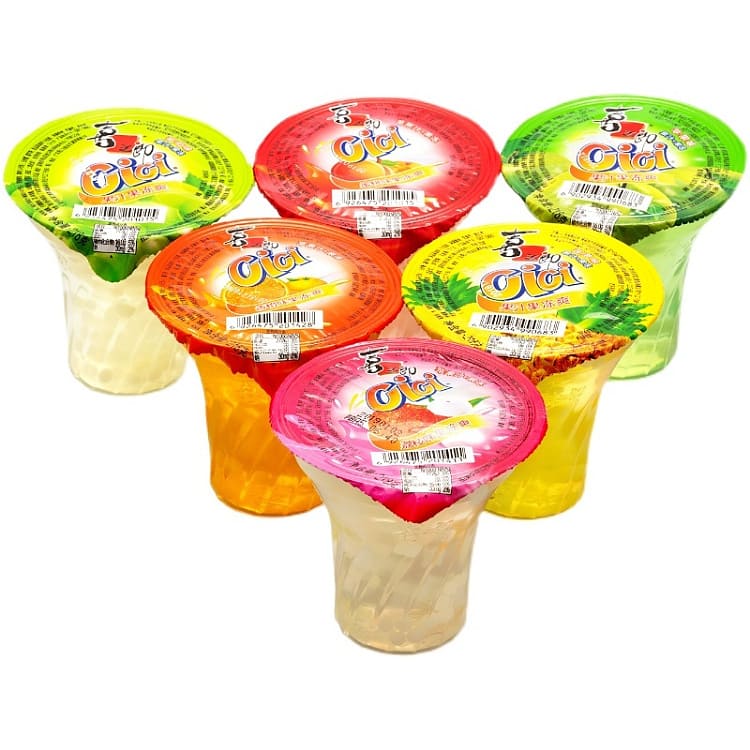
Jelly is not one single product. Some factories produce clear jelly cups. Some produce fruit jelly, pudding-style products, jelly with pieces, layered jelly, or different flavors with different acidity. Some buyers also want one line to handle several cup sizes.
Every additional jelly type or cup size creates design questions. The factory should confirm whether the product flows smoothly, whether it contains fruit pieces, how often flavors change, whether cleaning between colors is difficult, and whether the cup diameter may change later.
Large cup diameter changes are not always simple mold swaps. Cup size may affect the cup dropping structure, filling spacing, sealing positioning, mold plate, discharge rhythm, and output speed. If a buyer wants one line to cover many jelly cups, this must be discussed before production. Flexibility is useful, but it can also increase mold cost, changeover time, operator training, and cleaning workload.
Not suitable when: a buyer wants one low-cost machine to handle many unstable cup sizes, many formulas, frequent flavor changes, and high output at the same time. In that situation, the line may become slow to adjust, difficult to clean, and expensive to modify later.
Jelly production line planning table
| Item to Confirm | Why It Matters | Factory Check |
|---|---|---|
| Target output per hour | Decides machine size, filling lanes, conveyor rhythm, and packing pressure | Confirm cups per hour, daily hours, and shifts |
| Number of jelly types | Affects cleaning, filling system, formula changeover, and material selection | Check flavors, colors, acidity, viscosity, and particles |
| Cup diameter and cup height | Affects cup dropping, mold plate, sealing position, and discharge | Send real cup samples before final design |
| Filling volume | Decides nozzle design, tank planning, headspace, and filling accuracy direction | Confirm grams or ml per cup and product temperature |
| Future expansion | Prevents the line from becoming too small after orders grow | Leave space and define future cup/output plan early |
Why do materials and automation affect the real cost?
Some buyers ask why one jelly machine is more expensive than another when both suppliers show a stainless steel machine photo. The reason is often inside the machine: product-contact material, electrical components, automation level, sealing stability, cleaning access, and machine structure.
Jelly can be acidic, so buyers should not judge the machine only by outside appearance. For acidic jelly products, stronger corrosion-resistant material should be considered for product-contact areas, such as 316 stainless steel depending on formula, process, and production requirements.
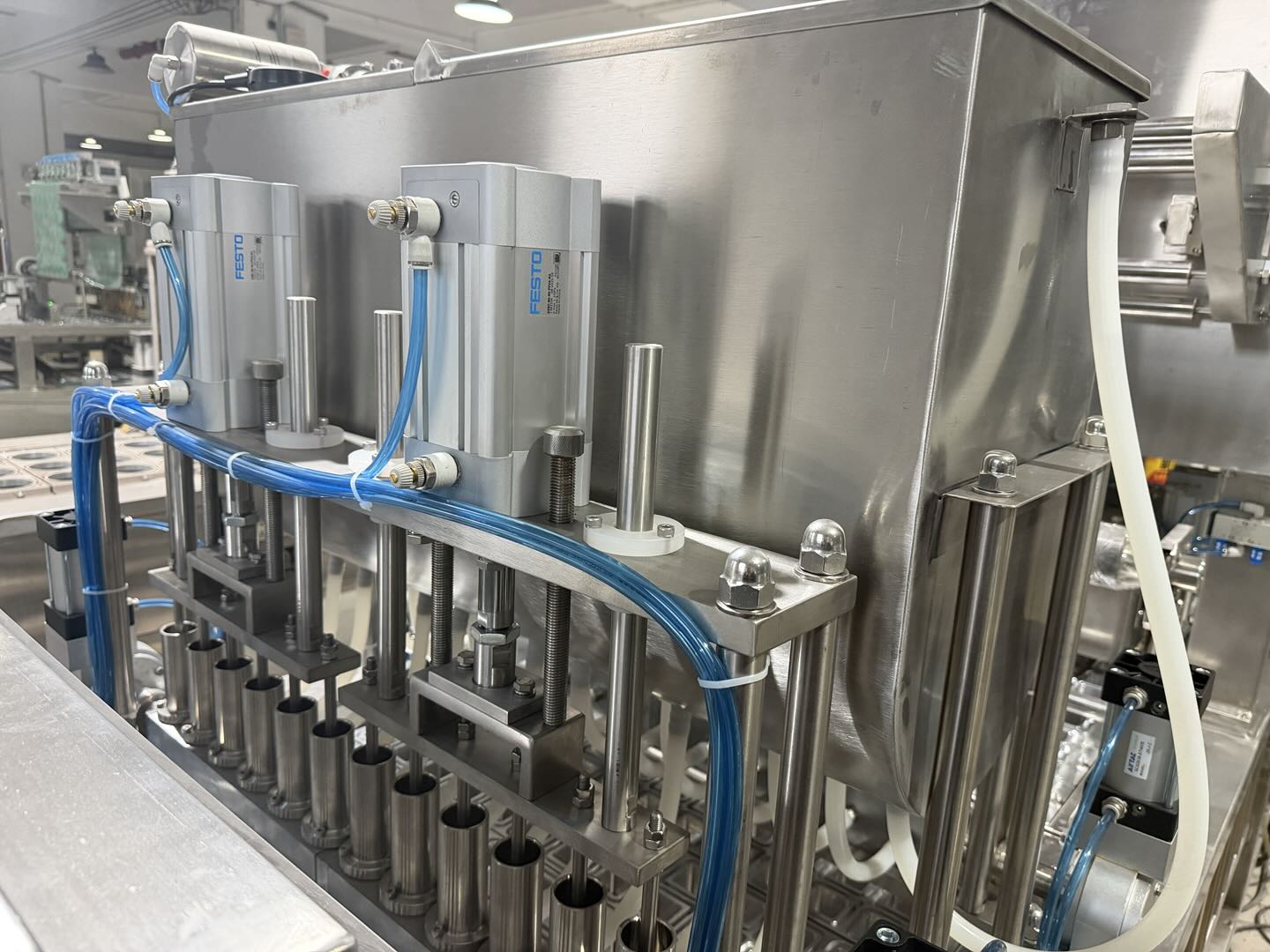
Good electrical configuration and automation also reduce labor pressure. Automation is not only for speed. It helps stabilize production rhythm, reduce manual adjustment, improve sealing consistency, reduce operator error, and make one shift easier to manage. A lower-cost machine may save money at the beginning, but if it needs more people, more manual correction, and more downtime, the long-term cost may be higher.
For export buyers in the Middle East, Africa, South Asia, Southeast Asia, and other emerging markets, machine stability matters because spare parts delivery, technician access, and operator skill levels may vary. A practical configuration can protect the factory from small daily problems becoming large production losses.
How much space and labor does a jelly line need?
Factory space depends on more than the filling and sealing machine footprint. A real jelly line needs room for raw material preparation, cooking or mixing, holding tanks, transfer route, filling and sealing, pasteurizing or cooling, finished product buffering, inspection, carton packing, cleaning, drainage, maintenance access, and operator movement.
The common mistake is measuring only the machine body. Buyers should also reserve space for cup storage, sealing film storage, carton area, compressor position, water and drainage points, electrical cabinet access, and future line extension.
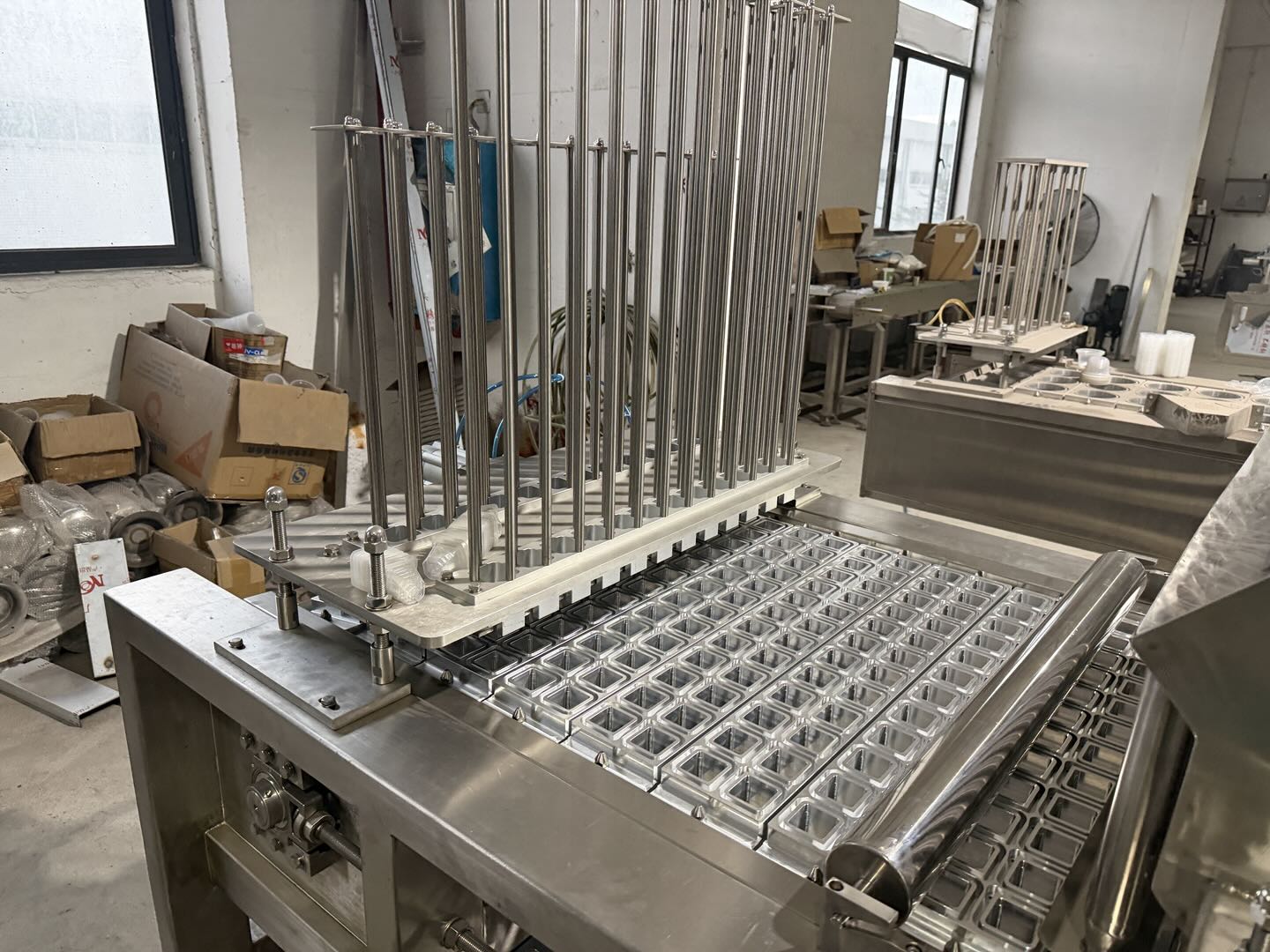
Labor depends on automation level. A simple line may need workers for cup loading, film handling, product feeding, finished cup collection, inspection, packing, and cleaning. A more automated line can reduce repetitive labor, but it still needs trained operators for monitoring, cleaning, quality checks, and changeovers.
The real labor question is not how many people stand beside a machine in a video. The real question is how many people are needed across one shift to keep product preparation, filling, sealing, cooling, packing, and cleaning moving without delay.
Single machine or complete jelly line?
| Project Situation | Better Choice | Buyer Decision Logic |
|---|---|---|
| Startup factory testing one cup product | Compact automatic cup filling and sealing machine | Control investment while confirming market demand |
| Stable orders and higher hourly output | More automated jelly cup production line | Reduce labor and improve production rhythm |
| Many flavors or colors | Line with cleaning and changeover planning | Avoid slow changeovers and product contamination risk |
| Acidic jelly formula | Stronger material specification in product-contact areas | Confirm stainless steel standard by tank, pipes, nozzles, and filling parts |
| Need longer shelf-life process | Discuss pasteurizer and cooling line together | Match thermal process, cooling, layout, utilities, and packing |
Buyer Checklist: What should be prepared before quotation?
Before requesting a final quotation, buyers should prepare cup samples, sealing film sample, filling volume, jelly formula information, acidity direction, viscosity, particle condition if any, target output per hour, daily working hours, factory layout, voltage, compressed air, water supply, drainage, steam or heating source if required, cooling plan, packing method, and future expansion plan.
For a jelly cup line, the quotation becomes more accurate when the buyer provides real production information instead of only asking for “one line price.” The engineering team can then match machine structure, material selection, automation level, utilities, space, and labor arrangement to the actual project.
Internal comparison can also help. For thermal process planning after cup filling, see our article on pasteurizer and cooling line decisions after a cup filling and sealing machine. For yogurt hygiene comparison, review yogurt cup filling and sealing machine selection. For jelly machine and mold-change planning, see jelly cup filling and sealing machine selection for export.
Factory Insight: What do buyers often underestimate?
In real jelly machine discussions, buyers often ask about price, space, and workers first. These are important, but they all depend on the same base information: hourly output and product variety.
Many buyers underestimate material selection. Jelly can be acidic, so the machine should not be judged only by outside appearance. Product-contact materials, sealing stability, electrical configuration, and automation design affect long-term reliability.
Future expansion is another common issue. Some startup factories choose the smallest possible configuration, then add more flavors, more cup sizes, or higher output after the market grows. If expansion was not considered early, the line may need expensive modification or replacement. A practical plan should leave enough space and technical possibility for the next stage.
Conclusion
To plan a jelly cup production line, start with output and product variety before comparing price. Then confirm cup size, filling volume, jelly formula, acidity, particles, sealing material, material contact standard, automation level, utilities, factory space, labor arrangement, cooling or pasteurizing needs, and future expansion. For acidic jelly products, buyers should pay special attention to corrosion-resistant materials such as 316 stainless steel where suitable, along with stable electrical configuration and automation that can reduce labor in daily production.
- Stainless steel is a broad material category often used in food machinery because of corrosion resistance and cleanability; the exact grade should match the product and cleaning method. Return
- 316 stainless steel is commonly discussed for stronger corrosion resistance than standard grades, but whether it is needed depends on jelly formula, acidity, contact time, and budget. Return
- Food contact materials are materials intended to touch food during processing or packaging; in jelly lines this includes tanks, pipes, nozzles, molds, and sealing-related parts. Return
- Heat sealing is the process that bonds sealing film or lids to the cup rim; sealing quality depends on material, temperature, pressure, dwell time, and positioning. Return
- Pasteurization is a heat-treatment concept used in many food processes; actual jelly process design should be confirmed according to formula, package size, and shelf-life target. Return