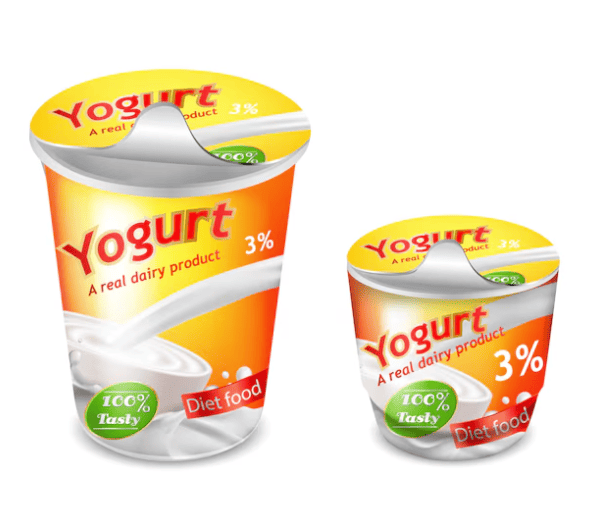
Many buyers ask about a yogurt cup filling and sealing machine by starting with output, cup diameter, and price. Those are useful questions, but they are not the first questions we should solve. Yogurt is a sensitive chilled dairy product. If the machine hygiene design is weak, the product can lose quality, the shelf-life plan can fail, and the brand can face food safety and sales risk. A machine that fills cups quickly is not enough if the filling path, tank, air protection, cup sterilization, and film sterilization are not designed for clean production.
The direct answer is: buyers should choose a yogurt cup filling and sealing machine by hygiene conditions first, then by cup size, filling volume, sealing film, capacity, layout, and full-line planning. For yogurt, we should require 304 stainless steel or higher for the main hygienic structure, a material tank with CIP automatic cleaning, HP Filter protection, and UV sterilization for both cups and sealing film before filling and sealing.
At Guangdong Xinchuang Machinery Industry Co., Ltd., we look at yogurt projects from the factory floor. A yogurt cup line is not only a filling station and a sealing station. It may include cup dropping, cup sterilization, product holding, filling, film sterilization, heat sealing, date coding, discharge, cooling or chilled handling, and carton packing. The same machine-product matching logic also applies to jelly cup filling and sealing machines, tofu cup filling machines, spout pouch filling and capping machines, ice lolly tube filling and sealing machines, pasteurizers, cooling lines, and full line solutions.
Several technical topics matter here. Food equipment should be cleanable and corrosion-resistant where it contacts food, as described in 21 CFR 117.401. Sanitary operation also depends on cleaning and sanitizing in a way that protects food, food-contact surfaces, and packaging materials, as described in 21 CFR 117.352. For systems that use automatic cleaning, CIP hygienic design3 should be discussed early.
Why should hygiene come before machine speed?
Yogurt buyers often compare filling speeds first because production planning feels urgent. But for chilled dairy products, hygiene is the foundation. If the cup is not handled cleanly, if the sealing film is exposed without sterilization, if the tank has dead corners, if the filling nozzle is hard to clean, or if the machine frame rusts in wet conditions, production risk rises even when the nominal speed looks attractive.
For yogurt, the first buying logic should be hygiene conditions: cleanable food-contact surfaces, stainless steel construction, controlled air or HP Filter protection, cup UV sterilization, sealing film UV sterilization, and a filling system that can be cleaned before and after production.
Yogurt quality is affected by product handling, filling temperature, microbial control, cup cleanliness, film cleanliness, and sealing quality. A poor hygiene design can affect taste, texture, shelf-life direction, customer complaints, and food safety confidence. This is why we do not treat the yogurt machine as a simple liquid filler. We treat it as a hygienic packaging system.
Not suitable when: a buyer wants to package chilled yogurt on a low-hygiene machine built for simple water-like products, with no cup sterilization, no film sterilization, no CIP cleaning plan, and no cleanable product path. That type of setup may look cheaper at the quotation stage, but it creates risk in real dairy production.
What stainless steel standard should buyers require?
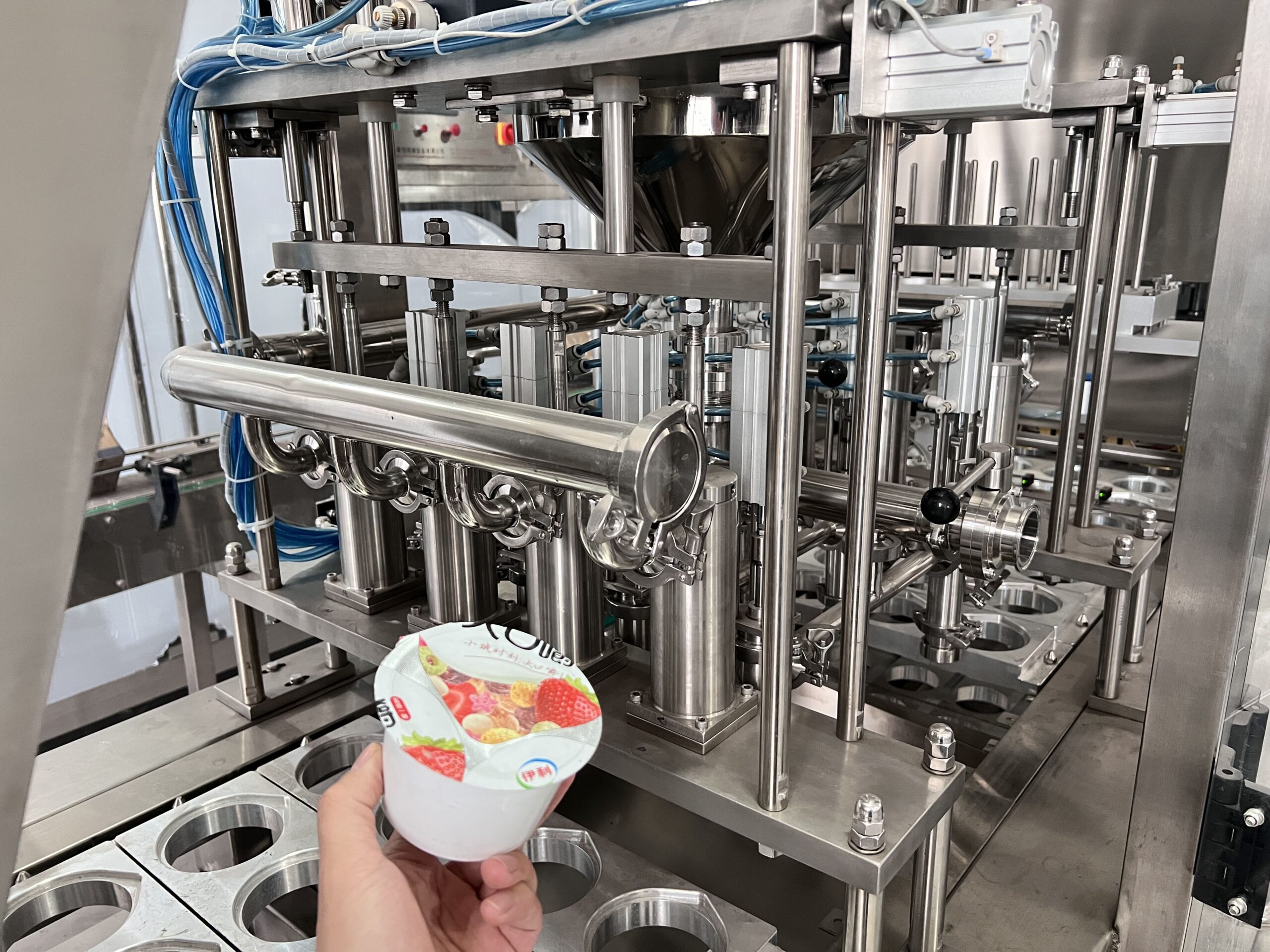
For yogurt projects, buyers should require a hygienic stainless steel structure. In practical machine selection, we usually discuss 304 stainless steel or higher for the main frame, product contact path, tank, filling parts, and areas exposed to cleaning. The exact material scope should be written clearly in the quotation because some suppliers may use stainless steel only on visible covers while hidden parts or lower structures are different.
For a yogurt cup filling and sealing machine, buyers should confirm that the machine is full 304 stainless steel or higher where hygiene, wet cleaning, and product contact matter. The material standard should be checked by part: frame, tank, pipelines, valves, filling nozzle, cup mold plate, guards, and splash areas.
Stainless steel alone is not the whole answer. Welds, corners, drainability, surface finish, fastener positions, and cleaning access also matter. A polished surface with poor drainage can still hold water. A strong frame with hidden product residue can still create sanitation problems. We prefer to review drawings, photos, and cleaning access before final confirmation.
If the buyer plans fruit yogurt, stirred yogurt, drinkable yogurt, or yogurt with particles, product contact parts must also match viscosity and cleaning difficulty. A smooth product path helps reduce residue. Easy disassembly can help when the product has fruit pieces or higher viscosity. CIP helps the tank and product path, but some parts may still need inspection and manual cleaning depending on the final design.
Why does the material tank need CIP automatic cleaning?
The material tank is one of the most important hygiene points in a yogurt filling machine. Yogurt can leave residue on tank walls, agitators, pipelines, valves, and nozzles. If the tank is hard to clean, the buyer may depend on manual washing, which is slower and less repeatable. For chilled dairy production, repeatable cleaning is a buying feature, not an optional decoration.
The yogurt material tank should include CIP automatic cleaning so the buyer can clean the tank and connected product path with a controlled cleaning cycle before and after production. This supports more consistent hygiene and reduces manual cleaning blind spots.
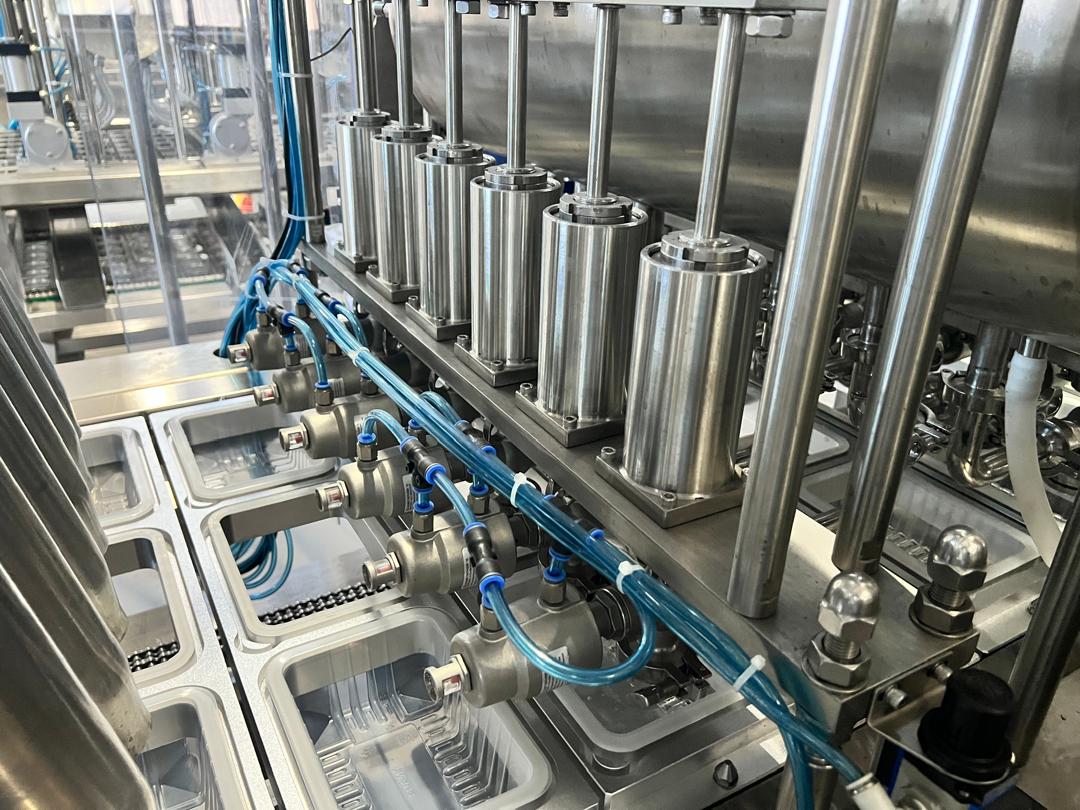
When discussing CIP, buyers should ask what parts are included in the automatic cleaning loop. Does the CIP wash only the tank, or does it also cover pipelines, valves, and nozzles? Is the tank drainable? Are there spray balls or cleaning ports? Can operators inspect the tank after cleaning? Are the seals and hoses suitable for the cleaning method? These details decide whether CIP is practical or only a word on the machine list.
We also ask whether the factory already has a central CIP system or needs a local cleaning arrangement. A full line solution may include product preparation, holding, filling, sealing, cooling, and cleaning planning together. A single yogurt filling and sealing machine can be suitable when the factory already has upstream preparation and hygiene management, but the connection points should still be checked.
What is the role of HP Filter protection?
Yogurt cups and sealing film are exposed for a short but important period before sealing. During that period, dust, droplets, or air movement can affect the clean area. HP Filter protection helps buyers create a cleaner air environment around sensitive stations, especially cup dropping, filling, and film handling. Buyers should confirm what the supplier means by HP Filter, where it is installed, and how it is maintained.
HP Filter protection should be treated as part of the hygiene design around exposed cups, filling nozzles, and sealing film. Buyers should confirm the filter location, airflow direction, replacement method, and service access before finalizing the machine.
We avoid promising that one filter can solve every hygiene issue. Air filtration works together with cup sterilization, film sterilization, stainless steel construction, cleaning routines, operator discipline, and factory environment. If the workshop itself is dusty, crowded, or poorly controlled, the machine filter helps but does not replace good production management.
Why should cups and sealing film use UV sterilization?
For yogurt packaging, the empty cup and sealing film are both direct risk points. The cup touches the finished product. The sealing film closes the product after filling. If either surface is poorly controlled, the line may fill a good product into a weak package environment. This is why buyers often request ultraviolet sterilization for cups and sealing film before filling and sealing.
A yogurt cup filling and sealing machine should include UV sterilization for empty cups and UV sterilization for sealing film when the buyer needs stronger hygiene control for chilled dairy products. Cup sterilization and film sterilization should be checked together, not treated as separate minor accessories.
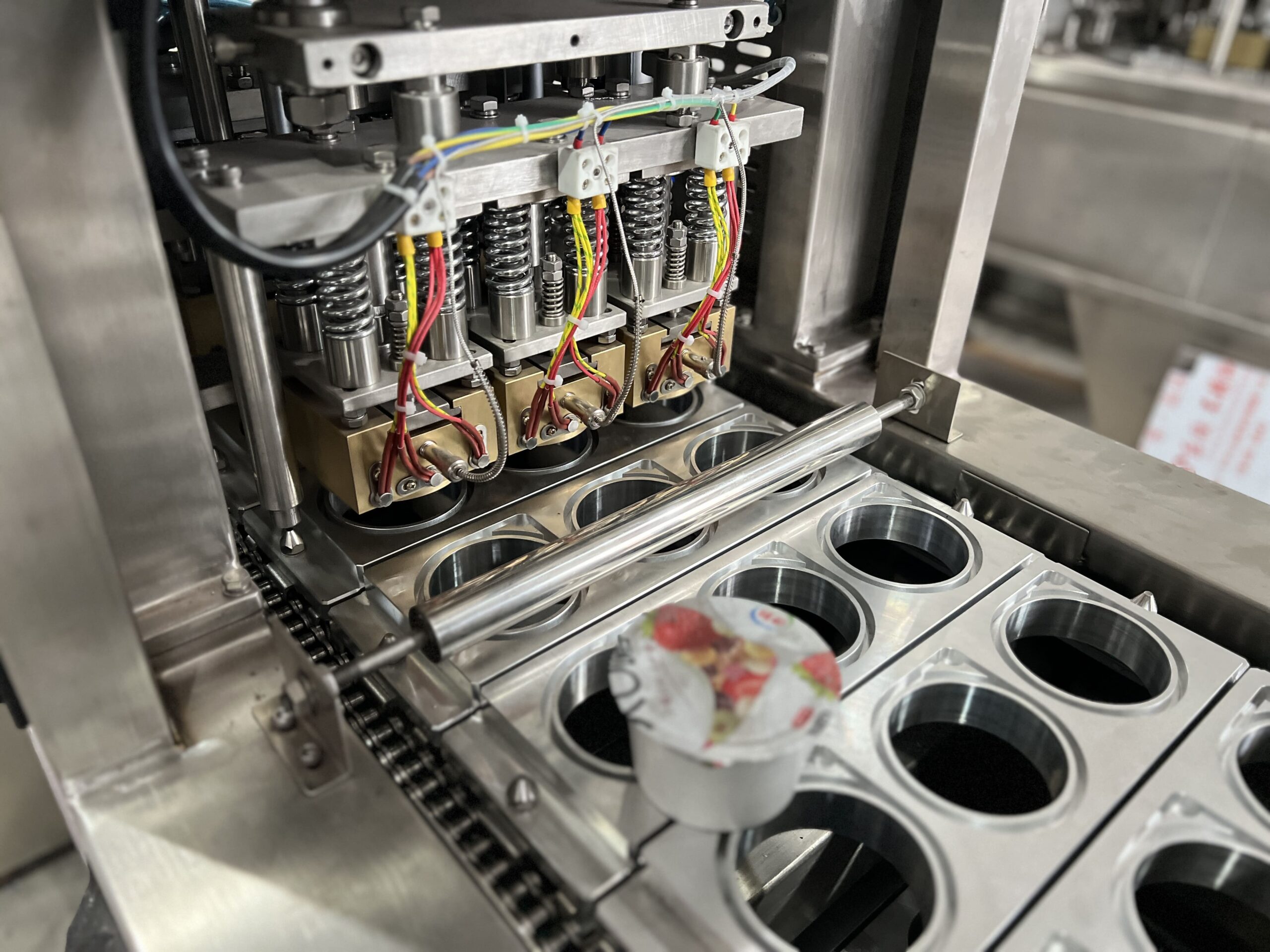
Buyers should ask where the UV lamps are placed, whether the cup mouth and film surface receive proper exposure, how operators check lamp condition, and how the system prevents contamination after sterilization. UV is most useful when the package path is short and controlled after exposure. If the sterilized cup travels through an open dirty area before filling, the benefit is weakened.
We also review sealing material together with UV and heat sealing. The sealing film must match the cup rim, product temperature, sealing temperature, pressure, dwell time, and peel requirement. A hygienic line can still fail if the seal wrinkles, leaks, or peels poorly. For yogurt, buyers should test real cups and film, not only drawings.
Yogurt machine hygiene checklist
| Item to Confirm | Why It Matters | Factory Check |
|---|---|---|
| 304 stainless steel or higher | Supports corrosion resistance, wet cleaning, and hygiene | Confirm material by frame, tank, pipes, nozzles, and splash areas |
| CIP automatic cleaning for material tank | Reduces manual cleaning blind spots and improves repeatability | Check whether tank, pipes, valves, and nozzles are included |
| HP Filter protection | Protects exposed cups, filling area, and film path | Check filter location, airflow, replacement, and access |
| UV cup sterilization | Improves control before product filling | Check cup path after UV exposure |
| UV sealing film sterilization | Improves control before sealing | Check lamp condition monitoring and film exposure path |
How do cup size, filling volume, and yogurt viscosity affect the machine?
After hygiene design, we still need to confirm product-machine matching. Yogurt can be drinkable, stirred, set-style, thick, or mixed with fruit. The filling system should match real viscosity, filling volume, and whether the product contains pieces. A water test is not enough. Buyers should provide product samples or a close substitute before final design.
Buyers should confirm cup diameter, cup height, rim shape, cup material, filling volume, yogurt viscosity, fruit piece condition, sealing film, target capacity, and factory layout before finalizing the yogurt cup filling and sealing machine.
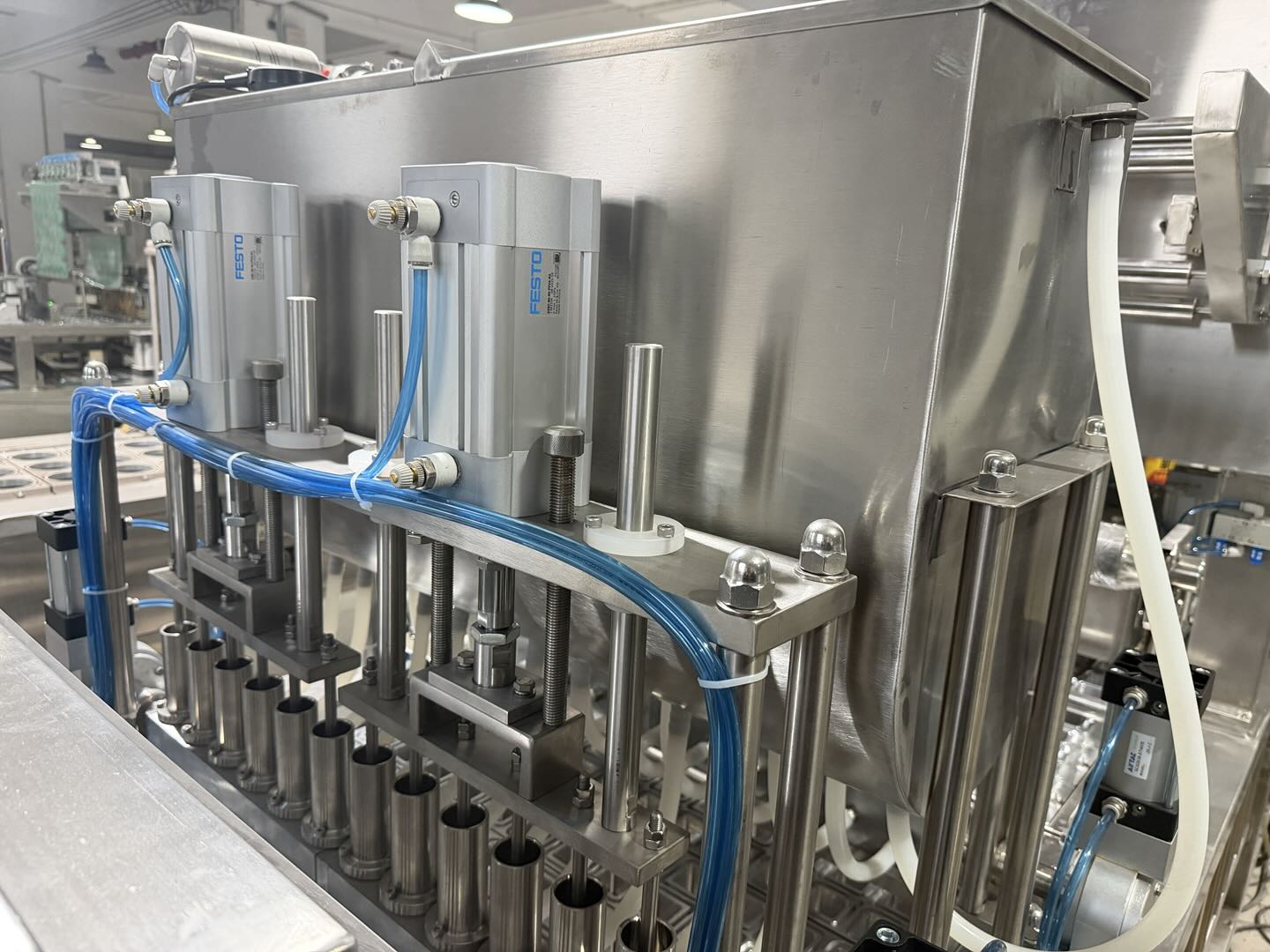
Cup sample checking is important. Some cups are too soft for automatic dropping. Some cup rims are not flat enough for stable sealing. Some cups deform under pressure or heat. The filling volume must leave enough headspace for sealing and handling. If product touches the rim, sealing quality and hygiene risk both suffer.
Capacity planning should be realistic. The real output depends on cup dropping, UV sterilization, filling stability, film sterilization, sealing quality, discharge, coding, packing, and operator rhythm. If the factory also needs pasteurization, cooling, or chilled storage, those steps must be included in the full line plan. A single machine is suitable when the buyer already has stable preparation and chilled handling. A full line solution is better when preparation, filling, sealing, cooling, layout, utilities, packing, future expansion, and after-sales support must be designed together.
| Project Situation | Better Choice | Buyer Decision Logic |
|---|---|---|
| Existing dairy factory with clean preparation | Single yogurt cup filling and sealing machine | Connect hygienic filling and sealing to existing process |
| New yogurt project | Full line solution | Plan preparation, CIP, filling, sealing, cooling, and layout together |
| Thick yogurt or fruit pieces | Sample-based filling design | Check viscosity, particles, nozzle size, and cleaning |
| Strict hygiene target | 304+ stainless steel, CIP, HP Filter, UV cup and film sterilization | Hygiene features must be built into the machine scope |
| Future cup sizes planned | Format planning before order | Mold plates and change parts should be defined early |
What should buyers prepare before requesting a quotation?
Before requesting a final quotation, buyers should prepare yogurt sample, cup samples, sealing film sample, filling volume, viscosity information, fruit piece details if any, target capacity, chilled storage plan, cleaning expectation, voltage, air supply, water supply, drainage, workshop layout, packing method, and future product plan. For hygiene, buyers should specifically request full 304 stainless steel or higher, CIP automatic cleaning for the material tank, HP Filter protection, UV cup sterilization, and UV sealing film sterilization.
Internal comparison can also help buyers. For cup thermal process planning, see our article on pasteurizer and cooling line decisions after a cup filling and sealing machine. For mold and cup-size planning, review jelly cup filling and sealing machine selection. For powder cup or capsule logic, compare coffee capsule filling and sealing machine selection.
Conclusion
To choose a yogurt cup filling and sealing machine for chilled dairy products, start with hygiene. The machine should use 304 stainless steel or higher where hygiene matters, the material tank should support CIP automatic cleaning, HP Filter protection should be planned around exposed cups and filling areas, and both cups and sealing film should have UV sterilization when stronger hygiene control is required. After that, buyers should confirm cup size, filling volume, yogurt viscosity, sealing film, capacity, layout, single machine versus full line scope, future expansion, and after-sales support.
- 21 CFR 117.40 requires food manufacturing equipment to be adequately cleanable and food-contact surfaces to be corrosion-resistant when in contact with food; this supports the stainless steel and cleanability logic in yogurt machine selection. Return
- 21 CFR 117.35 covers sanitary operations and cleaning/sanitizing in a way that protects food, food-contact surfaces, and food-packaging materials from contamination. Return
- CIP means clean-in-place; hygienic CIP design should define what objects are cleaned, how the cycle reaches them, and how cleaning effectiveness is managed. Return