Many buyers ask whether one cup filling and sealing machine can handle different cups. The simple answer is sometimes yes, but not without engineering confirmation. Cup size is not only a container choice. It affects cup dropping, mold plates, filling spacing, sealing position, film alignment, output rhythm, and changeover cost.
The direct answer is: cup mouth diameter is one of the decisive factors when customizing a cup filling and sealing machine. The machine template, cup dropping structure, sealing tooling, and cutting system must be designed according to the real cup size. Small-mouth cups often allow higher output, while large-mouth cups usually reduce output because of station spacing, machine width, and export transportation limits.
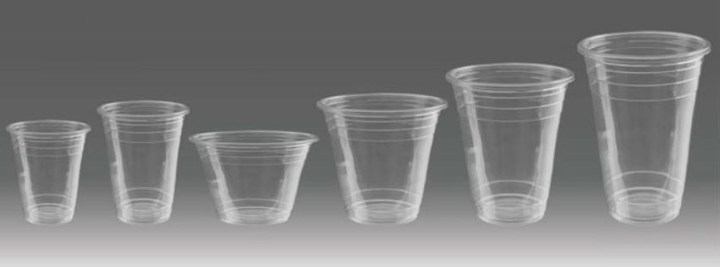
At Guangdong Xinchuang Machinery Industry Co., Ltd., we often explain this point before quotation. A buyer may say, “I want to use 75 mm cups today and maybe 95 mm cups later.” That future plan is important. If it is discussed early, the machine can sometimes be planned with more flexible mold and station design. If it is discussed after the machine is already built, the change may become expensive or technically limited.
From the factory side, we do not look at cup diameter as a small accessory detail. We use the cup mouth size to decide the template, the cup holders, the cup dropping method, the sealing position, and the film cutting logic. For export projects, we also need to consider the physical machine width. A machine cannot be designed without considering normal container loading width, so very large cup diameters can limit how many cups can be arranged per row and how much output the machine can reach.
Some technical terms are useful here. Polypropylene1 is commonly used for food cups. Thermoforming2 explains how many plastic cups are shaped. Heat sealing3 affects the cup rim and film match. Viscosity4 affects filling behavior. Production line5 balance affects real factory output.
Quick Answer: Can one machine use many cup sizes?
One machine can sometimes use more than one cup size, but only when the sizes are planned before machine design. Buyers should not assume that every cup can run on the same machine by changing only one mold. The supplier must check the cup diameter, cup height, rim shape, stack condition, filling volume, sealing film, and required output.
If the cup diameter difference is small and the machine structure has been planned for changeover, the buyer may use change parts. If the cup mouth diameter difference is large, the machine may need a different template, special cup dropping structure, different sealing tooling, different cutting tooling, and sometimes a different machine layout.
This is why sample checking is more reliable than verbal confirmation. A cup that looks normal in a photo may be too soft for automatic dropping. A rim that looks flat may still seal poorly. A cup stack may lean, stick together, or deform under pressure. These details affect machine stability in daily production.
Why does cup diameter change the machine structure?
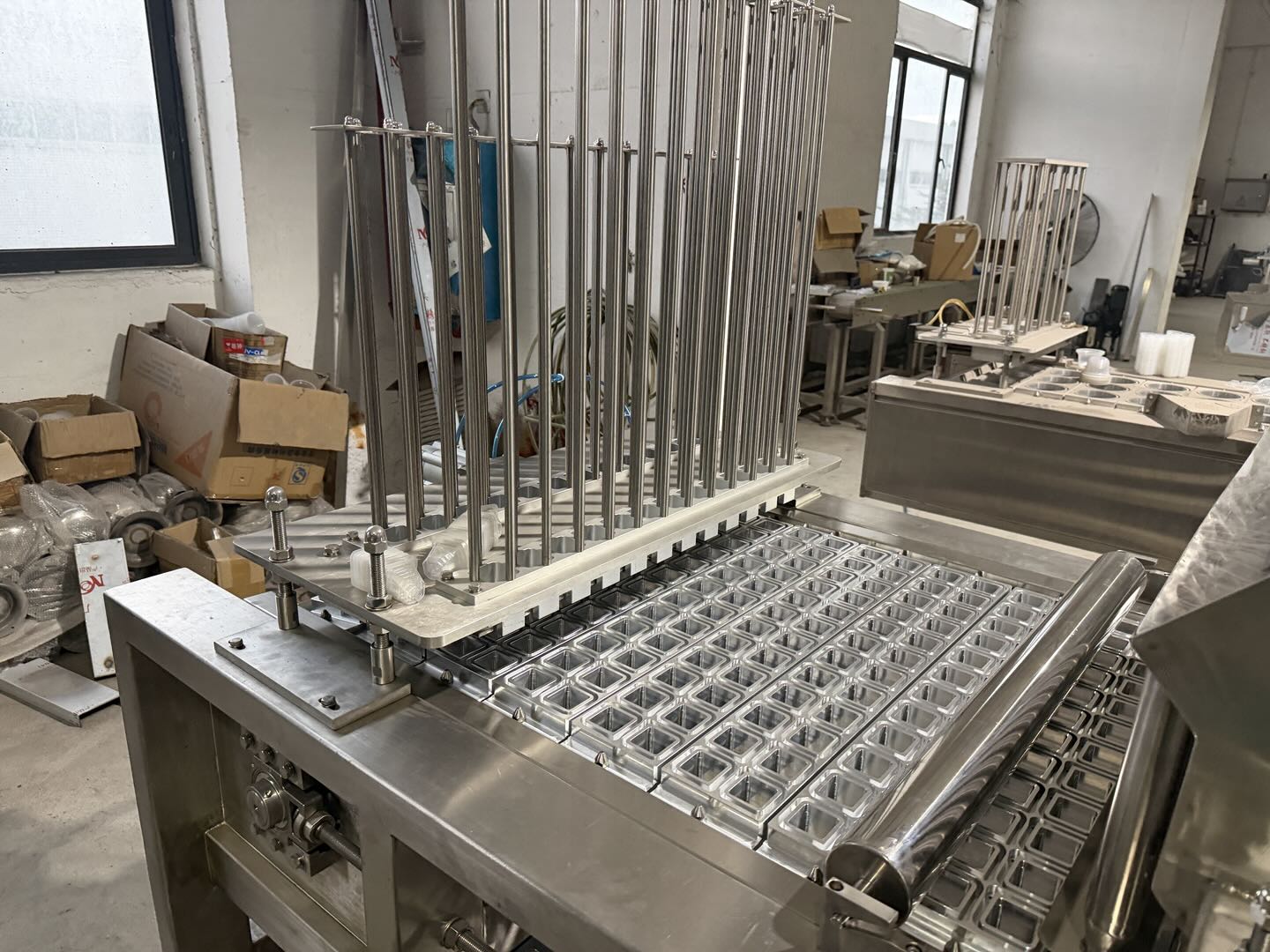
Cup diameter decides how cups sit in the mold plate and how much space each station needs. On a cup filling and sealing machine, cups usually move through cup dropping, filling, film placing or film feeding, sealing, cutting, coding, and discharge. Every station must line up with the cup center.
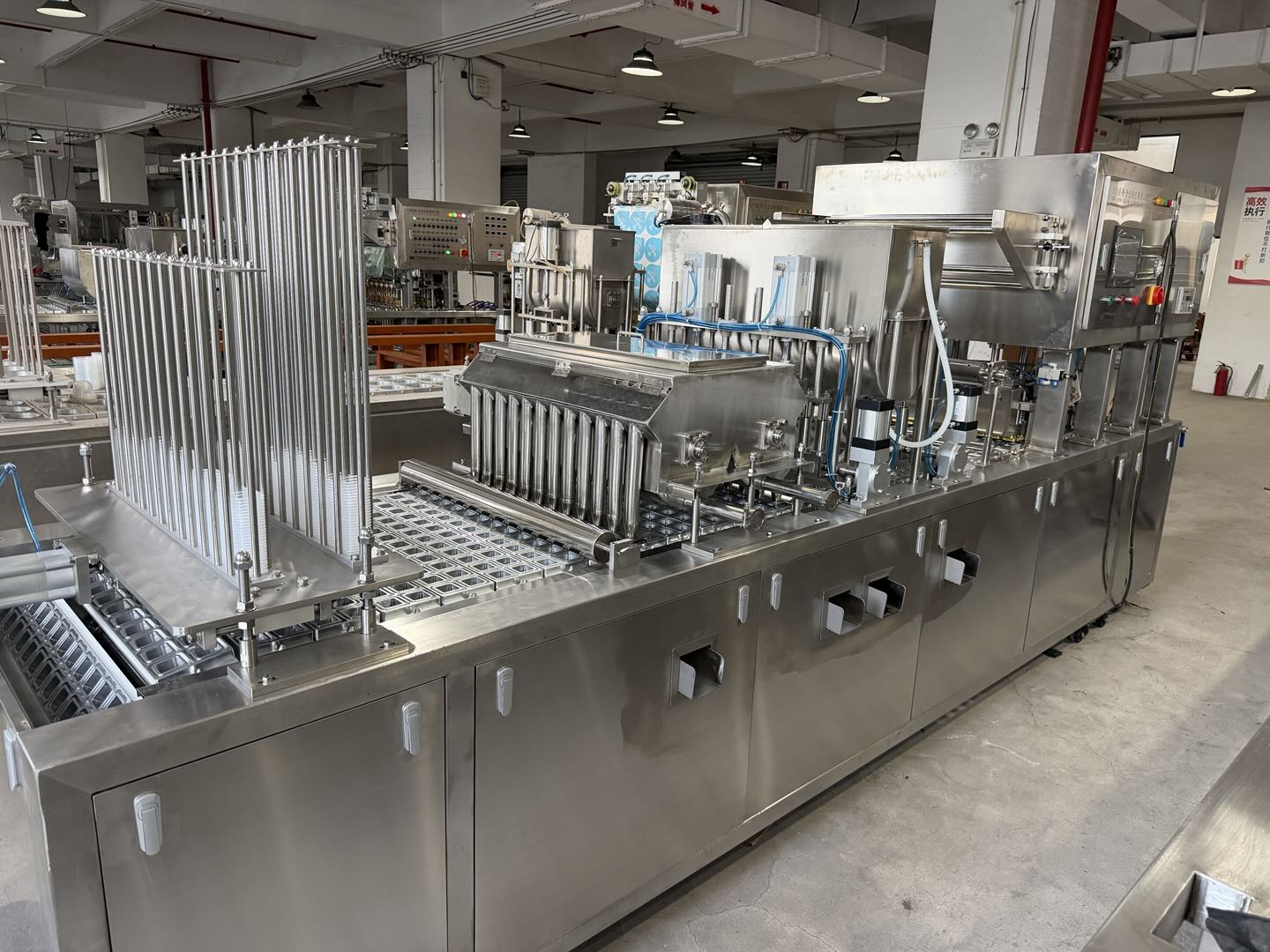
When the cup mouth diameter changes, the machine may need more than a simple mold swap. The change can affect the template, cup dropping position, filling nozzle spacing, sealing head size, film cutting position, discharge path, and available working space between stations.
For example, a smaller-mouth cup may allow more cavities per cycle. A larger-mouth cup may reduce the number of cups per cycle because each cup needs more space. This directly affects real output. A buyer who only compares machine price may miss this point. The machine designed for many small cups per cycle may not reach the same output when changed to a larger cup.
There is also an export limitation that buyers often do not see at the beginning. A machine can become too wide if too many large cups are arranged across the machine. For export machines, we must consider normal container loading width and transportation practicality. This is one reason why large-diameter cup machines often have lower output or need a different layout.
Not suitable when: a buyer expects one low-cost standard machine to handle many unrelated cup diameters, cup heights, and packaging styles with frequent changeovers. In that situation, changeover time, tooling cost, and output loss may become higher than expected.
What changes when cup size changes?
| Machine Area | What Cup Size Affects | Factory-Side Risk |
|---|---|---|
| Cup dropping | Cup diameter, stack height, cup stiffness | Cups may double-drop, jam, or fail to separate |
| Mold plate | Cup diameter, bottom shape, cup height support | Unstable holding can affect filling and sealing |
| Machine width | Cup mouth diameter and number of lanes | Large cups may reduce lanes because export machines must consider container loading width |
| Filling station | Filling volume, center position, nozzle spacing | Splashing, rim contamination, or slower output |
| Sealing station | Rim width, film size, sealing pressure | Wrinkles, leakage, weak peel, or poor appearance |
| Cutting station | Film cutting size and cup pitch | Wrong cutting design can affect appearance and film waste |
| Discharge | Cup height, cup weight, lid shape | Finished cups may tilt, jam, or require manual handling |
How do cup height and filling volume affect the machine?
Cup height affects the mold depth, cup support, filling nozzle movement, and discharge. A tall cup may need deeper holding and more stable transfer. A shallow cup may be easier to hold but more sensitive to splashing if the filling nozzle is not matched to the product.
Filling volume should be confirmed together with cup height and product viscosity. The machine should leave enough headspace for sealing and handling. If product touches the rim before sealing, leakage and seal failure become more likely.
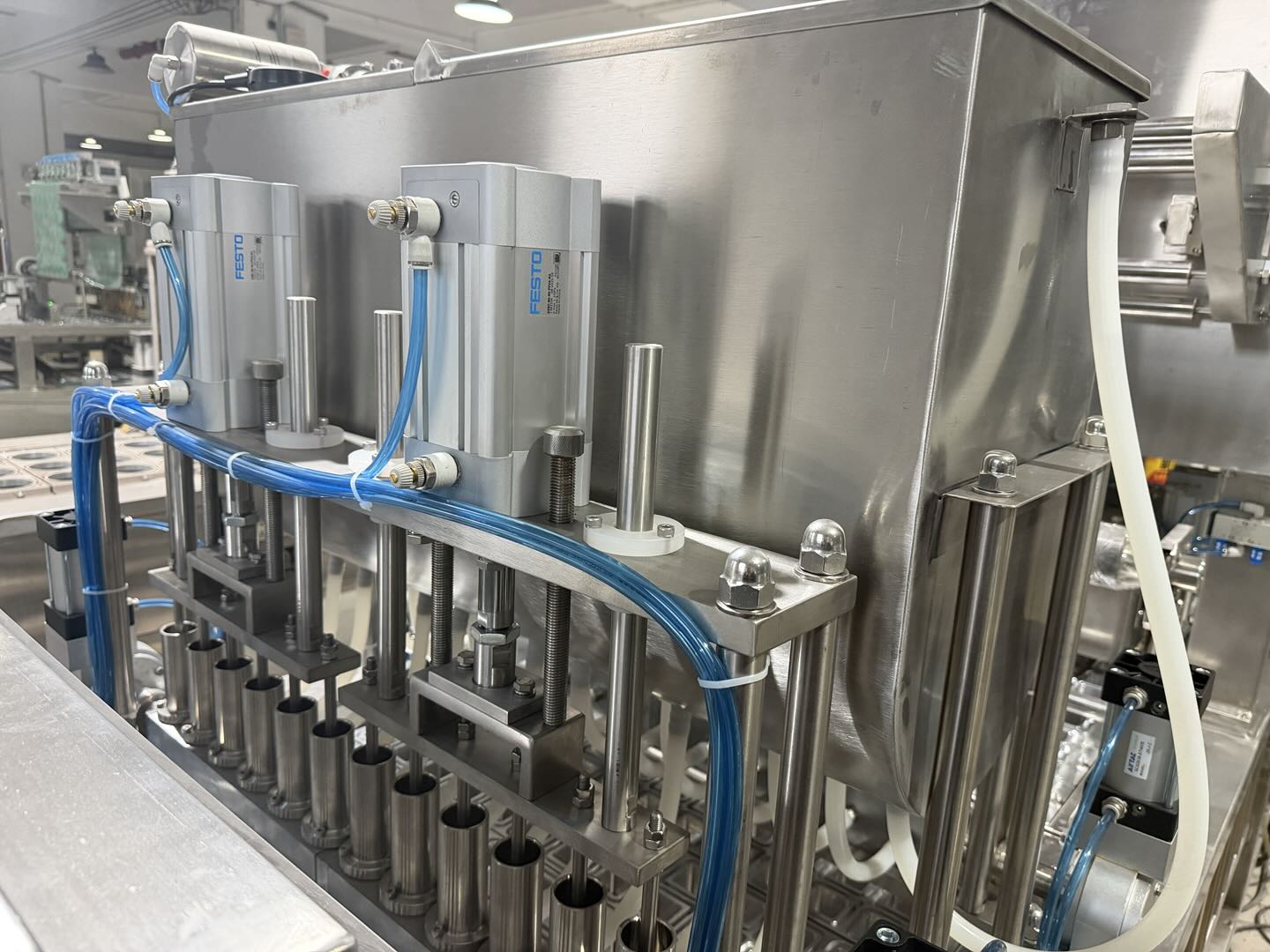
Product characteristics also matter. Yogurt, jelly, sauce, jam, milk tea, pudding, fruit salad, and prepared food cups do not behave the same way during filling. A water-like product can flow quickly. A viscous product may need a different pump, nozzle, or anti-drip design. A product with particles needs more careful sample testing.
The buyer should provide the real cup and product sample when possible. If the product is still under development, the buyer should at least provide target viscosity, filling temperature, whether particles are included, and the expected filling volume. Final design should be confirmed after sample checking.
Why does sealing film need to match the cup rim?
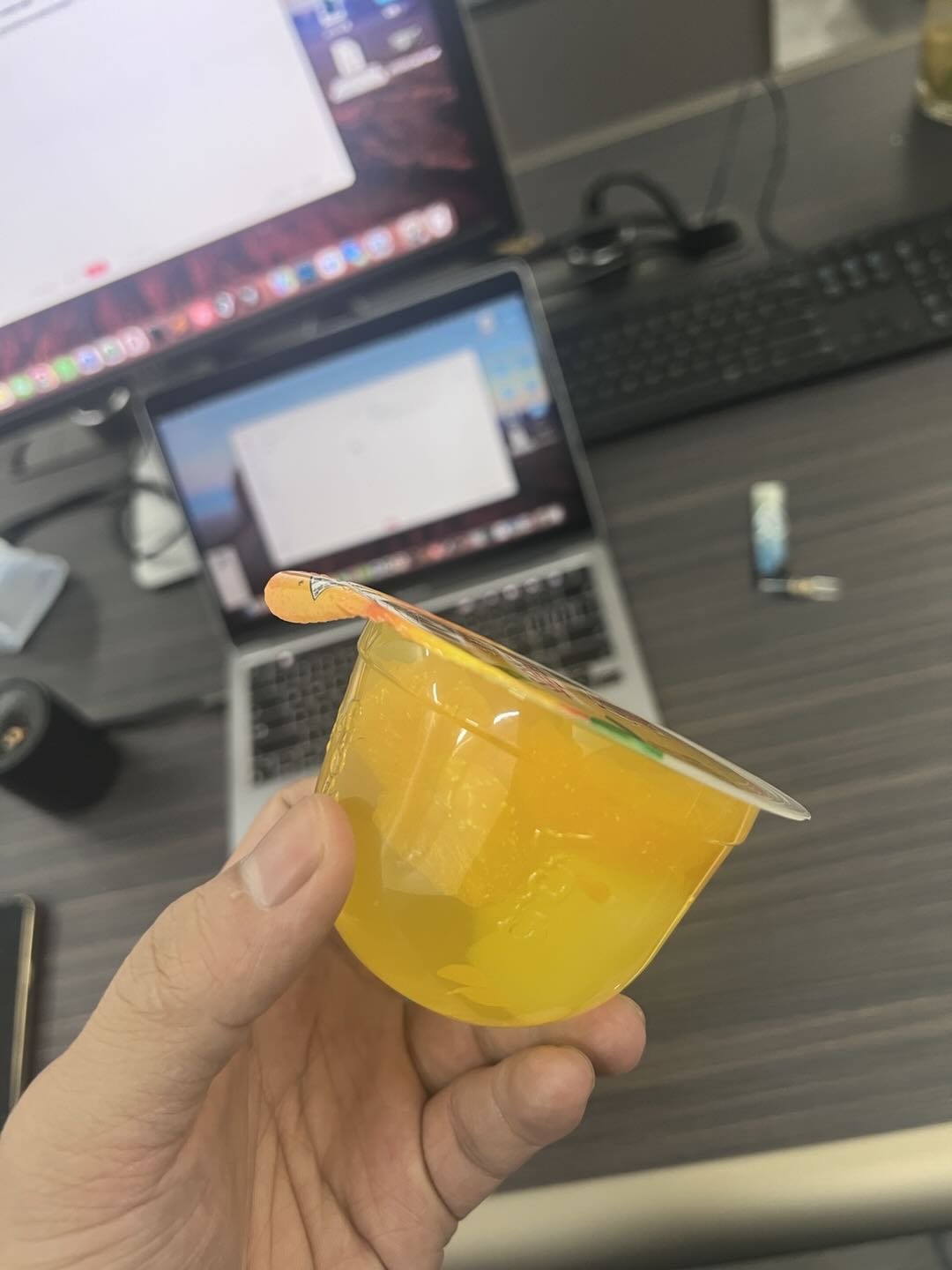
Sealing quality depends on the cup rim, sealing film, temperature, pressure, dwell time, and sealing head design. A cup with a narrow rim gives less sealing area. A cup with an uneven rim can create leakage. A cup material that does not match the film layer may not seal reliably even when the machine is stable.
Buyers should test the real cup and real sealing film before final machine confirmation. The seal must be strong enough for transport and storage, but it may also need the right peel feeling for consumers.
Different products also create different sealing risks. Sauce, jelly, yogurt, and milk tea can contaminate the rim if the filling control is weak. Powder products may leave dust on the rim. Prepared food cups may need stronger sealing pressure and better tray support. This is why cup sealing should be checked as part of the complete filling system, not only as a heating plate.
Buyer Checklist: What should be confirmed before ordering?
Before ordering a cup filling and sealing machine, buyers should prepare real cup samples, sealing film samples, filling volume, product sample, target output, expected changeover plan, workshop layout, and future expansion plan. This reduces quotation mistakes and helps the manufacturer design the machine correctly.
The most important planning question is not only “what is the price?” It is “what cups and products must this machine run now, and what cups may it need to run later?”
| Buyer Information | Why It Matters | Best Preparation |
|---|---|---|
| Cup diameter and height | Decides mold plate and station spacing | Send real cup samples or accurate drawings |
| Cup rim shape | Controls sealing stability | Send cups from the actual supplier |
| Filling volume | Affects filling time, headspace, and speed | Confirm ml or gram target for each SKU |
| Product viscosity | Decides filling method and nozzle design | Send sample or describe flow behavior |
| Future cup sizes | Affects machine flexibility and tooling plan | Discuss before order, not after installation |
| Target output | Decides machine model and cavities per cycle | Confirm cups per hour and shifts per day |
Factory Insight: Why should future cup sizes be discussed early?
In real factory projects, many buyers start with one cup size and later want to add another product. This is normal. The problem is that future cup sizes are often not mentioned during the first machine design. When the buyer asks for another cup later, the supplier may find that the machine pitch, cup dropping area, sealing head space, or discharge path is not suitable.
Future expansion should be discussed early because machine flexibility is easier to plan before manufacturing. After the machine is built, large cup changes may require new molds, new change parts, station adjustment, speed reduction, or a separate machine.
Our factory-side experience is that cup mouth diameter is the first key point for output planning. Small-mouth cups can often be arranged with more lanes or more cavities, so the output can be higher. Large-mouth cups occupy more machine width, so the output is usually lower. For export machines, we also need to keep the machine practical for container transportation. This is why some high-output requests cannot be confirmed only by saying the filling volume; we must check the real cup size first.
For related planning logic, buyers can read our article on jelly cup production line planning, compare hygiene needs in yogurt cup filling and sealing machine selection, and review why buyers should send samples before choosing a filling machine. These articles follow the same factory-side logic: sample first, machine matching second, capacity and expansion planning third.
Conclusion
Cup size affects a cup filling and sealing machine because the machine is built around the real package. Cup mouth diameter decides the template, cup dropping structure, station spacing, sealing tooling, cutting tooling, and output possibility. Cup height affects holding and discharge. Filling volume affects nozzle design and output rhythm. Rim shape and sealing film affect leakage risk and finished product appearance.
Buyers should not treat cup size as a small detail. Small-mouth cups often support higher output, while large-mouth cups usually reduce output because of machine width and station spacing. For export machines, container loading width is also a real design limitation. Before ordering, confirm the current cup, future cup plan, product viscosity, filling volume, sealing film, output target, and changeover expectation. A well-planned machine may cost more at the beginning, but it can reduce changeover trouble, production interruption, and expensive redesign later.
- Polypropylene is widely used in food packaging cups because it can be formed into lightweight containers; actual cup suitability still depends on supplier quality and sealing layer. Return
- Thermoforming is a common plastic forming method for cups and trays; forming quality affects cup rim flatness and automatic dropping stability. Return
- Heat sealing joins cup rim and sealing film through heat, pressure, and dwell time; material matching is essential. Return
- Viscosity describes flow resistance; it affects filling speed, nozzle choice, dripping, and rim cleanliness. Return
- A production line must balance cup supply, filling, sealing, discharge, packing, and labor, not only the nominal speed of one station. Return