Many buyers ask for a cup filling and sealing machine by starting with price and output. Those are important, but they are not enough for a correct machine decision. For cup products, the machine should be chosen according to cup diameter, cup height, filling volume, sealing material, target output, changeover plan, factory layout, and export transportation limits.
The direct answer is: buyers should choose a linear cup filling and sealing machine when they need high output, more working space for operation and maintenance, flexible customization according to cup diameter, and a machine layout that is easier to export by container. A linear machine is usually longer, but its width can be kept narrower, which is important for export projects where container loading width is limited.
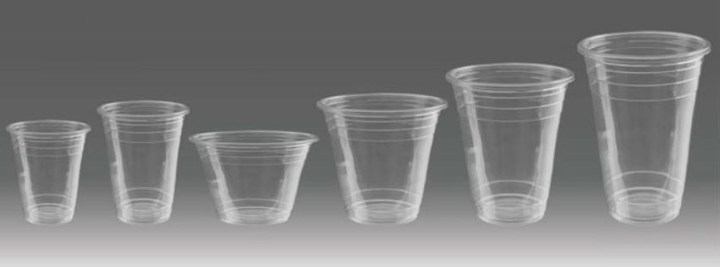
Guangdong Xinchuang Machinery Industry Co., Ltd. focuses on linear cup filling and sealing machine solutions for cup products such as jelly, yogurt, pudding, milk tea, sauce, jam, juice, cup water, tofu, prepared food cups, and frozen food cups. The main advantage of this structure is practical factory usability: high capacity can be planned through lanes and stations, the machine has more accessible operating space, and the layout can be customized around the buyer’s cup and production requirement.
Several technical terms help buyers understand the decision. Production line1 planning affects real output. Heat sealing2 affects cup film quality. Polypropylene3 is common for food cups. Viscosity4 affects filling design. Intermodal container5 size matters for exported machinery.
Quick Answer: When is a linear machine the right choice?
A linear cup filling and sealing machine is a good choice when the buyer wants high capacity, a clear production flow, easier operator access, and customization around real cup size. It is especially suitable when the project is for export because the machine width can often be controlled more practically than a wider structure.
The most important buying logic is cup-first design. The linear machine should be designed according to the cup mouth diameter, cup height, cup stack condition, filling volume, sealing film, and required output. Output is not only a motor speed question; it depends on cup size, lanes, station arrangement, filling stability, and sealing quality.
For buyers planning multiple cup products, the future cup range should be discussed early. If the cup diameter changes too much, the machine may need different templates, cup dropping structure, filling spacing, sealing tooling, and cutting parts. A linear machine gives useful design flexibility, but it still needs engineering planning before manufacturing.
Why does cup diameter decide the machine design?
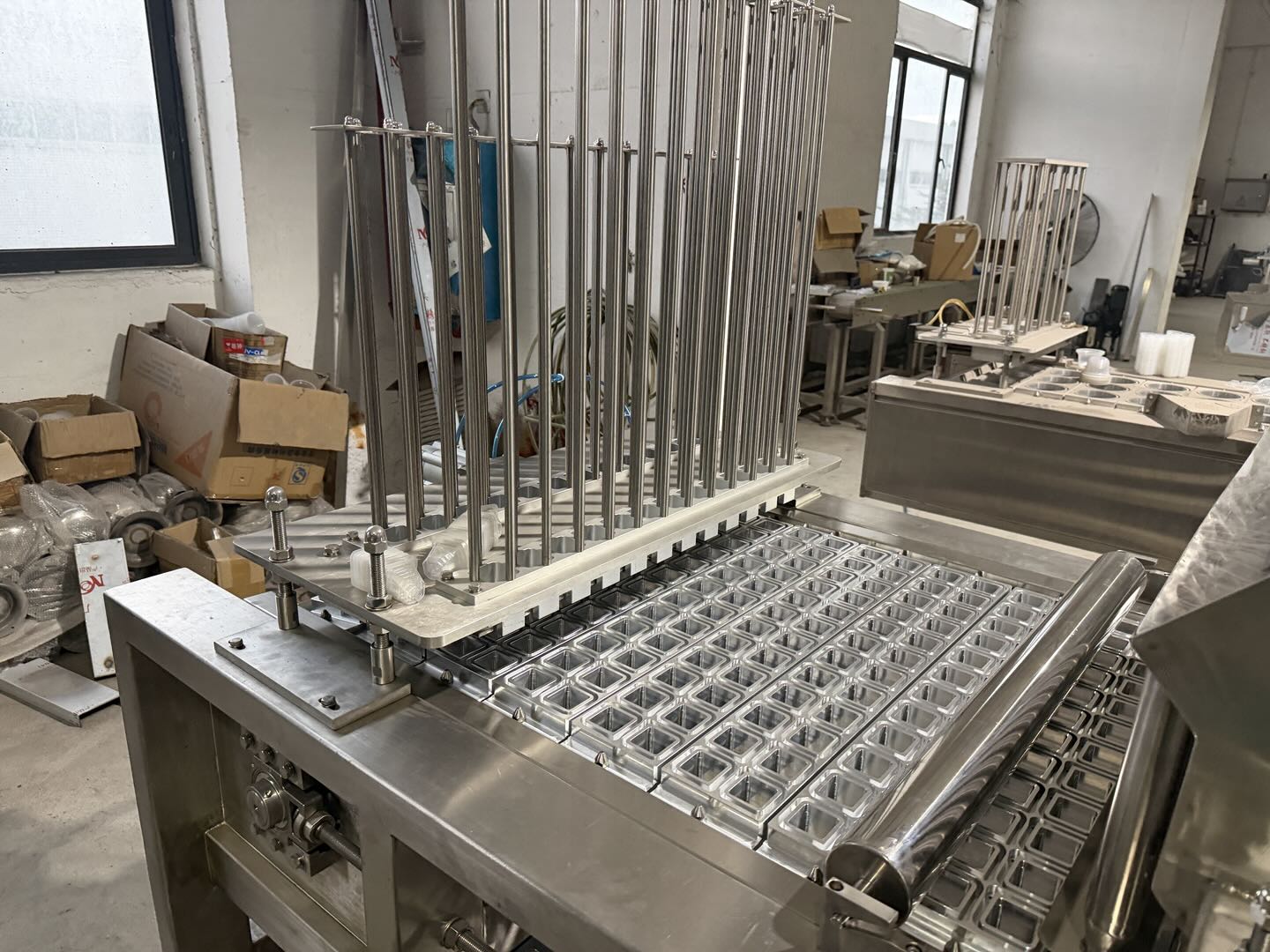
Cup diameter is one of the decisive factors for a linear cup filling and sealing machine. The factory must use the cup size to design the template, cup holders, cup dropping structure, filling positions, sealing positions, and cutting system. A small-diameter cup and a large-diameter cup cannot always share the same layout.
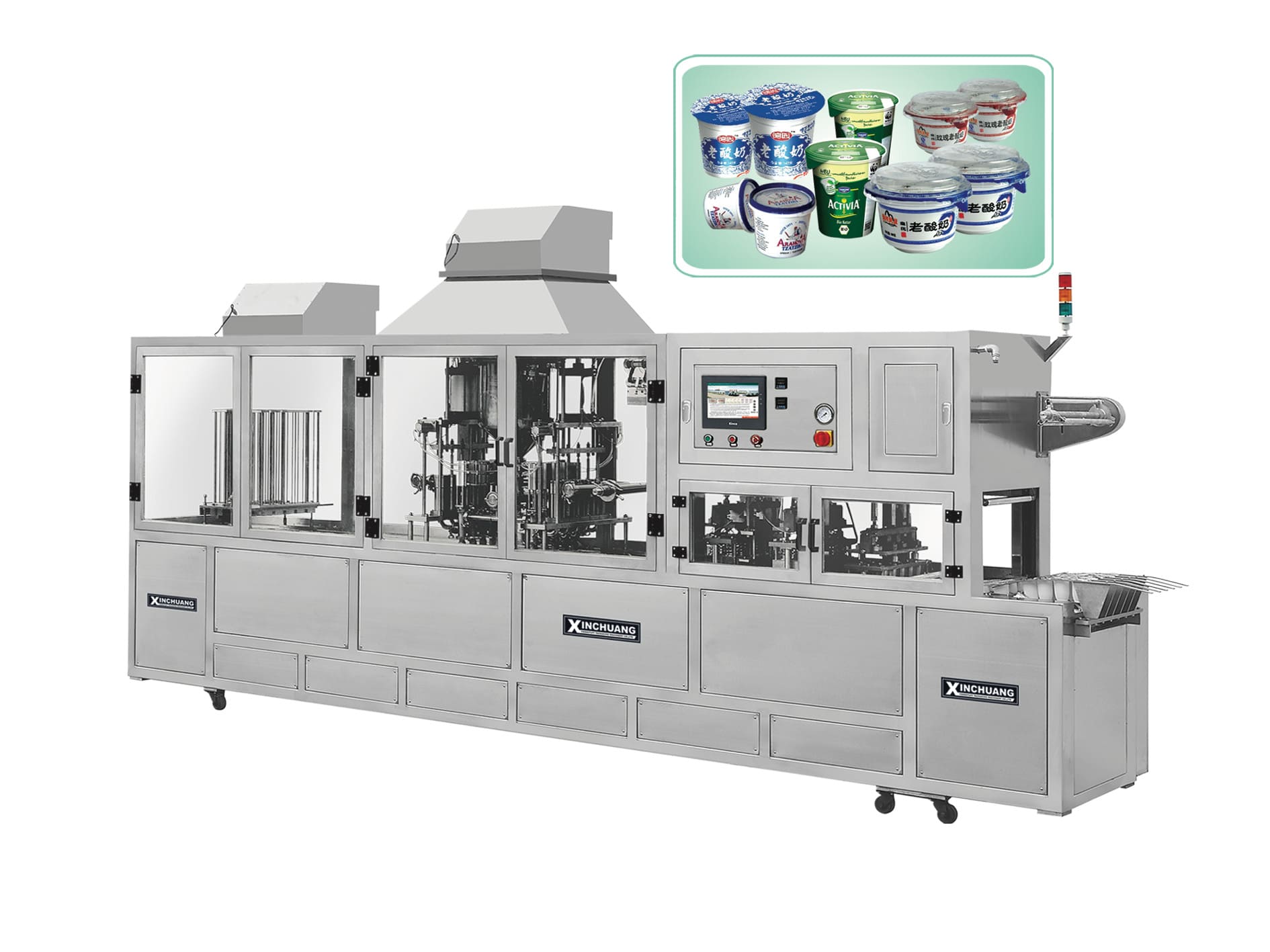
Small-diameter cups often allow higher output because more cups can be arranged across the machine or per working cycle. Large-diameter cups usually reduce output because each cup requires more width, more station space, and larger sealing or cutting tooling.
This is also why container export matters. A machine cannot be made infinitely wide. Export machinery must consider container loading limits, workshop access, truck loading, and installation conditions. A linear design can extend in length while keeping the machine width more manageable. For many export projects, this is a practical advantage.
How cup size affects linear machine planning
| Factor | Effect on Machine | Buyer-Side Decision |
|---|---|---|
| Cup mouth diameter | Decides template, lanes, station spacing, and output potential | Send real cup samples before final design |
| Cup height | Affects cup dropping, mold depth, filling nozzle movement, and discharge | Confirm the full cup drawing and stacked cup condition |
| Filling volume | Affects filling time, nozzle design, and headspace | Confirm volume for every product SKU |
| Sealing film | Affects heat sealing, cutting, and finished appearance | Test real cup and film together |
| Future cup sizes | Affects changeover tooling and machine flexibility | Discuss expansion before order |
How does linear layout help output and operation?
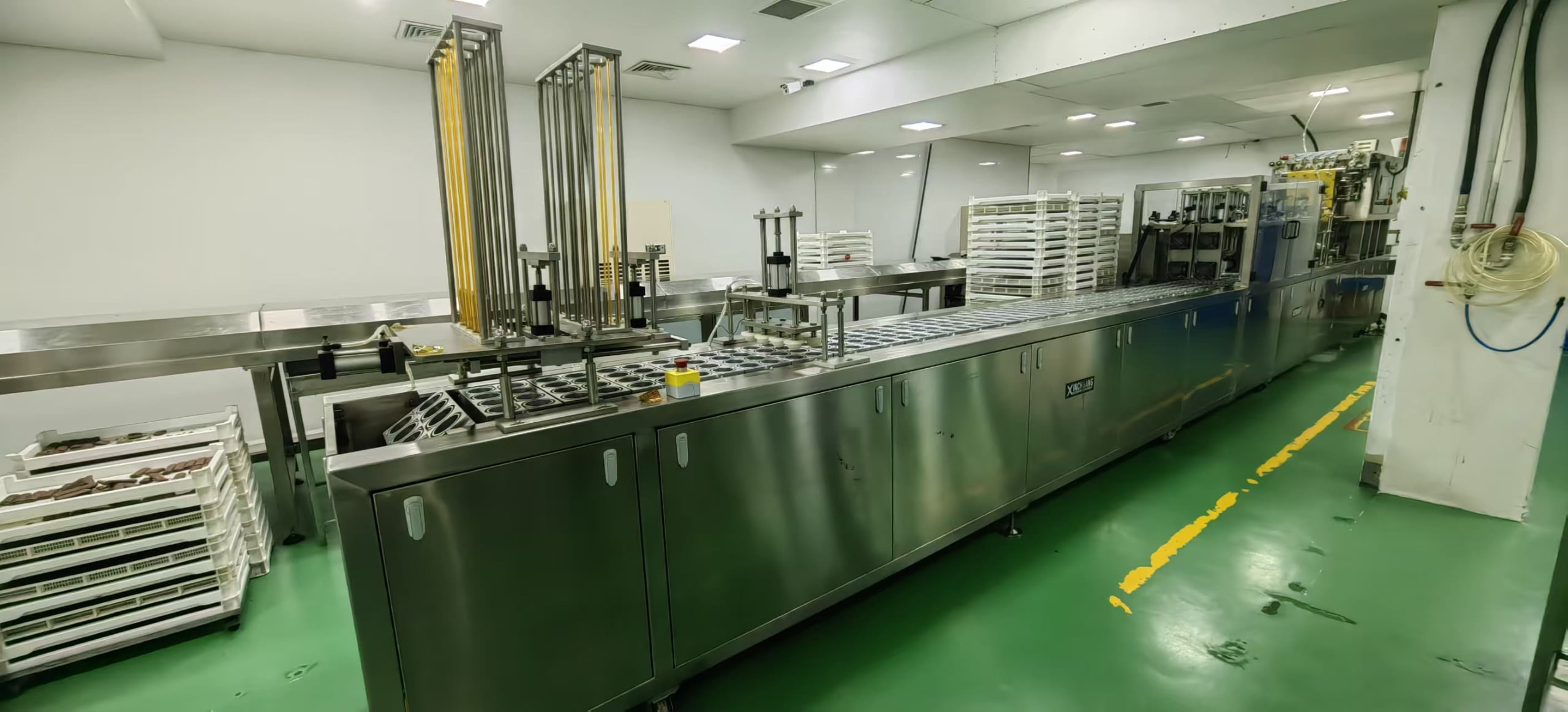
A linear machine can be planned with a clear flow: cup dropping, filling, film feeding or film placing, sealing, cutting, coding, and discharge. Operators can access different stations along the machine length. This gives more working space for inspection, adjustment, cleaning, and maintenance.
For factory operation, accessible space matters. A machine with more practical working access is easier to adjust, easier to clean, and easier for operators to understand. This is important for export buyers who may need to train local operators after installation.
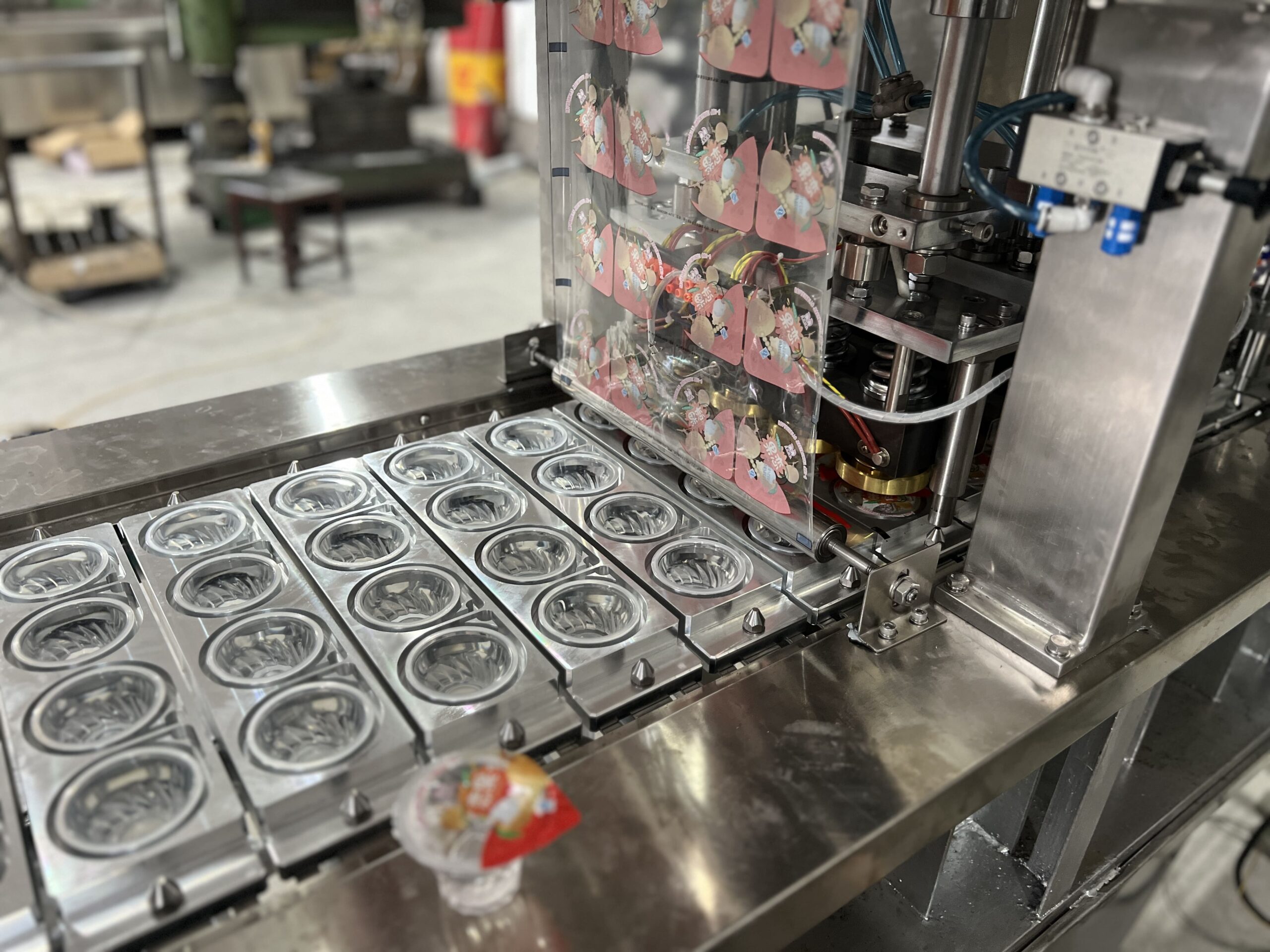
High output is not only achieved by making the machine faster. It is achieved by balancing cup feeding, filling stability, sealing time, cutting, discharge, and packing. If one station becomes unstable, the real output will drop. A linear machine gives the factory more space to arrange stations and service points, but the design must still match the cup and product.
Buyers should avoid comparing only nominal capacity. The actual capacity depends on cup size, filling volume, product viscosity, sealing material, number of lanes, operator rhythm, and downstream packing. A realistic capacity discussion should include samples and layout, not only a speed number.
What are the limitations of a linear cup filling machine?
A linear machine has advantages, but it is not magic. Because it extends in length, the factory needs enough floor space in the line direction. If the workshop is too short or the layout has many columns, doors, or drainage limitations, the line may need adjustment.
Not suitable when: the buyer expects one compact low-cost machine to run many unrelated cup sizes with frequent changeovers, very limited workshop length, and no clear future product plan. In that case, changeover cost, machine length, and output stability may become problems.
Large cup sizes can also reduce the output advantage. If the cup diameter is large, fewer cups can fit across the machine width. If the buyer still wants very high output, the machine may become longer or require a more complex configuration. This must be confirmed before quotation.
Linear machines are easier to export in many cases because the width can be controlled, but shipping still needs planning. The final machine may need modular design, packaging plan, container loading check, and installation preparation at the buyer’s factory.
Buyer Checklist: What should be confirmed before quotation?
Before requesting a quotation, buyers should prepare cup samples, sealing film samples, filling volume, product sample, target output per hour, workshop layout, voltage, air supply, downstream packing plan, and future cup plan. The more complete the information, the more accurate the machine design and quotation will be.
The best quotation starts from real samples. A photo can help, but real cups and film show cup stiffness, stacking behavior, rim flatness, sealing quality, and automatic dropping stability.
| Information to Provide | Why It Matters | Factory Check |
|---|---|---|
| Real cup sample | Decides template and cup dropping structure | Check diameter, height, stiffness, rim, and stack |
| Sealing film sample | Decides sealing and cutting design | Test heat sealing and peel condition |
| Product sample | Decides filling method and anti-drip design | Check viscosity, particles, temperature, and cleaning |
| Target output | Decides lane quantity and station arrangement | Confirm realistic cups per hour |
| Workshop layout | Decides machine length direction and access | Check doors, columns, drainage, packing area, and utilities |
| Export requirement | Decides machine width and shipping plan | Check container loading and installation path |
Factory Insight: Why does linear design fit export projects?
From the factory side, one major advantage of a linear cup filling and sealing machine is that the machine can keep a narrower width while extending in length. This is useful because export machinery must consider container width, transportation, unloading, and the customer’s installation path.
For Xinchuang projects, we often design the linear machine around the customer’s cup diameter and output target, while also keeping export transportation practical. Small cup diameters can usually support higher output. Large cup diameters need more careful lane planning because width is limited.
For related planning, buyers can review why cup size affects a cup filling and sealing machine, how to plan a jelly cup production line, whether jelly cup products need pasteurizer and cooling line, and why buyers should send samples before choosing a filling machine.
Conclusion
Choosing a linear cup filling and sealing machine should start from the real cup and the required production plan. Cup diameter, cup height, filling volume, product viscosity, sealing film, target output, changeover plan, workshop layout, and export container width all affect the final machine design.
A linear machine is a strong choice when the buyer needs high output, more operating space, customizable cup handling, practical machine width, and export-friendly layout. The final design should still be confirmed by sample checking and factory layout review, because real output depends on the cup, product, sealing quality, lane arrangement, and full production rhythm.
- A production line should be balanced across cup feeding, filling, sealing, discharge, downstream handling, and packing. Return
- Heat sealing joins the sealing film to the cup rim; the cup and film must be tested together. Return
- Polypropylene is a common plastic cup material, but each cup’s heat resistance and sealing compatibility should be verified. Return
- Viscosity affects filling speed, nozzle selection, dripping, and cleaning difficulty. Return
- Intermodal container dimensions affect exported machinery design, especially machine width, modular packaging, and loading method. Return