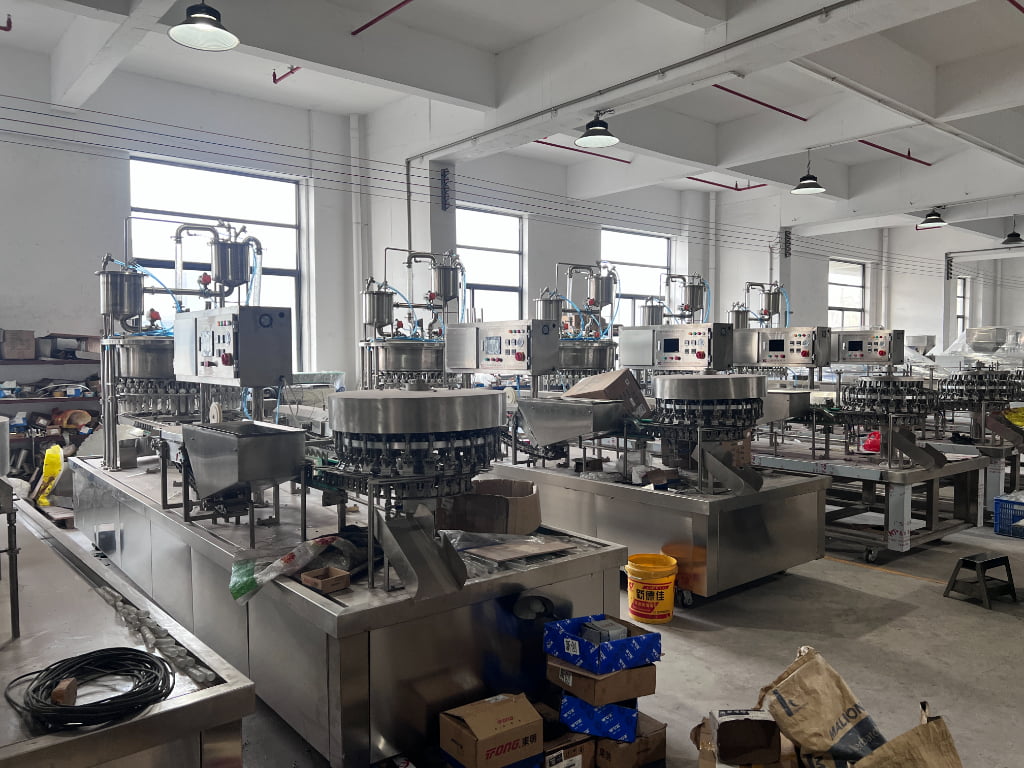
Starting an ice pop tube factory requires more than one filling machine. The complete process normally begins with product preparation, continues through tube production or tube supply, filling and sealing, pasteurization, and finishes with packing.
The direct answer is: a complete ice pop tube production line normally includes cooking or product preparation equipment, a blowing machine for making empty ice lolly tubes when tubes are produced in-house, an ice lolly tube filling and sealing machine, a pasteurization line, and a packing machine. The exact configuration depends on whether the factory buys ready-made tubes, the target hourly output, product formula, hygiene process, and packing method.
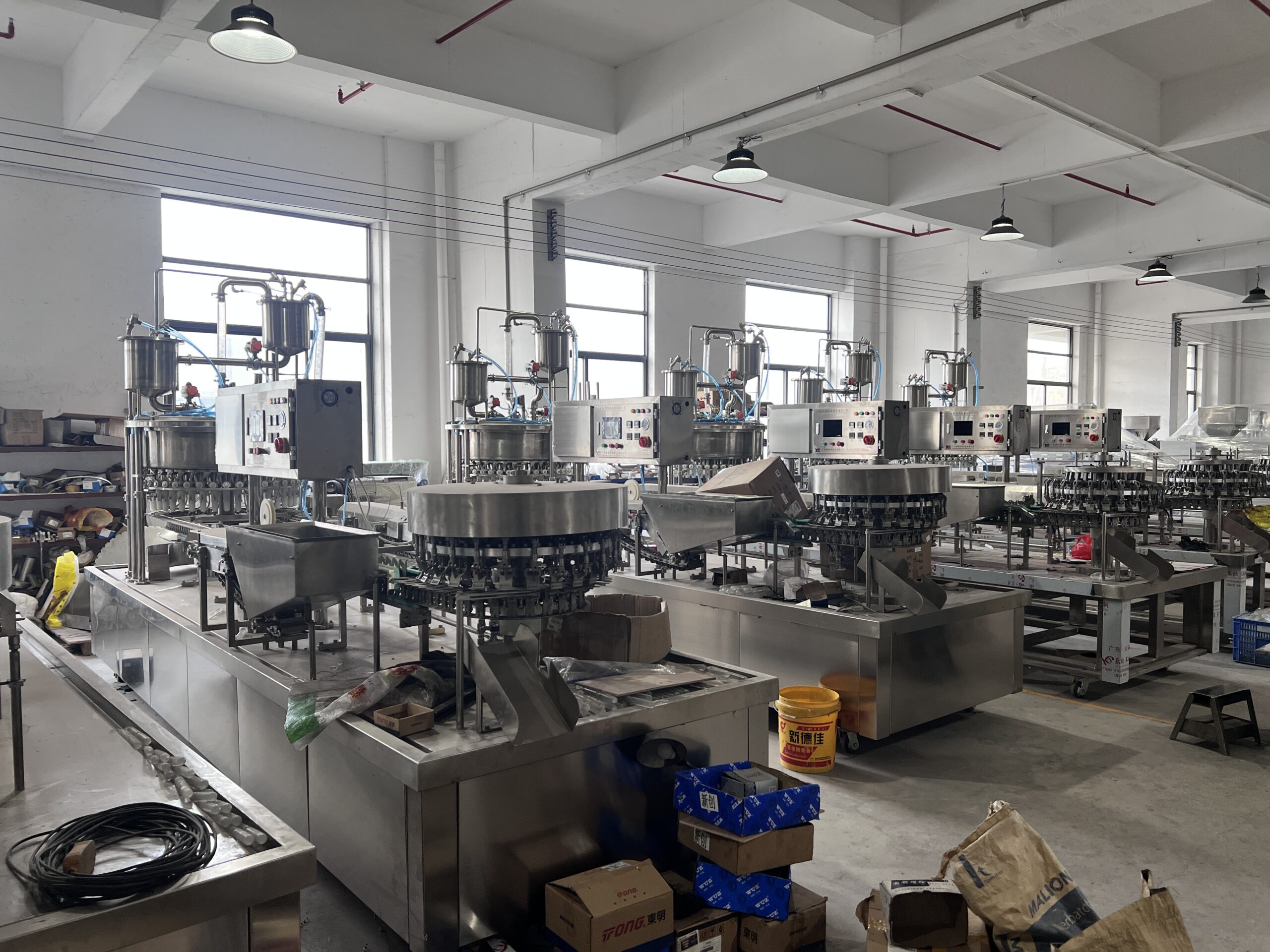
Guangdong Xinchuang Machinery Industry Co., Ltd. supplies ice pop or ice lolly tube filling and sealing machines and supports complete production line planning. The filling and sealing machine is usually the capacity reference for matching preparation, pasteurization, cooling, conveying, and packing equipment.
Useful technical concepts include mixing1, blow molding2, heat sealing3, pasteurization4, and packaging5.
Quick Answer: What are the main machines in the line?
| Process Stage | Main Equipment | Purpose |
|---|---|---|
| Product preparation | Cooking, mixing, or holding equipment | Prepare syrup or liquid product before filling |
| Tube production | Blowing machine | Produce empty ice lolly tubes when made in-house |
| Primary packaging | Ice lolly filling and sealing machine | Fill measured product and seal each tube |
| Heat treatment | Pasteurization line | Apply the required thermal process according to the product plan |
| Final packaging | Packing machine | Group or pack finished tubes for transport and sale |
The line should be designed as one connected process. Buying each machine separately without matching capacity can create bottlenecks between preparation, filling, pasteurization, and packing.
What cooking and preparation equipment is needed?
The first section prepares the ice pop liquid. Depending on the recipe, the factory may need a cooking tank, mixing tank, holding tank, filters, pumps, and connecting pipelines. The actual design depends on whether the product uses sugar syrup, juice, dairy ingredients, stabilizers, colors, or flavors.
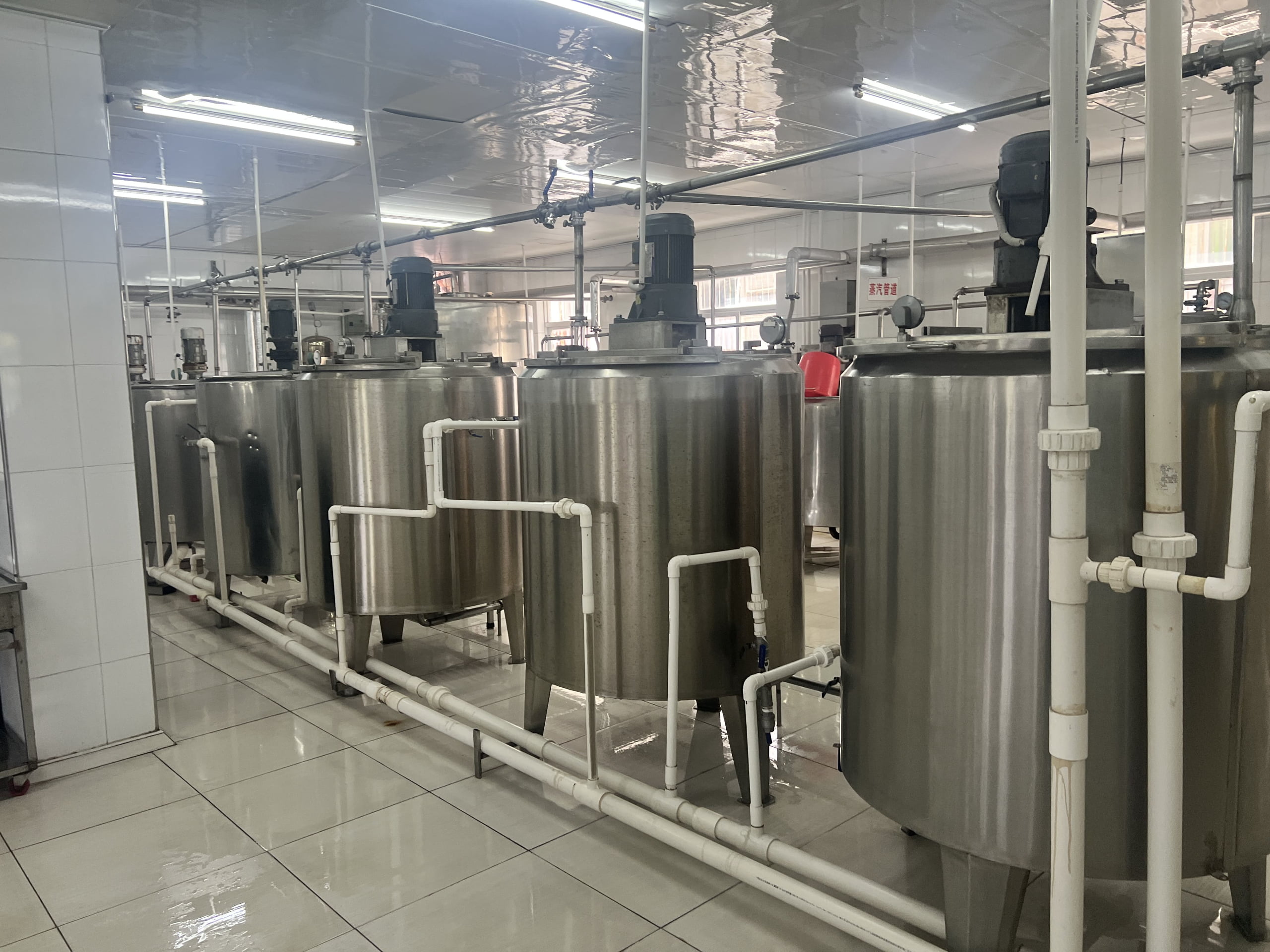
The preparation section must supply product fast enough for the filling machine. If the tank volume or transfer rate is too small, the filling machine will wait for product even if its rated capacity is high.
Buyers should confirm batch size, mixing time, heating requirement, holding time, transfer method, and cleaning method. Utility planning for electricity, steam or hot water, compressed air, drainage, and clean water should be completed before the equipment layout is finalized.
Do you need a blowing machine for ice lolly tubes?
A blowing machine is needed when the factory plans to manufacture its own empty ice lolly tubes. If ready-made tubes are purchased from a packaging supplier, this section may not be necessary.
The make-or-buy decision should consider tube quality, minimum order quantity, local packaging supply, storage space, capital budget, and whether the planned blowing capacity can keep up with the filling and sealing machine.
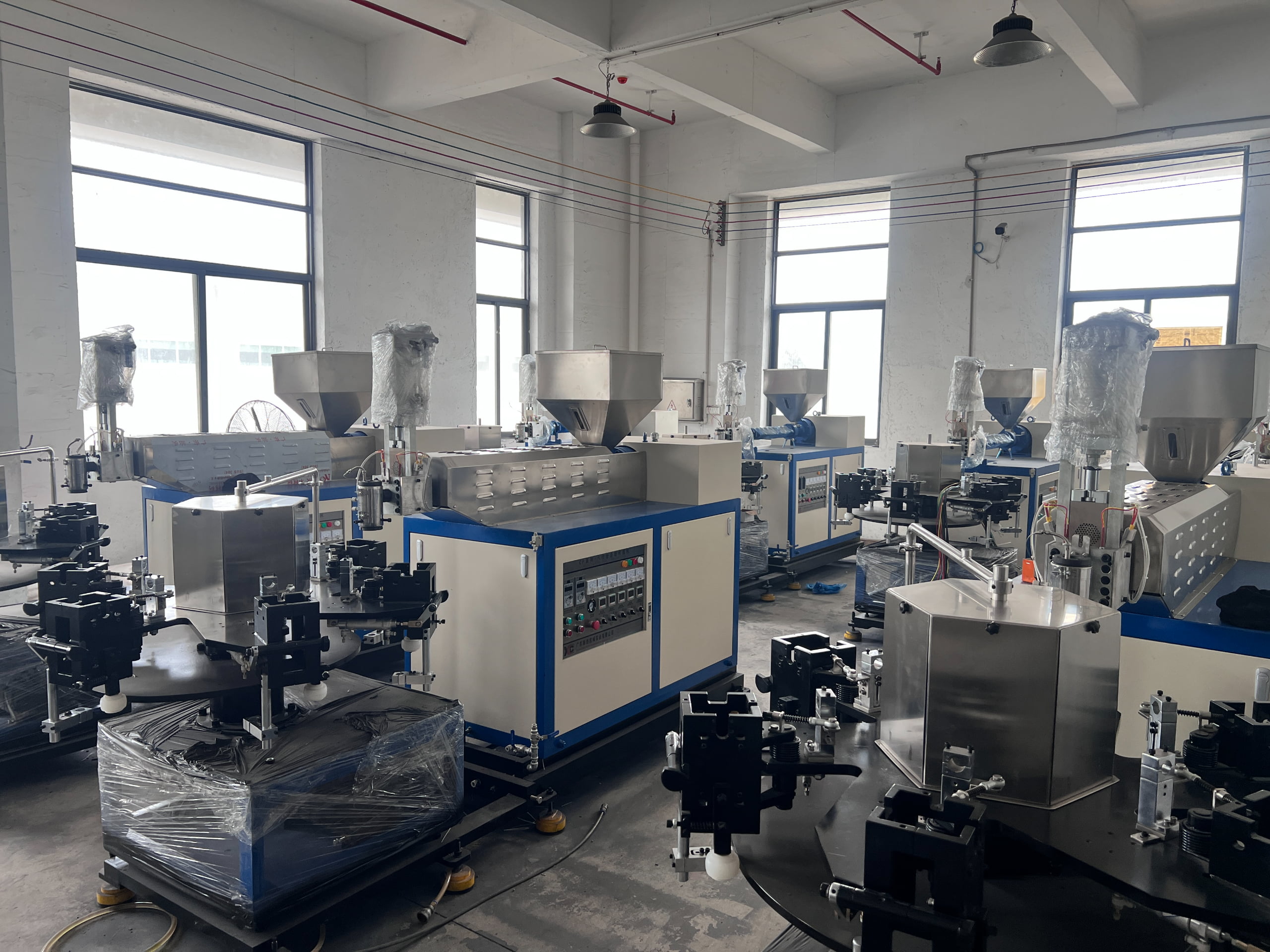
Tube dimensions and material consistency affect filling and sealing. Before machine design, buyers should provide tube samples or confirmed drawings. Changes in tube length, width, mouth shape, or film structure may affect feeding, positioning, filling level, and sealing.
How should filling, sealing, and pasteurization capacity be matched?
The ice lolly tube filling and sealing machine is the central packaging machine. Its required output should be selected from the buyer’s sales plan, shift arrangement, product variety, and future expansion target. Actual capacity depends on tube size, filling volume, product characteristics, and machine configuration.
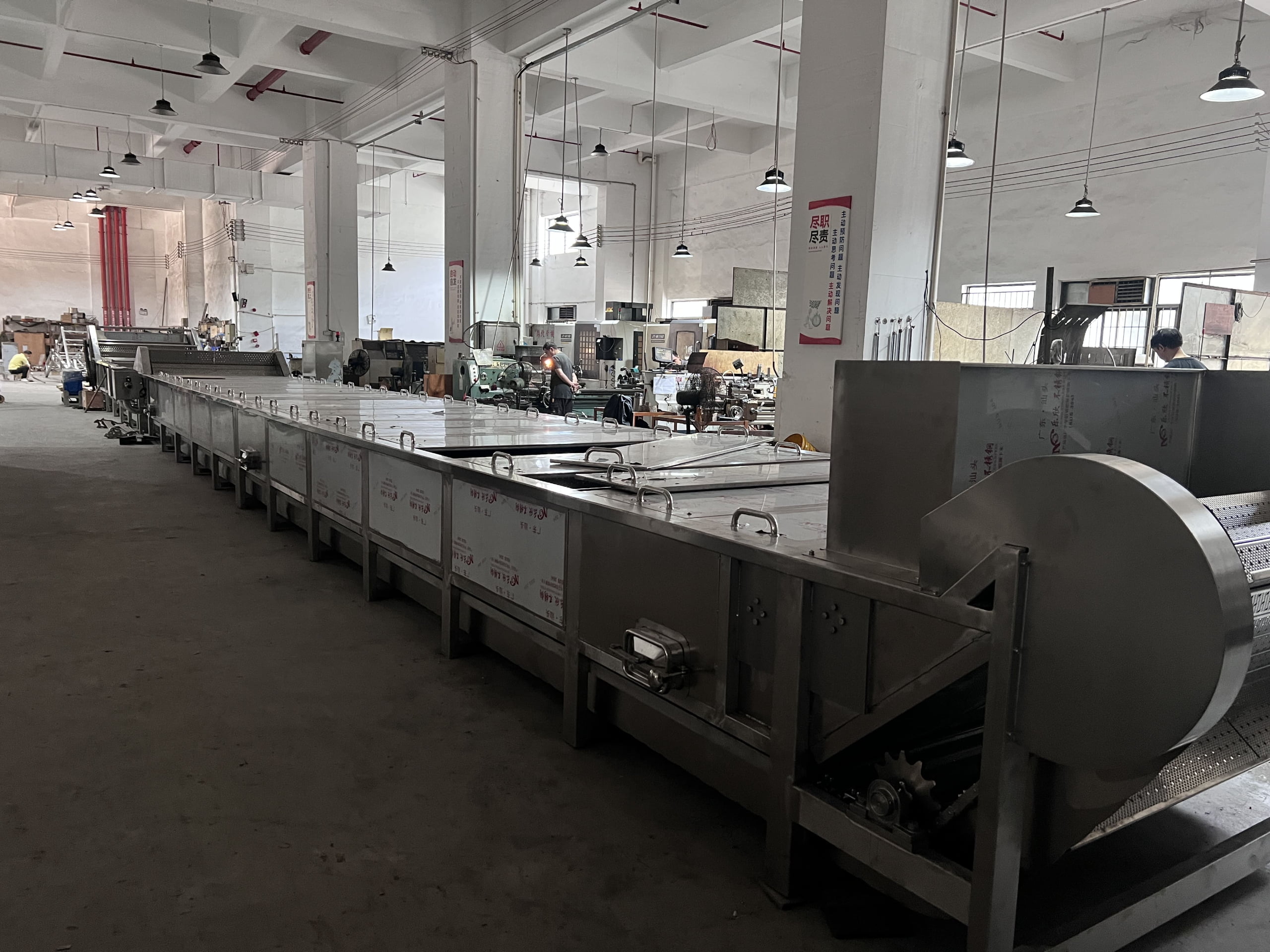
After filling and sealing, the product may enter a pasteurization line according to the formula, packaging, shelf-life target, and local process requirements. Pasteurizer residence time and conveyor loading must match the filling output.
| Capacity Check | Risk if Undersized | Planning Action |
|---|---|---|
| Preparation tanks | Filling machine waits for product | Calculate batch volume and transfer time |
| Tube blowing | Not enough empty tubes | Match tube output and maintain buffer stock |
| Filling and sealing | Main production target cannot be reached | Select configuration from real tube and volume |
| Pasteurization | Sealed products accumulate before treatment | Match conveyor loading and residence time |
| Packing | Finished products create a labor bottleneck | Choose manual, semi-automatic, or automatic packing |
What packing equipment should be planned?
Packing equipment depends on how the finished ice pop tubes are sold. A factory may use counting, bagging, coding, labeling, carton sealing, or other secondary packing equipment. Manual packing may be acceptable for a small startup, while higher output normally requires more automation.
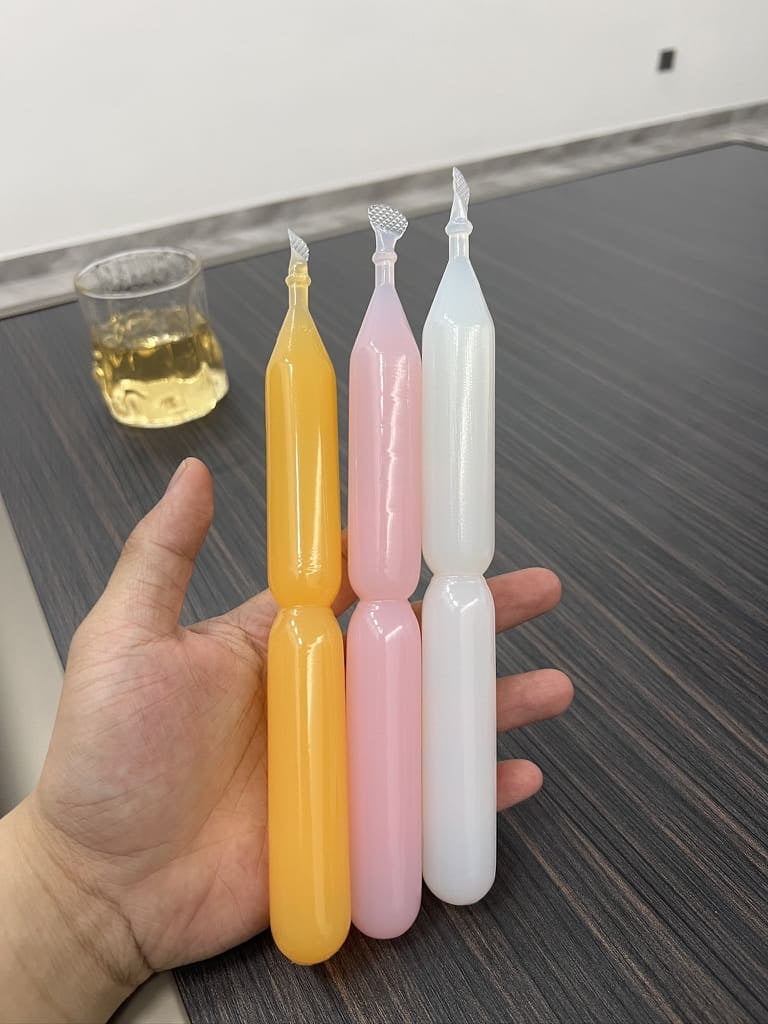
Packing should be planned before the factory layout is fixed. The buyer needs space for product discharge, inspection, counting, bagging, cartons, finished-goods movement, and operators.
Buyer Checklist
Before requesting a complete-line quotation, buyers should prepare the ice pop tube sample, filling volume, product formula direction, target output per hour, working shifts, whether tubes will be purchased or produced, pasteurization plan, final packing format, workshop dimensions, and available utilities.
Related planning resources include ice pop line space and labor planning, choosing an ice lolly tube filling and sealing machine, why buyers should send samples, and starting an ice lolly business.
Not Suitable When
A fixed equipment list is not suitable when the buyer has not confirmed whether tubes are purchased or made in-house, the target output, product preparation process, pasteurization requirement, or final packing format. These decisions can add or remove complete sections of the line.
It is also not suitable to select all machines by their individual maximum capacities. The complete line should be balanced around realistic production output and buffer planning.
Factory Insight
From a factory-side view, the five core sections are cooking or preparation equipment, blowing machine, ice lolly filling and sealing machine, pasteurization line, and packing machine. However, not every project needs exactly the same configuration. The blowing machine is optional when ready-made tubes are purchased, and packing automation depends strongly on output and labor cost.
The correct order is to confirm the product, tube, filling volume, target output, heat-treatment plan, and final package first. Then each machine can be sized as part of one production line.
Conclusion
An ice pop tube production line normally includes product cooking or preparation equipment, tube blowing equipment when tubes are produced in-house, an ice lolly filling and sealing machine, a pasteurization line, and packing equipment. Conveyors, pumps, pipelines, cooling, drying, coding, and inspection may also be added depending on the final process.
Final design should be confirmed after reviewing the tube sample, filling volume, formula, target output, workshop, utilities, pasteurization process, and packing method.
- Mixing performance affects product uniformity and the supply rate to the filling machine. Return
- Blow molding can be used to manufacture hollow plastic packaging such as certain ice lolly tube formats. Return
- Heat sealing depends on packaging material, temperature, pressure, dwell time, and seal-area cleanliness. Return
- Pasteurization uses controlled heat treatment; the required process depends on product and packaging conditions. Return
- Secondary packaging should protect finished products and match distribution and sales requirements. Return