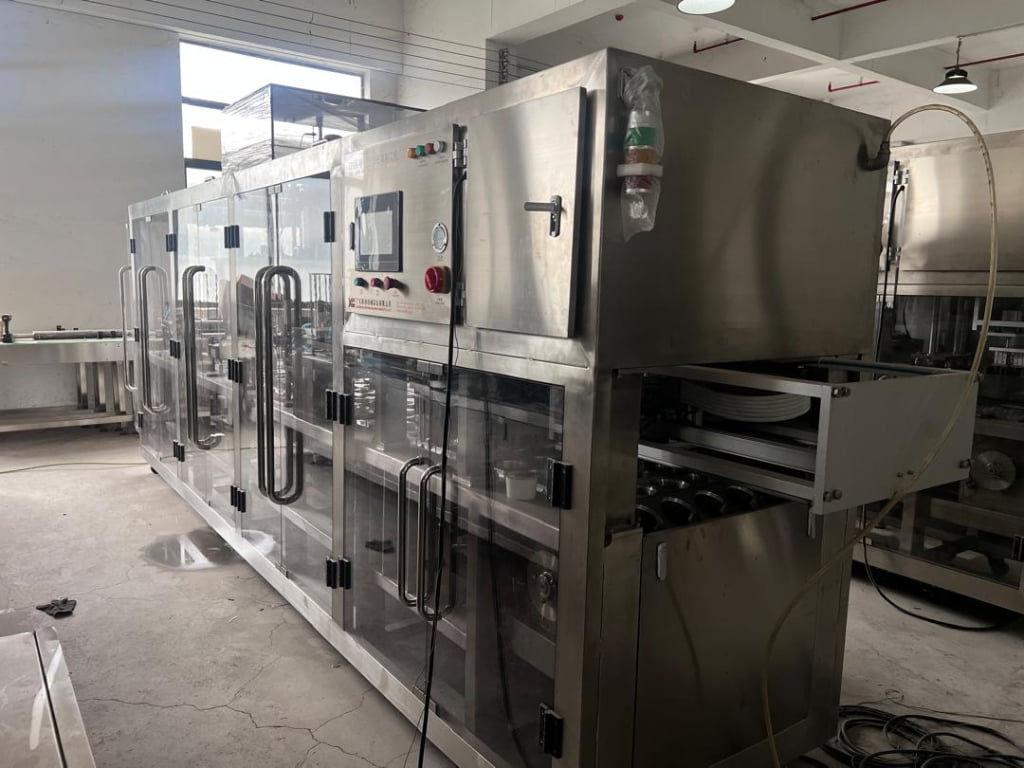
Milk tea cup production should not start from the machine model first. It should start from the packaging format that is popular in the target market. Cup diameter, cup volume, whether the product has pearls or coconut jelly, whether the cup needs a lid, and whether a straw should be attached to the side all affect the machine configuration.
The direct answer is: to plan a milk tea cup filling and sealing line, first confirm the market packaging format, then match the linear cup filling and sealing machine around that package. A common milk tea cup may use a 90 mm cup mouth and around 350 ml volume. Pearls, coconut jelly, pudding, and similar particles can be added automatically by a special feeding device. Four-lane, six-lane, or larger customized layouts can be selected according to the buyer’s initial output plan.
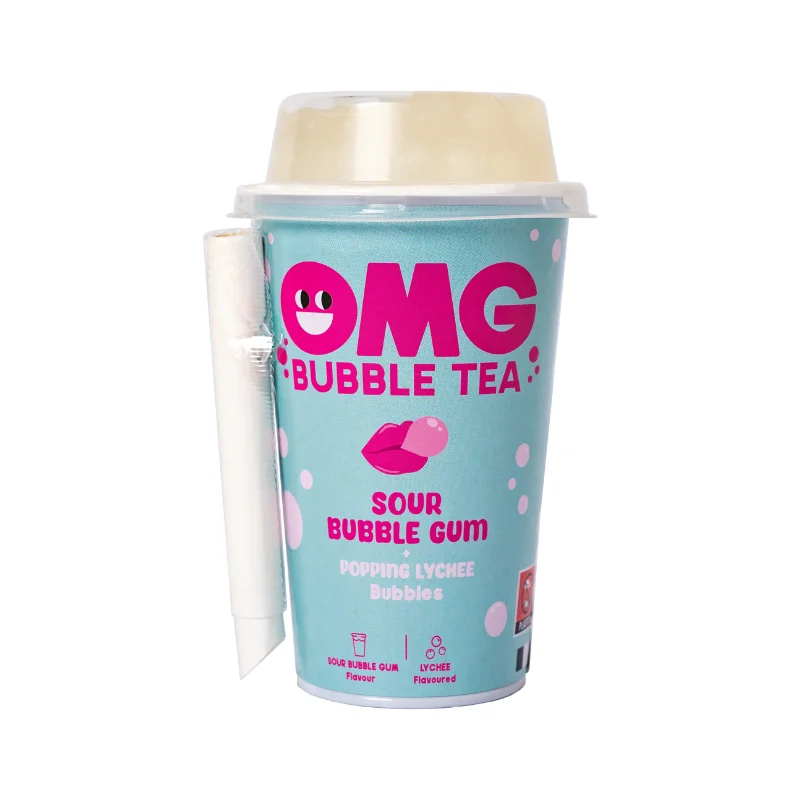
Guangdong Xinchuang Machinery Industry Co., Ltd. focuses on linear cup filling and sealing machine solutions. For milk tea projects, this is important because the line may need several operations in sequence: cup dropping, particle dosing, liquid filling, film sealing, cutting, lid adding, straw attaching, discharge, conveying, and packing. The final design should be confirmed after checking real cup samples, product formula, particles, and target output.
Useful technical concepts for this topic include bubble tea1, tapioca pearls2, heat sealing3, polypropylene4, and viscosity5. These terms help buyers understand why cup structure, ingredients, and sealing method affect machine planning.
Quick Answer: What information is needed before choosing the line?
Before choosing a milk tea cup filling and sealing line, buyers should confirm the cup mouth diameter, cup volume, cup material, sealing film, product temperature, whether particles are included, target output, lid requirement, straw attachment requirement, and final packing method.
The most important buying logic is simple: confirm the package that the market accepts first, then design the machine around that package. If the package changes later, the cup dropping structure, filling spacing, sealing position, lid system, straw applicator, and output rhythm may also need changes.
A common milk tea package uses a wide cup mouth around 90 mm and a filling volume around 350 ml. This is much larger than many jelly cups, so the number of lanes and machine length must be planned carefully. Wider cups usually need more space on the template, and higher filling volume also needs enough filling time.
Why does the packaging format decide the machine configuration?
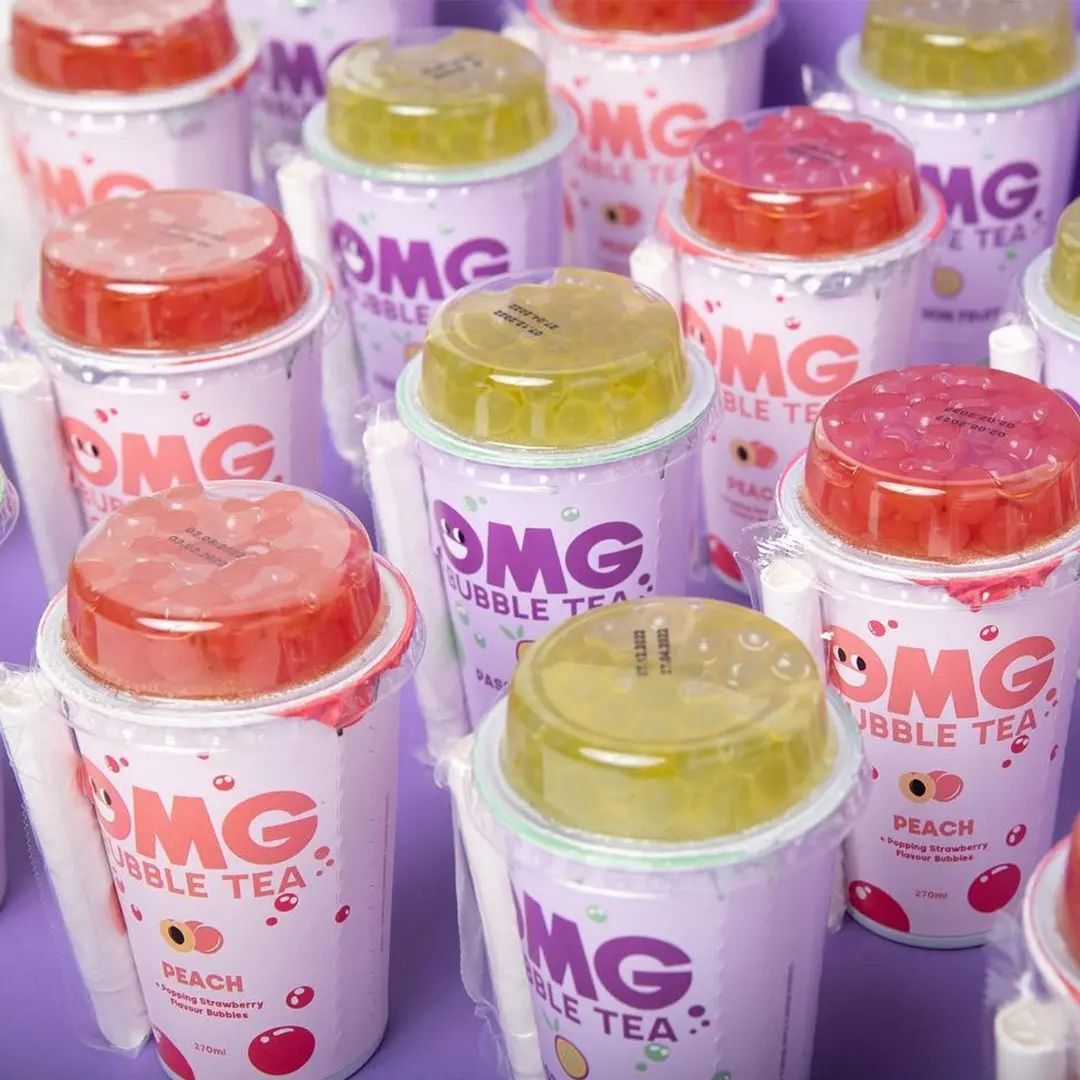
Milk tea packaging is not one fixed format. Some factories only need a sealed cup. Some want a cup with a plastic lid added after sealing. Some want a straw attached to the side of the cup so consumers can drink conveniently. These packaging choices decide which stations are required on the line.
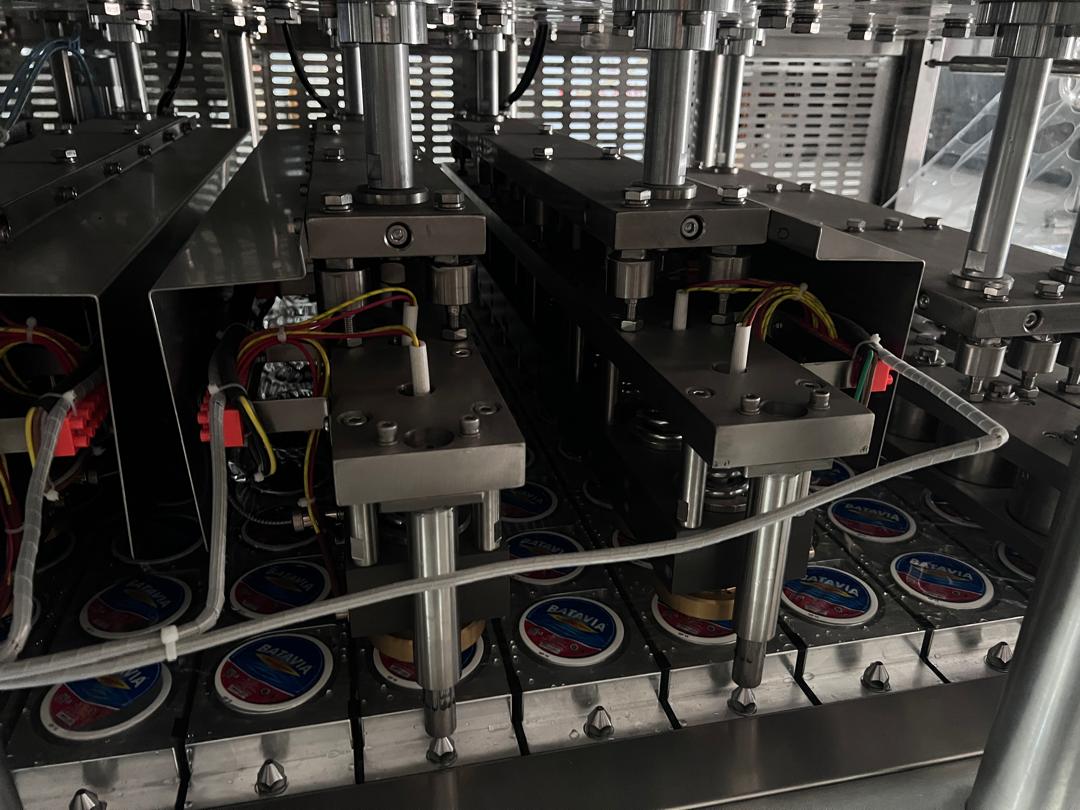
If the buyer plans to sell a cup with lid and straw, the machine should be discussed as a complete packaging line, not only a filling and sealing machine. Lid adding and straw attaching can be automated, but they must be designed according to the real cup shape, lid type, straw size, and label or sleeve position.
This is why early sample checking matters. The cup, lid, sealing film, straw, and product all influence the final solution. A small change in cup shoulder, cup rim, lid tightness, straw length, or side surface shape can affect the feeding and attaching mechanism.
Milk tea line configuration by packaging format
| Packaging Format | Typical Machine Stations | Factory Planning Note |
|---|---|---|
| Sealed cup only | Cup dropping, liquid filling, film sealing, cutting, discharge | Suitable when the market accepts film-sealed cups without extra lid or straw |
| Sealed cup with particles | Cup dropping, particle dosing, milk tea filling, sealing, cutting | Pearls, coconut jelly, or pudding need a special automatic feeding device |
| Sealed cup with lid | Filling and sealing plus automatic lid adding | Cup and lid samples must be checked for feeding and fitting stability |
| Sealed cup with lid and straw | Filling, sealing, lid adding, straw attaching, conveying | Straw position, cup side shape, and output rhythm should be confirmed early |
How are pearls, coconut jelly, and pudding added automatically?
Milk tea products may include tapioca pearls, coconut jelly, pudding, fruit jelly, or other particles. These ingredients should not be handled like simple liquid. They normally need a special dosing or feeding device to drop a controlled amount into each cup before the liquid filling step.
Particles can be automatically added into the cup, but the feeding device must be customized according to particle size, stickiness, shape, and required amount per cup. The final design should be confirmed after sample checking.
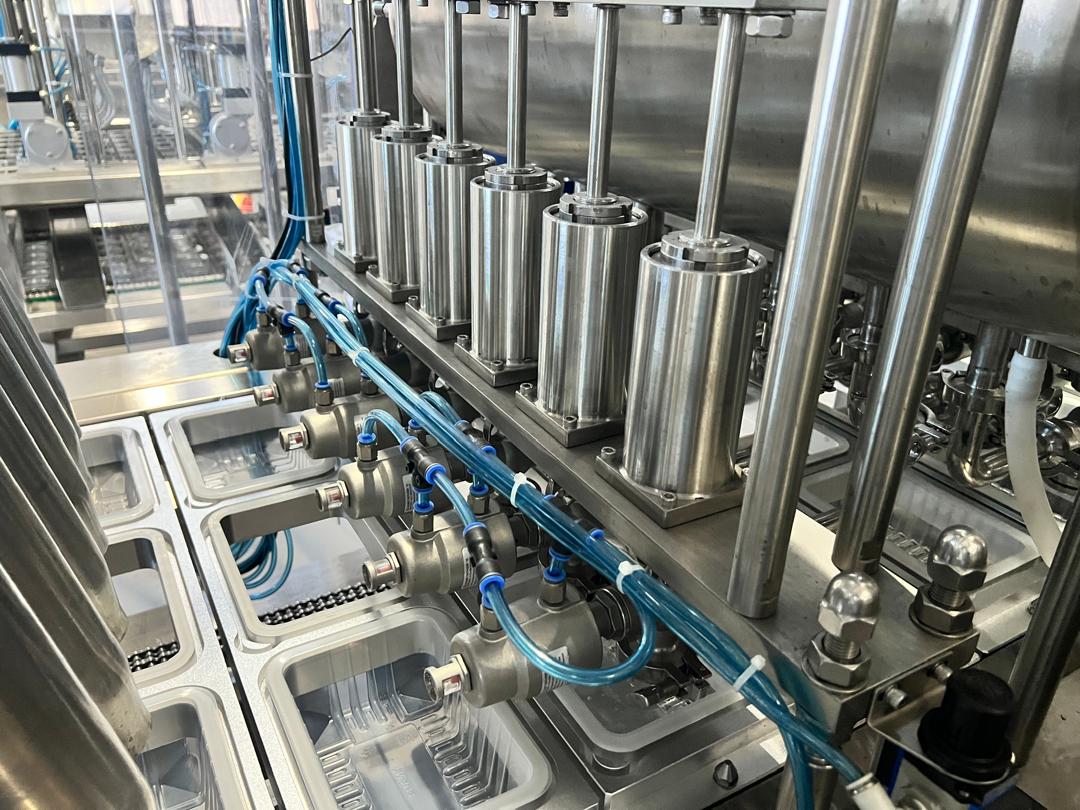
Buyers should prepare particle samples during the technical discussion. Pearls may behave differently from coconut jelly or pudding. Some particles are sticky, some are easy to bridge in the hopper, and some may break if handled roughly. The feeding structure should protect product appearance while keeping enough dosing consistency for commercial production.
Liquid filling also needs to match the product. Milk tea without particles is different from milk tea with mixed solids. Product temperature, viscosity, foaming, and filling volume all affect the filling method and speed. For a 350 ml cup, filling time must be included in capacity calculation.
How many lanes should a milk tea cup line use?
Lane count should be selected according to the buyer’s initial output target, budget, workshop layout, and future expansion plan. For milk tea cups, four lanes and six lanes are common discussion directions, and more lanes can be customized depending on production requirements and cup size.
Do not choose lane count only because a larger number sounds better. A larger machine may need more length, stronger downstream conveying, more stable cup and lid supply, and enough packing capacity after the line.
| Planning Factor | Why It Matters | Buyer Decision |
|---|---|---|
| Cup mouth diameter | 90 mm cups take more space than small cups | Confirm real cup sample before lane design |
| Filling volume | 350 ml filling needs enough filling time | Estimate capacity from volume and product flow |
| Particle feeding | Solids may slow the rhythm or require special dosing | Send pearl, coconut jelly, or pudding samples |
| Lid and straw automation | Extra stations affect line length and timing | Confirm packaging format before ordering |
| Downstream packing | High-speed output must be packed efficiently | Plan labor, conveyor, and carton packing early |
Buyer Checklist
Before requesting a quotation for a milk tea cup filling and sealing line, buyers should prepare the target cup, lid, straw, sealing film, product formula, particle samples, filling volume, required output, workshop layout, power and air conditions, packing method, and target market packaging style.
The buyer should first answer: what package will sell well in my market? After that, the machine supplier can match the linear cup filling and sealing line to that package.
For related planning, buyers can read how to choose a linear cup filling and sealing machine, why cup size affects cup filling machine design, why buyers should send samples before choosing a filling machine, and how downstream line planning affects cup products.
Not Suitable When
This type of planning is not suitable when a buyer has not decided the package but wants a fixed machine price immediately. If the buyer later changes from sealed cup only to lid plus straw, the machine configuration, layout, tooling, and automation stations may change.
It is also not suitable to estimate output without checking cup diameter and filling volume. A 90 mm, 350 ml milk tea cup needs a different design from a small jelly cup. Actual capacity depends on cup size, filling volume, product characteristics, lane count, sealing stability, optional lid and straw stations, and downstream packing speed.
Factory Insight
From a factory-side view, milk tea projects often fail at the planning stage when the buyer talks only about output and machine price. For this product, the better sequence is: confirm market packaging, prepare real cup and accessory samples, decide whether particles are required, decide whether lid and straw automation are needed, then calculate lanes and line length.
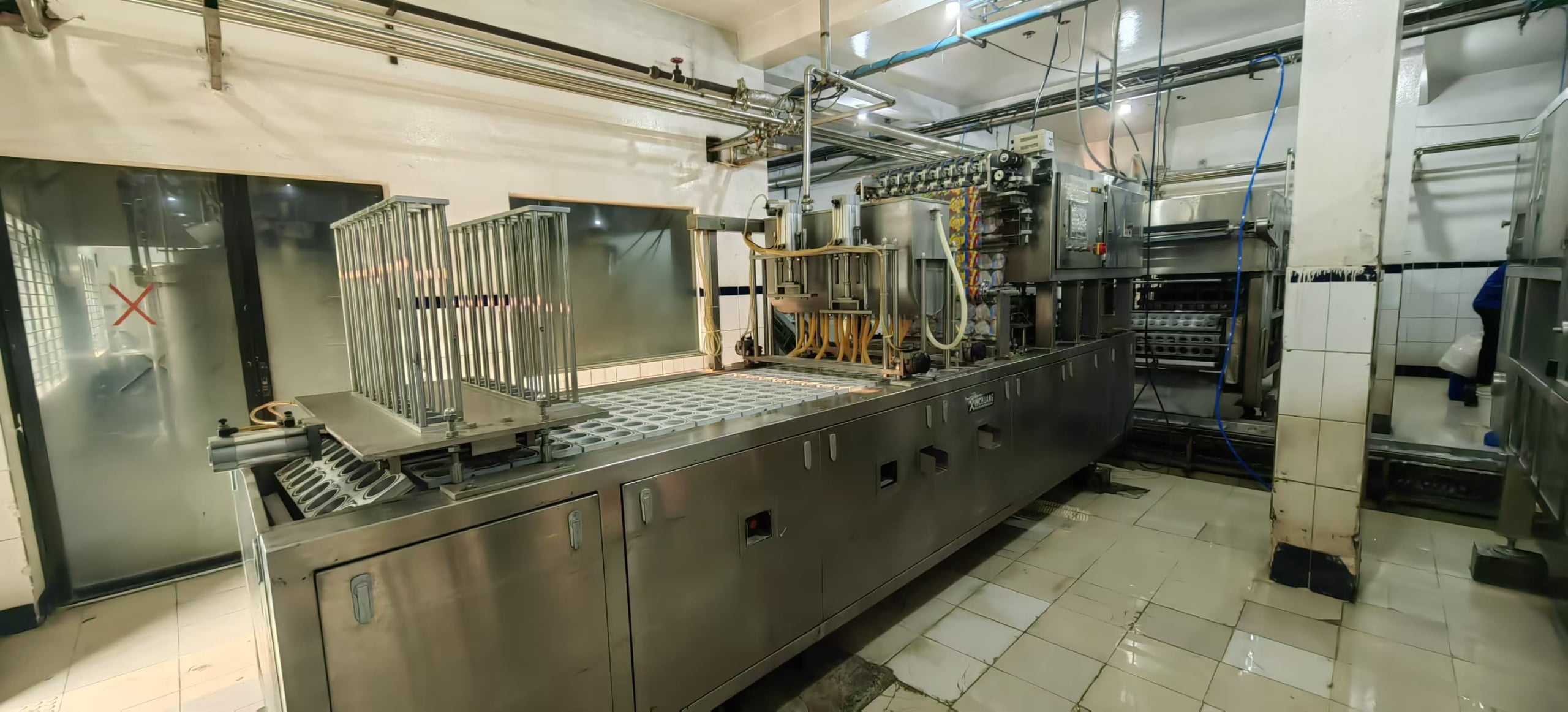
For a milk tea factory, the packaging format is the starting point. The machine should follow the cup, lid, straw, particles, filling volume, and sales channel requirement. This makes the quotation more accurate and helps avoid expensive changes after production starts.
Conclusion
A milk tea cup filling and sealing line should be planned around the real package. A common milk tea cup may use a 90 mm cup mouth and around 350 ml volume. Pearls, coconut jelly, pudding, and similar particles can be added automatically by a special feeding device. Four-lane, six-lane, or larger customized machines can be considered according to the buyer’s initial output estimate.
If the market requires a lid or straw attached to the cup, those operations can also be automated, but they must be confirmed with real cup, lid, and straw samples. The safest planning method is to choose the market package first, then match the machine configuration to that package.
- Bubble tea or milk tea packaging varies by market, so the accepted cup format should be confirmed before machine configuration. Return
- Tapioca pearls and similar particles need special dosing consideration because size, stickiness, and shape affect automatic feeding. Return
- Heat sealing quality depends on sealing film, cup rim, pressure, temperature, and dwell time. Return
- Polypropylene is common in cup packaging, but actual cup stiffness and rim quality should be checked with samples. Return
- Viscosity affects filling time, nozzle selection, dripping control, and practical line output. Return