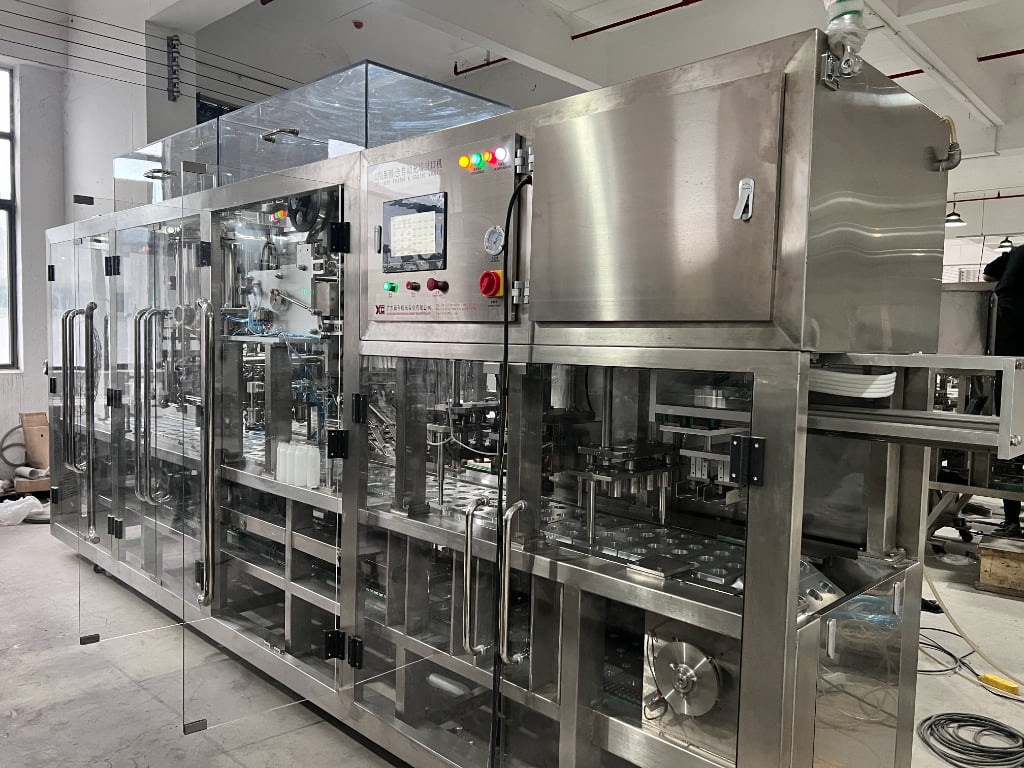
A yogurt cup filling and sealing machine is not designed from capacity alone. The machine layout depends on the cup size, filling volume accuracy, sealing film style, automation level, hygiene requirement, and whether the yogurt contains coconut jelly, fruit pieces, or other inclusions.
The direct answer is: cup dimensions, filling accuracy requirement, sealing film format, automation form, sanitary design requirement, and whether the yogurt contains coconut jelly or fruit pieces all affect the design of a yogurt cup filling and sealing machine.
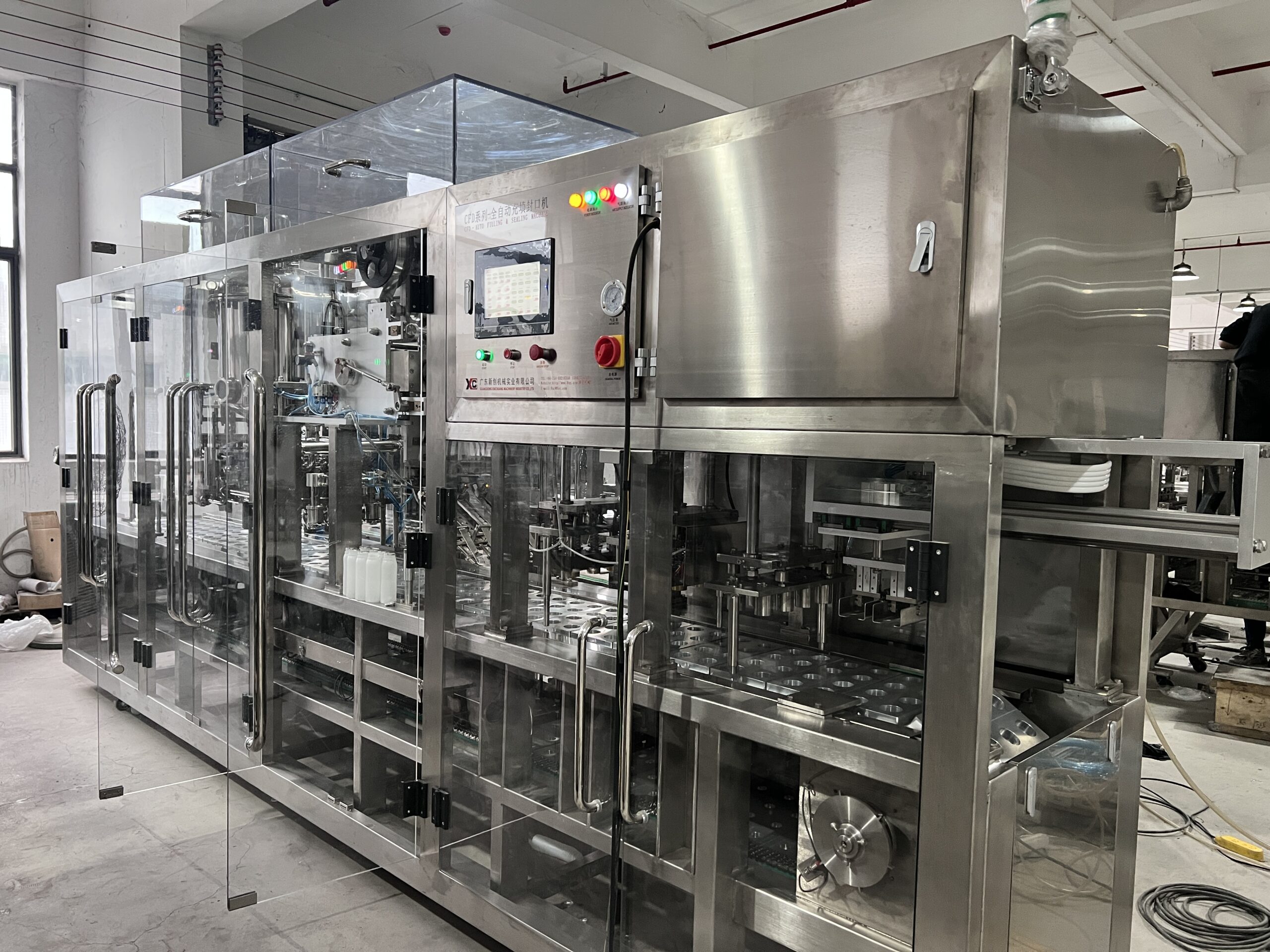
Guangdong Xinchuang Machinery Industry Co., Ltd. focuses on linear cup filling and sealing machine solutions. For yogurt projects, the correct machine is usually customized around the buyer’s package and product condition. A quotation based only on “yogurt cup machine” is not enough for a serious factory project.
Useful technical concepts for this topic include yogurt1, viscosity2, heat sealing3, clean-in-place4, and food contact materials5.
Quick Answer: Which factors change the machine design?
The most important factors are cup diameter, cup height, filling volume, filling accuracy requirement, film type, automation level, sanitary requirement, yogurt viscosity, and whether the yogurt contains coconut jelly or fruit pieces. Each factor changes a different part of the machine.
Buyers should send real cup samples, sealing film samples, and yogurt samples before final design. The machine supplier needs these samples to confirm cup dropping, filling, sealing, cleaning, and output logic.
How does cup size affect the machine?
Cup size is one of the first design inputs. Cup diameter affects the mold plate, cup dropping structure, sealing head spacing, film positioning, lane layout, and machine width. Cup height affects cup stacking, cup dispensing stability, filling nozzle movement, and discharge handling.
For linear cup machines, the number of lanes must be planned around the cup diameter. A small cup can usually fit more cavities across the machine width. A larger yogurt cup takes more space, so the same machine width may support fewer lanes. This changes the practical output.
Large cup diameter changes are usually not simple mold swaps. They may affect cup dropping, filling spacing, sealing structure, cutting position, and export transportation width.
| Design Factor | Buyer Should Confirm | Machine Area Affected |
|---|---|---|
| Cup diameter | Rim outside diameter and cup mouth size | Mold plate, lane count, sealing head |
| Cup height | Total height and stacking condition | Cup dropping, filling nozzle, discharge |
| Cup material | PP, PET, paper-plastic, or other material | Sealing temperature and cup handling |
| Cup rim quality | Flatness and rim strength | Seal strength and leakage control |
Why does filling accuracy change the filling system?
Some yogurt buyers only need a normal commercial filling tolerance. Others require stricter filling accuracy because the cup volume is small, the product is expensive, or retail weight control is important. The required accuracy affects pump choice, filling valve design, control method, and filling rhythm.
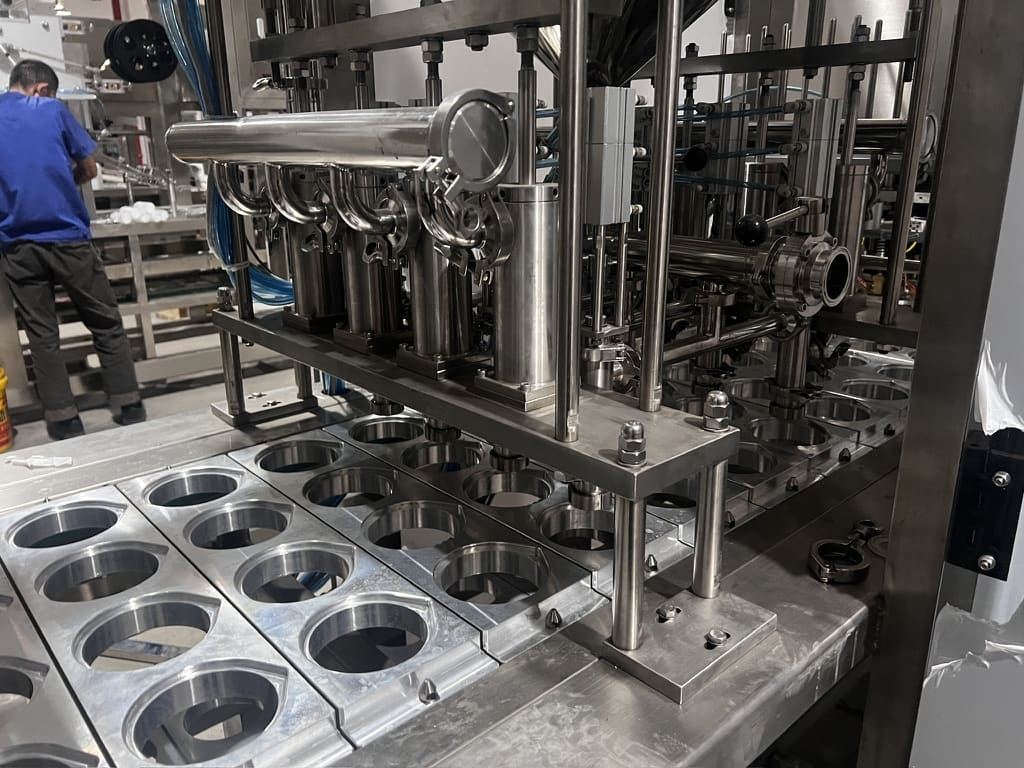
Yogurt viscosity also matters. Drinkable yogurt, thick yogurt, stirred yogurt, and yogurt with inclusions do not flow the same way. A filling system that works well for low-viscosity yogurt may not be suitable for thick yogurt. If the buyer needs high accuracy, the factory should test the real product sample.
The higher the accuracy requirement, the more important it is to confirm yogurt viscosity, filling temperature, filling volume, and whether the product contains particles.
How do single-piece film and roll film affect sealing design?
Yogurt cups may use pre-cut single-piece lids or roll film. These two sealing formats require different feeding and positioning systems. Single-piece film usually needs lid picking, placing, and positioning. Roll film usually needs film unwinding, mark tracking when printed film is used, sealing, and cutting.
Film style also affects automation and cost. Pre-cut film can be practical for some cup formats, but feeding stability depends on film shape, stack quality, static, and lid stiffness. Roll film can be efficient for continuous production, but the machine must match roll width, film material, printing mark, and cutting shape.
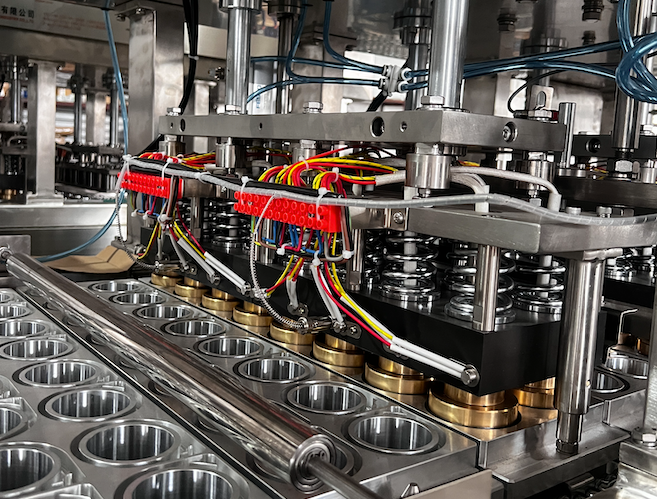
Buyers should confirm whether they want single-piece film or roll film before final quotation. Changing the film format later can change the machine structure, not only the film holder.
What automation level should buyers choose?
Automation level should match the buyer’s labor plan, target output, budget, and workshop operation. A basic yogurt cup line may include automatic cup dropping, filling, film placing or film feeding, sealing, cutting, and discharge. A more automated line may include date coding, UV sterilization, cup checking, lid adding, conveyor connection, and downstream packing support.
Higher automation is not automatically better for every factory. It requires better cup quality, more stable film supply, trained operators, and maintenance support. For startup factories, the key is to choose automation that solves real labor and output problems without making operation too complex.
| Automation Choice | When It Helps | What To Confirm |
|---|---|---|
| Automatic cup dropping | Stable continuous production | Cup stack quality and cup stiffness |
| Automatic film feeding | Roll film production | Roll width, material, printed mark |
| Automatic single-lid placing | Pre-cut film or lid format | Lid shape, stack, static, feeding stability |
| CIP-related design | Higher dairy hygiene requirement | Product-contact cleaning scope |
| Downstream conveyor | Higher output or packing connection | Workshop layout and packing labor |
Why do hygiene requirements and coconut jelly affect the design?
Yogurt is a dairy product, so product-contact parts need careful sanitary design. The filling hopper, pump, pipeline, filling heads, and valves should be discussed according to the buyer’s hygiene standard. If the buyer needs CIP, the cleaning scope should be specified clearly.
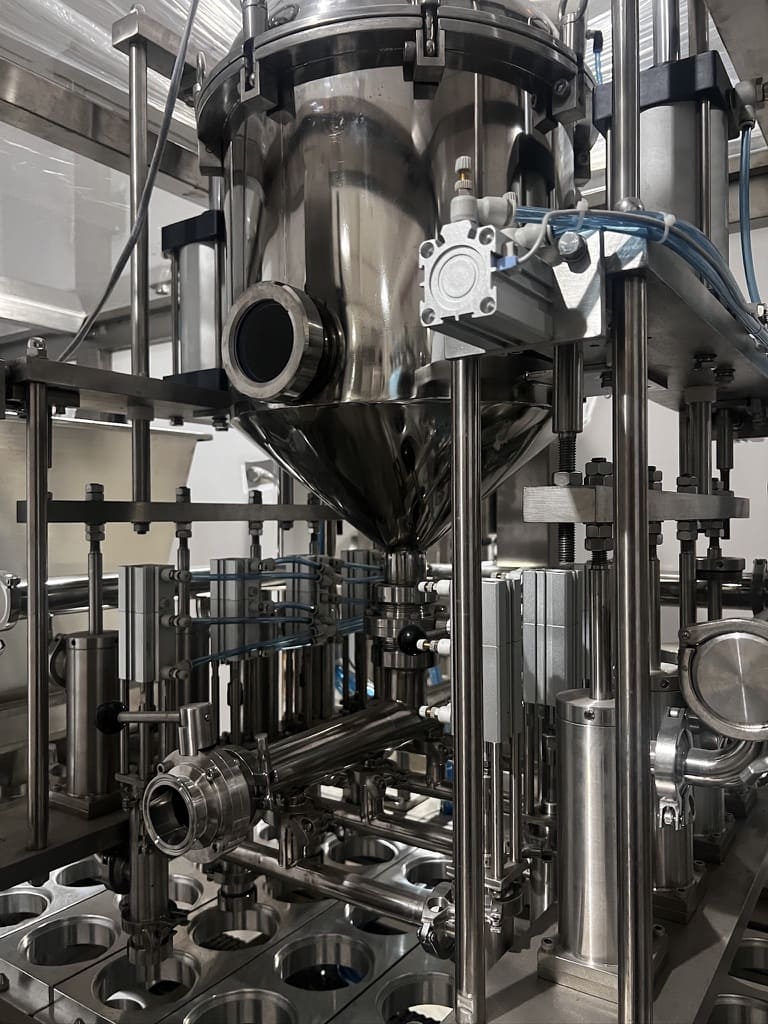
Do not ask only whether the machine has CIP. Confirm which parts are included: hopper, pipes, pump, filling heads, valves, and product-contact connection points.
If the yogurt contains coconut jelly, fruit pieces, or similar inclusions, the filling system may need a larger passage, suitable pump, anti-blocking nozzle design, and gentle handling. The product may also need mixing or anti-settling consideration before filling. Coconut jelly pieces may settle, bridge, or block if the feeding path is not designed correctly.
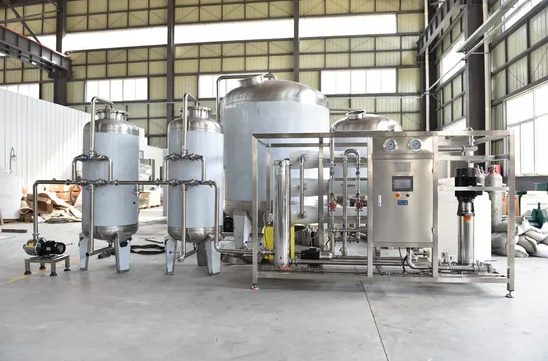
For this reason, sample testing is not optional for complicated yogurt products. The factory should see the real yogurt, real inclusions, and real filling temperature before confirming the final design.
Buyer Checklist
Before requesting a quotation, buyers should prepare the cup sample, cup drawing if available, target filling volume, required accuracy, sealing film sample, film format, automation expectation, hygiene requirement, yogurt sample, and information about coconut jelly or fruit pieces.
The best quotation is built from real samples, not from a general machine name.
- Confirm cup diameter, height, rim shape, material, and stack quality.
- Confirm filling volume and acceptable filling accuracy range.
- Confirm whether sealing uses single-piece film or roll film.
- Confirm desired automation level and available labor.
- Confirm sanitary requirements, CIP scope, and cleaning frequency.
- Confirm whether the yogurt contains coconut jelly, fruit pieces, or other inclusions.
- Send real cup, film, and product samples for checking before final design.
Not Suitable When
This type of machine design discussion is not suitable when the buyer only asks for the lowest price without confirming cup size, filling volume, film format, yogurt condition, hygiene requirement, and automation expectation. In that case, the supplier can only provide a rough machine direction.
It is also not suitable to assume one fixed yogurt cup machine can handle every future cup and product. If the buyer may change cup diameter, use a different film format, add fruit pieces, or require stricter hygiene later, future expansion should be discussed before ordering.
Factory Insight
From a factory-side view, the most easily missed details are cup dimensions, filling accuracy requirement, film format, automation form, sanitary level, and inclusions such as coconut jelly. These details look small during early inquiry, but they decide the actual machine configuration.
The practical rule is simple: cup size decides the mechanical layout, filling accuracy decides the filling system, film style decides the sealing structure, automation decides the station arrangement, hygiene decides cleaning design, and coconut jelly decides whether the filling path needs special handling.
Related articles: why yogurt cup filling machines need CIP cleaning, how to choose a yogurt cup filling machine for chilled dairy products, why buyers should send samples, and why cup size affects cup filling machines.
Conclusion
The design of a yogurt cup filling and sealing machine is affected by cup size, filling accuracy, sealing film style, automation level, sanitary requirement, and whether the yogurt contains coconut jelly or fruit pieces. These factors affect the machine structure, not only the quotation text.
Final design should be confirmed after reviewing real cup samples, sealing film samples, yogurt product condition, required output, hygiene requirements, and factory operation plan.
- Yogurt is a dairy product, so filling equipment should be reviewed with hygiene and residue control in mind. Return
- Viscosity affects flowability, filling accuracy, dripping control, and cleaning difficulty. Return
- Heat sealing depends on film material, cup rim quality, temperature, pressure, and dwell time. Return
- Clean-in-place is relevant for dairy filling, but the actual scope depends on machine design. Return
- Food contact materials and product-contact surfaces should be considered for yogurt hygiene planning. Return