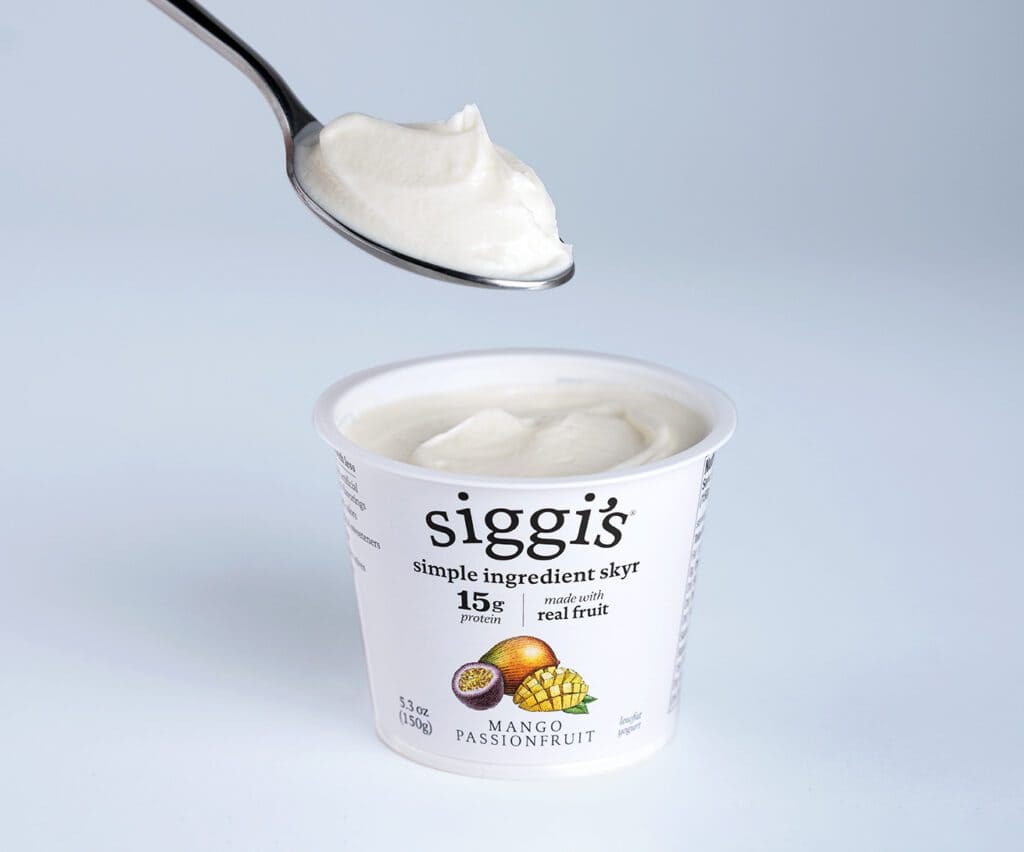
Yogurt cup production has higher hygiene requirements than many simple liquid products. Buyers often focus on filling speed, cup size, and sealing film, but cleaning design is just as important. If the parts that touch yogurt are not cleaned properly, dairy residue can remain inside the machine and create quality and hygiene risks.
The direct answer is: a yogurt cup filling machine needs CIP cleaning because yogurt directly contacts the filling hopper, product pipelines, filling heads, and filling pump. If these parts are not cleaned, or if cleaning is incomplete, dairy residue may ferment or even become moldy inside the material-contact areas. This can affect taste, product quality, and hygiene safety.
At Guangdong Xinchuang Machinery Industry Co., Ltd., we treat CIP cleaning as part of the yogurt machine’s hygiene design, not as a decorative option. For yogurt projects, the key question is not only whether the machine can fill cups. The real question is whether the product-contact path can be cleaned consistently before and after production.
Useful technical terms for this topic include clean-in-place1, yogurt2, fermentation3, stainless steel4, and viscosity5. These terms help buyers understand why yogurt filling equipment should be reviewed as a hygienic system.
Quick Answer: What does CIP clean on a yogurt filling machine?
CIP cleaning is mainly used for parts that have direct contact with yogurt. On a yogurt cup filling and sealing machine, the important cleaning areas include the filling hopper, product pipelines, filling heads, and filling pump. These are the parts where yogurt residue can remain after production.
Buyers should not ask only whether the machine has CIP. They should ask which parts are included in the CIP cleaning path: the hopper, pipes, filling heads, pump, valves, and any product-contact connection points.
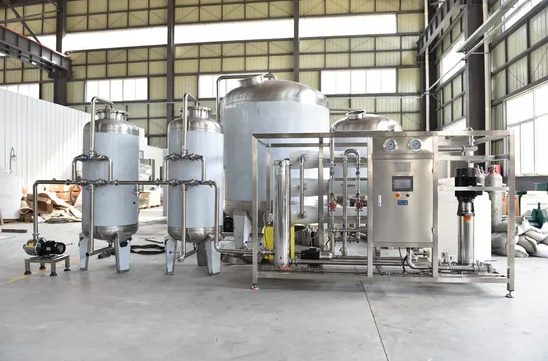
The exact cleaning scope should be confirmed in the quotation and design discussion. Some systems may clean only the tank or hopper. Others may include more of the product path. If the buyer assumes the whole system is automatically cleaned, but the machine only cleans one section, cleaning gaps can appear in daily production.
Why is yogurt residue a serious problem?
Yogurt is a dairy product. If residue stays in the filling hopper, pipelines, filling head, or filling pump, it can continue to change after production. Dairy residue can sour, ferment further, produce odor, or create visible contamination if it is left too long or not cleaned properly.
In factory terms, unclean yogurt residue is not only a cleaning inconvenience. It can affect product taste, create hygiene risk, and damage buyer confidence in the finished product.
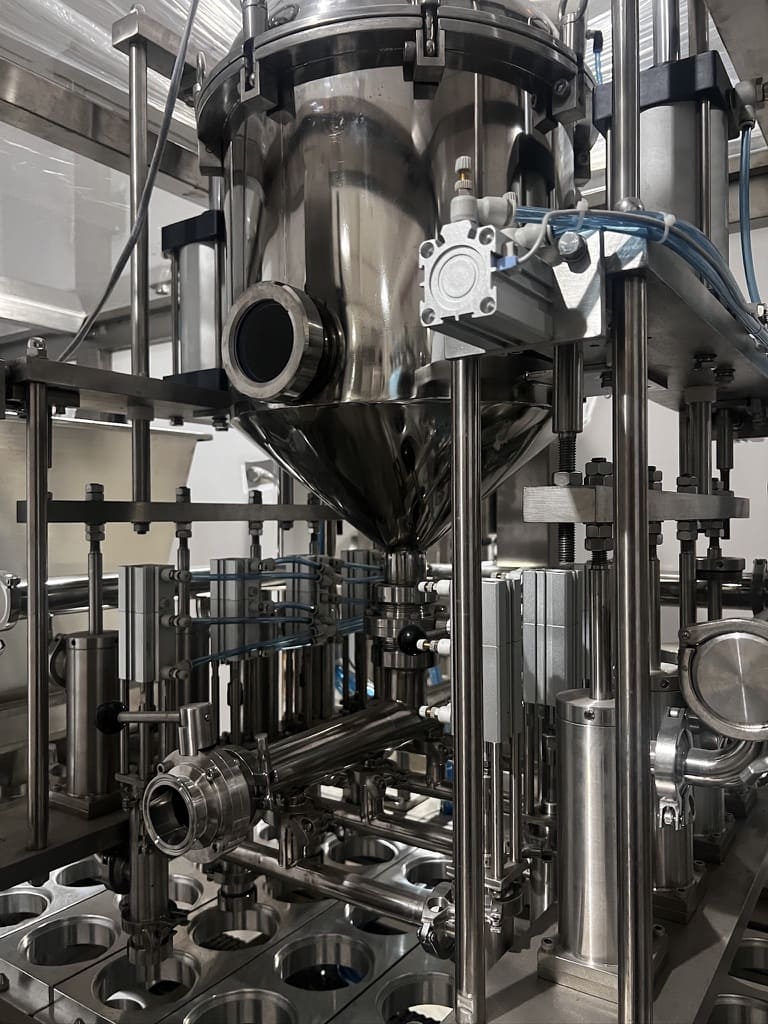
This is why cleaning repeatability matters. Manual cleaning can help in some areas, but it depends heavily on operator discipline, access, and time. CIP cleaning helps create a more controlled cleaning process for the product-contact areas that are designed into the CIP path.
However, CIP is not a magic word. Buyers still need to confirm drainability, cleaning connection points, dead corners, inspection access, and which parts may require manual checking. A hygienic yogurt line depends on machine design, cleaning process, operator practice, and factory environment together.
How do viscosity and fruit particles affect CIP planning?
Yogurt viscosity affects how easily product residue is removed from the machine. Drinkable yogurt may flow and rinse more easily. Thick yogurt may remain on hopper walls, pipe surfaces, valves, and filling heads. Fruit yogurt or yogurt with particles may require more careful cleaning and inspection.
The thicker the yogurt, the more important it is to review the filling path, pump type, pipe layout, nozzle design, and cleaning access. If fruit particles are included, sample testing and cleaning verification become more important.
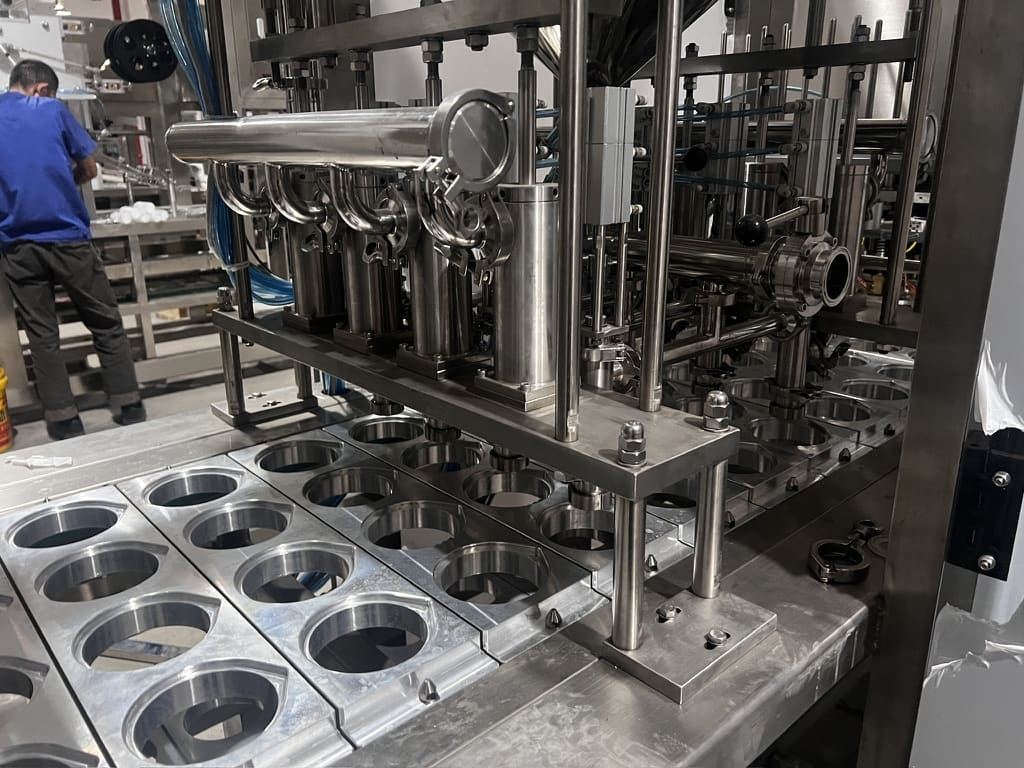
Some buyers think CIP means operators no longer need to inspect anything. That is risky. For dairy products, the cleaning plan should define which areas are cleaned automatically, which areas should be inspected, and which parts may need disassembly depending on product characteristics.
Yogurt CIP cleaning checklist
| Machine Area | Why It Matters | Buyer Check |
|---|---|---|
| Filling hopper | Yogurt can remain on tank walls and bottom areas | Confirm CIP spray/cleaning path and drainability |
| Product pipelines | Residue can remain inside pipe runs | Check pipe layout, cleaning connections, and dead corners |
| Filling heads | Residue affects filling hygiene and dripping | Confirm cleaning method and inspection access |
| Filling pump | Product passes through pump chambers and seals | Confirm whether pump is included in CIP path |
| Valves and joints | Small gaps can hold dairy residue | Check disassembly and manual inspection requirements |
When is CIP not enough by itself?
Not suitable when: a buyer expects CIP to solve hygiene problems while ignoring product samples, factory sanitation, operator cleaning procedures, workshop environment, and manual inspection. CIP supports cleaning, but it does not replace a complete hygiene management plan.
CIP may also be insufficient when the product contains large fruit pieces, very sticky ingredients, or materials that are difficult to rinse from narrow paths. In those cases, the filling system and cleaning method should be confirmed after sample checking.
Buyers should also avoid vague quotation language. “With CIP” is not enough. The quotation should clarify which parts are included, how the cleaning liquid flows, how operators connect cleaning, and whether any parts still need manual cleaning.
Buyer Checklist: What should buyers confirm before ordering?
Before ordering a yogurt cup filling machine, buyers should confirm yogurt viscosity, whether fruit particles are included, filling volume, production temperature, cleaning frequency, cleaning method, hopper design, pipeline layout, pump type, filling head access, and whether the factory already has a central CIP system.
The practical buying question is: can the machine clean the real yogurt contact path that my product will pass through every day?
| Question | Why It Matters | Factory-Side Note |
|---|---|---|
| Is the hopper included in CIP? | Hopper residue is common after production | Check spray, drainage, and access |
| Are pipelines included? | Closed pipes are hard to clean manually | Confirm flow path and cleaning connections |
| Are filling heads included? | Nozzle residue can affect hygiene and dripping | Inspect nozzle design and disassembly needs |
| Is the pump included? | Yogurt passes through pump chambers | Confirm pump cleaning method |
| Does the product contain fruit particles? | Particles can remain in product path | Sample testing is recommended |
Factory Insight: What do buyers often misunderstand?
Many buyers treat CIP as a simple accessory name. In real factory discussion, CIP should be reviewed by product-contact part. For yogurt, the filling hopper, pipelines, filling heads, and filling pump are the key areas because they directly contact dairy product.
Our factory-side view is that yogurt CIP cleaning should be planned before machine confirmation, not added casually later. If the machine is not designed with proper cleaning path, access, and drainability, cleaning becomes slower and less reliable.
For related planning, buyers can read how to choose a yogurt cup filling and sealing machine for chilled dairy products, why buyers should send samples before choosing a filling machine, pasteurizer and cooling line decisions, and linear cup filling and sealing machine selection.
Conclusion
A yogurt cup filling machine needs CIP cleaning because yogurt directly contacts the filling hopper, pipelines, filling heads, and filling pump. If these areas are not cleaned properly, dairy residue can ferment, become moldy, affect taste, and create hygiene risk.
Buyers should confirm CIP scope by machine area, not only by the word CIP. The final design should consider yogurt viscosity, fruit particles, filling volume, product temperature, cleaning frequency, product-contact path, drainability, inspection access, and factory hygiene management.
- Clean-in-place means cleaning internal equipment surfaces without full disassembly, but the actual cleaning scope depends on system design. Return
- Yogurt is a dairy product with high hygiene requirements, so residue control in filling equipment is important. Return
- Fermentation can continue when dairy residue remains in unsuitable conditions, affecting odor, taste, and hygiene risk. Return
- Stainless steel is commonly used for hygienic food equipment, but cleanability also depends on design, access, and surface condition. Return
- Viscosity affects how yogurt flows, fills, drains, and cleans from product-contact surfaces. Return