Cup-form jelly is the main application for this type of machine, but “jelly” does not describe only one product. A factory may plan single-color jelly, two-color jelly, jelly with coconut pieces, or jelly with fruit inclusions. These products may use the same general packaging format, yet they do not automatically use the same machine design.
Quick Answer: A linear cup filling and sealing machine can be configured for single-color jelly, two-color jelly, coconut jelly cups, fruit jelly cups, and other flowable jelly products in preformed cups. However, cup diameter, color arrangement, particle type, filling behavior, and downstream cooling requirements must be confirmed before the machine is designed.
The important buyer question is not only “Can the machine fill jelly?” It is “What product must enter each cup, in what sequence, and what must happen after sealing?” That information determines the cup molds, number of filling systems, particle-feeding device, machine length, controls, and downstream line.
For a process overview, first read how a jelly cup filling and sealing machine works. This article focuses on product compatibility and why different jelly styles require different engineering.
Which Jelly Products Can Be Packed in Preformed Cups?
The machine is mainly used for products sold in sealed cups. The cups are automatically dropped into molds, filled according to the recipe, covered with sealing film, sealed, cut, coded when required, and discharged. The exact station sequence depends on the product.
Single-color jelly
Single-color jelly is usually the most straightforward configuration. One prepared jelly mixture is supplied to the filling system and dispensed into each cup. Even here, the supplier still needs the real cup diameter, cup height, filling volume, product temperature, viscosity, and target output. A different cup mouth changes the mold, cup-dropping structure, lane spacing, sealing area, and possible cavity count.
Two-color jelly
Two-color jelly normally needs two product supplies and a defined filling sequence. Depending on the intended appearance, the products may be placed in separate steps or through a specially arranged filling station. The buyer should explain whether the colors form layers, separate zones, or another visual effect. Product viscosity and timing affect whether the colors remain distinct.
A single-color machine and a two-color machine do not normally have the same length. The second product system can add a hopper, pump, pipes, filling heads, controls, cleaning points, and physical station space. A two-color requirement added after manufacturing may therefore be a significant modification rather than a simple software change.
Jelly with coconut pieces
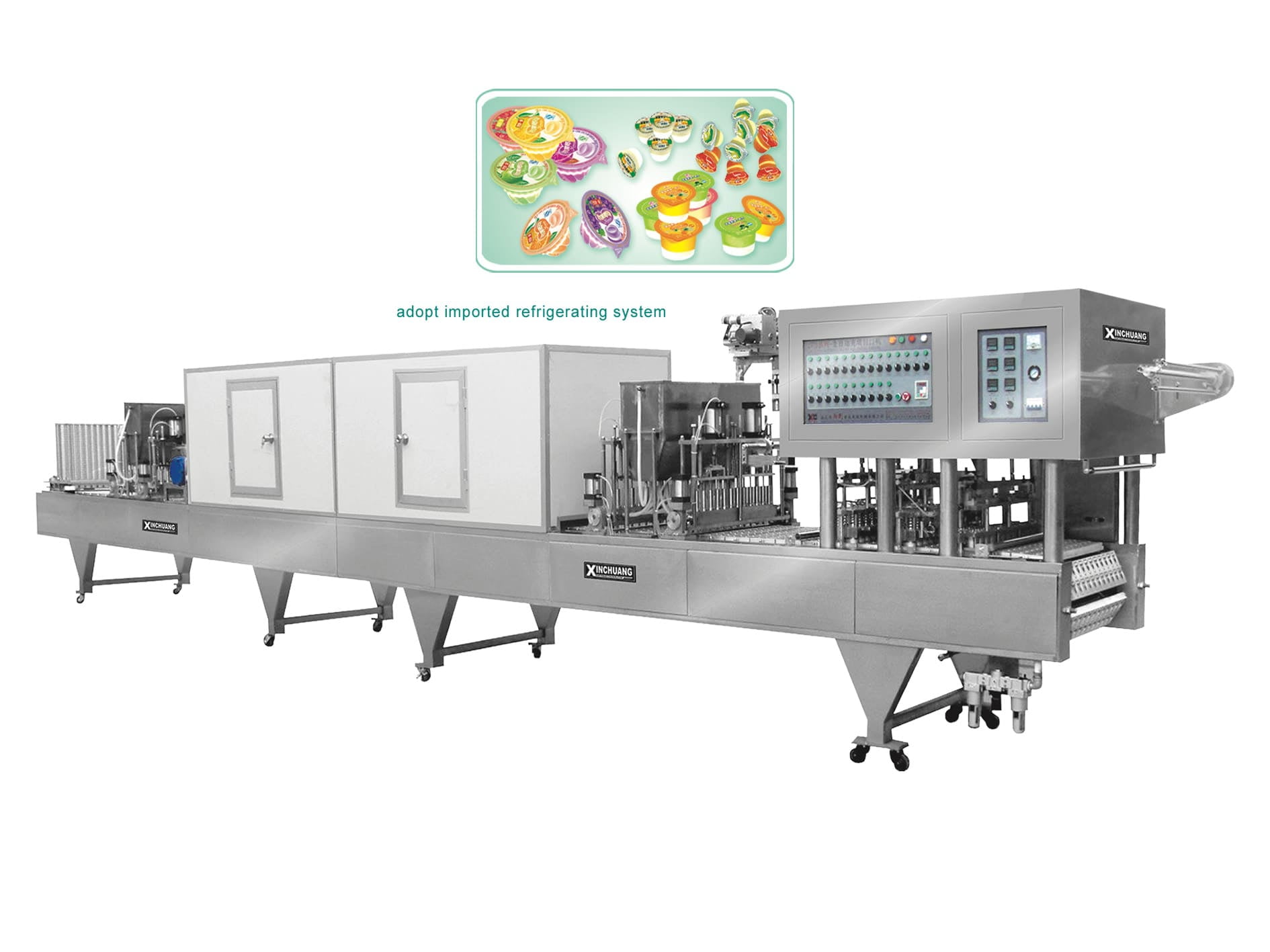
Jelly cups with coconut pieces, often described as nata de coco1, require an additional feeding decision. Coconut pieces are not handled like a smooth liquid. Their size, shape, moisture, concentration, and tendency to bridge or settle influence the device.
A separate coconut-feeding unit may be installed before or between liquid filling stages. The factory should send the actual coconut material for testing. The supplier needs to see whether pieces stick together, whether the requested quantity can be distributed consistently, and whether any material reaches the cup rim and interferes with sealing.
Jelly with fruit pieces
Fruit jelly can mean a fruit-flavored liquid jelly or a cup containing real fruit pieces. Those are different projects. A fruit-flavored, particle-free product may use a normal liquid filling system. Real fruit pieces require checking their dimensions, softness, shape, syrup content, distribution, and sensitivity to damage.
Small, reasonably uniform pieces may be handled with a dedicated feeding arrangement after testing. Large, irregular, fragile, or highly sticky pieces may not feed reliably through a standard device. The final design should be confirmed after sample checking rather than from a photograph or recipe name.
| Jelly cup product | Main machine requirement | What the buyer must confirm |
|---|---|---|
| Single-color jelly | One primary filling system | Cup size, volume, viscosity, temperature and output |
| Two-color jelly | Two product supplies or staged filling arrangement | Color pattern, sequence, viscosity and cleaning method |
| Coconut jelly cup | Additional coconut-piece feeding device | Piece size, concentration, target quantity and feeding behavior |
| Jelly with fruit pieces | Product-specific particle or fruit feeding solution | Fruit dimensions, softness, stickiness and acceptable damage |
Why the Product Changes the Entire Machine Design
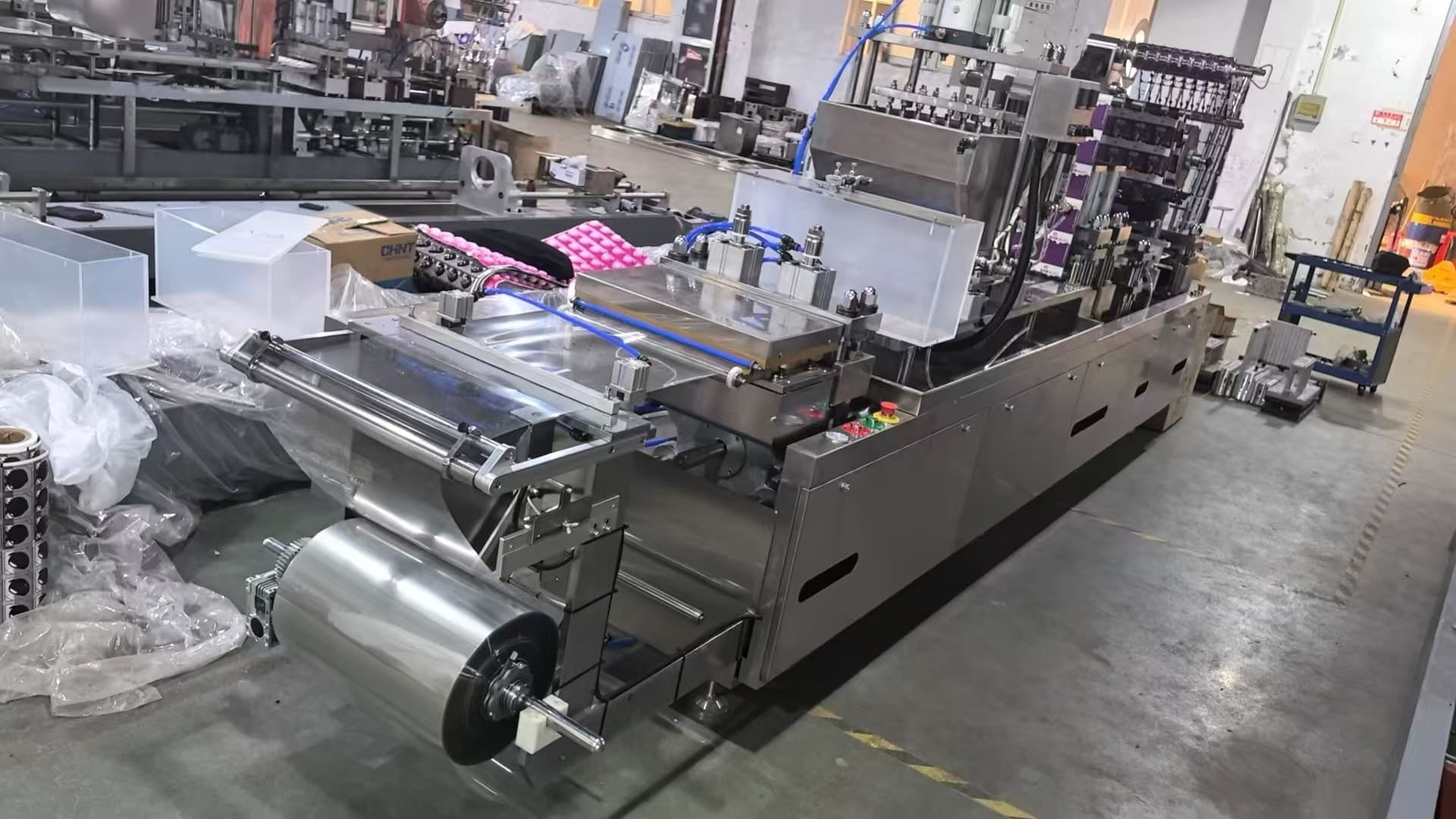
A linear cup filling and sealing machine is organized as a sequence of stations. Changing the product can add a station, change the distance between stations, or require separate product-contact systems. The result may be a different frame length, machine width, utility requirement, cleaning procedure, and production rhythm.
Cup diameter affects more than the mold
Cup diameter is one of the first design inputs. It affects cup dropping, mold dimensions, lane spacing, filling-head positions, sealing-film layout, sealing pressure distribution, cutting arrangement, and the number of cups processed per index. A large diameter change is not automatically a simple mold replacement.
The cup rim and material also matter because the cup must be stable during automatic handling and compatible with the selected sealing film. Technical background on heat sealing2 helps explain why seal performance depends on film, cup surface, temperature, pressure, and contact time.
Single-color and two-color configurations use different space
The machine length should follow the real process. A single-color line may need cup dropping, filling, film placement, coding, sealing, cutting, and output. A two-color line can require an additional hopper and filling station. Coconut or fruit pieces can add another feeding station. Each addition affects access for operators, cleaning, maintenance, and export packing.
Buyers planning more than one product should list the products before the layout is frozen. The supplier can then evaluate which products can share the same machine and which changes would require extra tooling, filling components, or a separate machine. For broader purchasing questions, see the jelly cup filling and sealing machine buying guide.
Product flow changes filling performance
Even when two products use the same cup, they may not fill in the same way. Viscosity3, temperature, bubbles, particles, and gel behavior influence the suitable filling method and cycle time. A product that flows freely through a nozzle may behave differently after fruit or coconut pieces are added.
Final filling accuracy and output should therefore be discussed using the actual recipe and sample. Catalogue capacity alone cannot represent every cup diameter, filling volume, color arrangement, and particle content. The related guide on jelly cup machine output explains why capacity depends on the complete configuration.
Why a Cooling Tunnel and Extra Devices May Be Needed
Jelly cup packaging often forms one part of a longer production line. Depending on the recipe and process, the filled and sealed cups may need heat treatment, cooling, drying, inspection, and secondary packing. A cooling tunnel cannot be selected only by matching its conveyor width to the filling machine.
If the process uses hot filling or post-sealing heat treatment, the factory must plan the product inlet temperature, treatment conditions, cooling target, cup and film behavior, conveyor speed, water or air system, drainage, and available floor space. Pasteurization4 is a process concept that must be validated for the actual formulation and package rather than assumed from another product.
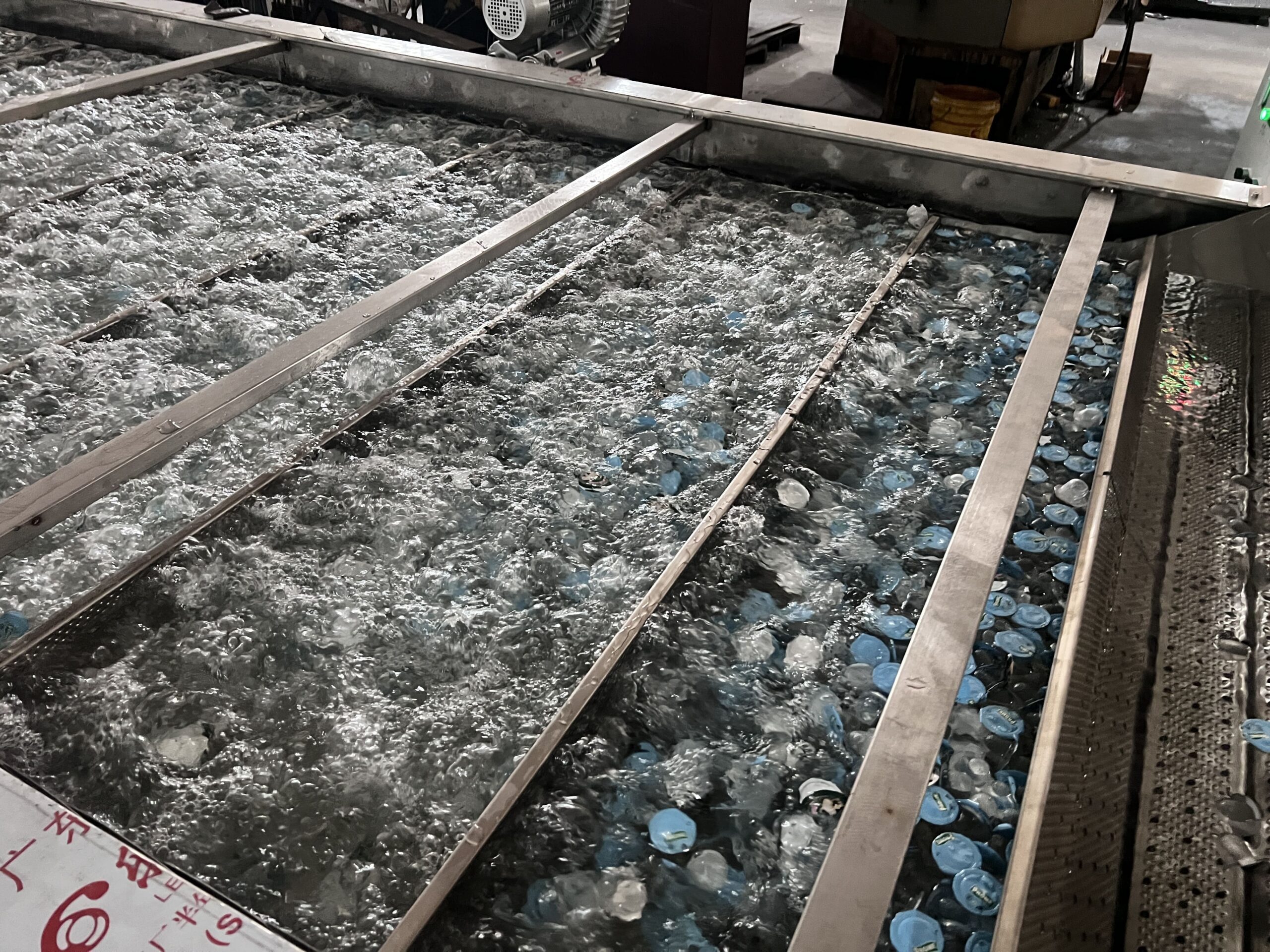
Additional coconut or fruit feeders must also be coordinated with downstream equipment. If particles contaminate the rim, sealing quality can suffer before the cups enter the cooling section. If the cooling tunnel runs slower than the filling machine, it can become the line bottleneck. The complete line should be balanced around the real product and output requirement.
Packaging materials should also be reviewed for their intended food use and process conditions. The FDA overview of food-contact substances5 is one technical reference, while the buyer must follow the requirements applicable in the destination market. More line-planning context is available in the jelly cup pasteurizer and cooling-line guide.
Buyer Checklist and Products That Need Special Review
Buyer Checklist
| Question | Why it changes the project |
|---|---|
| What are the cup diameter, height, rim and material? | Defines cup handling, molds, lanes, sealing and cutting |
| Is the jelly single-color or two-color? | Determines the number of product systems and machine length |
| Are coconut or fruit pieces required? | May require a separate feeder and sample testing |
| What are the filling volume, temperature and flow behavior? | Affects filling method, timing and output |
| Is post-sealing cooling or pasteurization required? | Adds downstream equipment, utilities and factory space |
| Will future products use the same cup and process? | Helps evaluate shared tooling and expansion risk |
Not Suitable When
A standard jelly cup machine configuration is not suitable when the buyer has not finalized the cup, when large fruit pieces must be fed without testing, when two-color filling is expected from a single filling system, or when the factory assumes every cup diameter can use the same tooling and output. It is also unsuitable to add a cooling tunnel after the layout is complete without checking line balance, utilities, drainage, and available space.
Products that are extremely thick, contain irregular solids, foam heavily, or change behavior at the intended filling temperature need a separate engineering review. “Jelly” on the product label is not enough information to confirm the machine.
Factory Insight: Define the Jelly Before Designing the Machine
From the factory side, the most useful starting point is a product matrix: cup drawing, single or two colors, coconut or fruit content, filling volume, filling temperature, target output, sealing film, and downstream cooling requirement. This matrix reveals whether the project needs one filling system, two filling systems, a separate particle feeder, a longer frame, and a cooling tunnel.
The machine should follow the jelly product, not the other way around. A clear product definition helps the buyer receive a realistic quotation and reduces later changes to the cup-dropping system, filling stations, sealing arrangement, frame length, and downstream line.
Conclusion
A linear cup filling and sealing machine can pack several cup-form jelly products, including single-color jelly, two-color jelly, coconut jelly cups, and fruit jelly cups. The packaging format may look similar, but the machine configuration is product-specific. Cup diameter affects the complete machine; two-color filling usually adds length and product-contact systems; coconut and fruit pieces may require dedicated feeders; and the process may require a downstream cooling tunnel.
Before ordering, provide the cup and real product samples, explain the desired visual effect and particle content, and confirm the complete process after sealing. That is the practical way to determine what the machine can pack reliably.
Footnotes
- Nata de coco is a gel-like food produced from coconut water and is commonly used as an inclusion in desserts and drinks. ↩
- Heat sealing joins compatible thermoplastic surfaces using controlled heat and pressure. ↩
- Viscosity describes resistance to flow and is one factor affecting filling behavior. ↩
- Pasteurization is a heat-treatment concept whose conditions must be validated for the specific food and package. ↩
- Food-contact material requirements depend on the material, intended use, process conditions, and applicable market rules. ↩