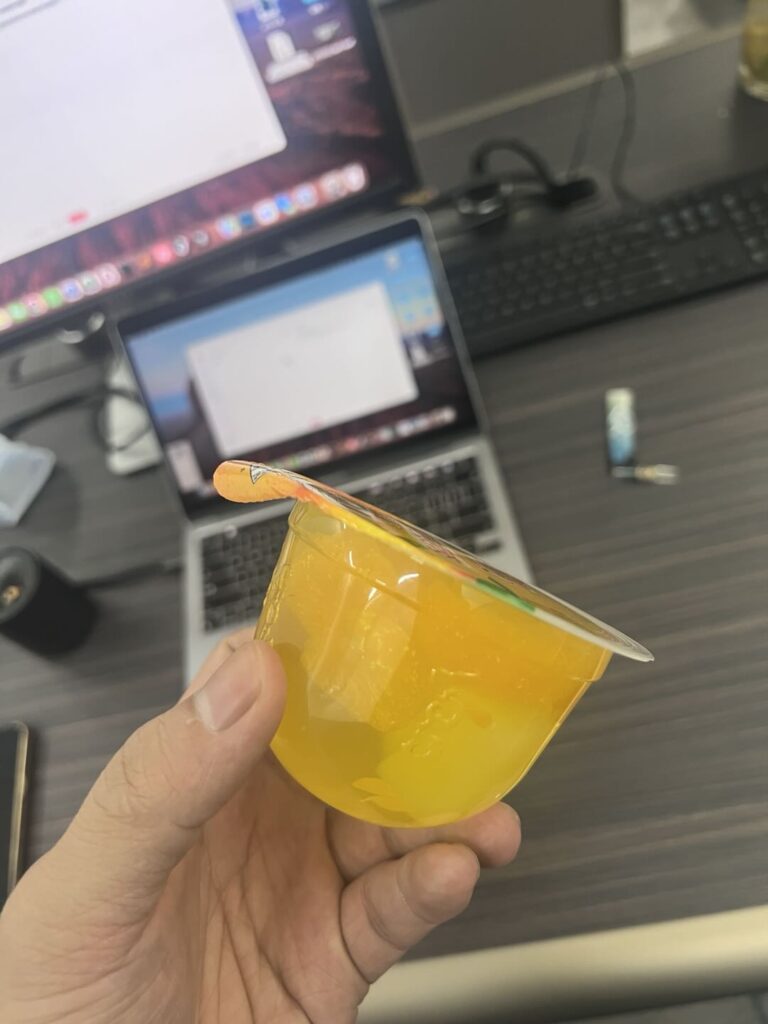
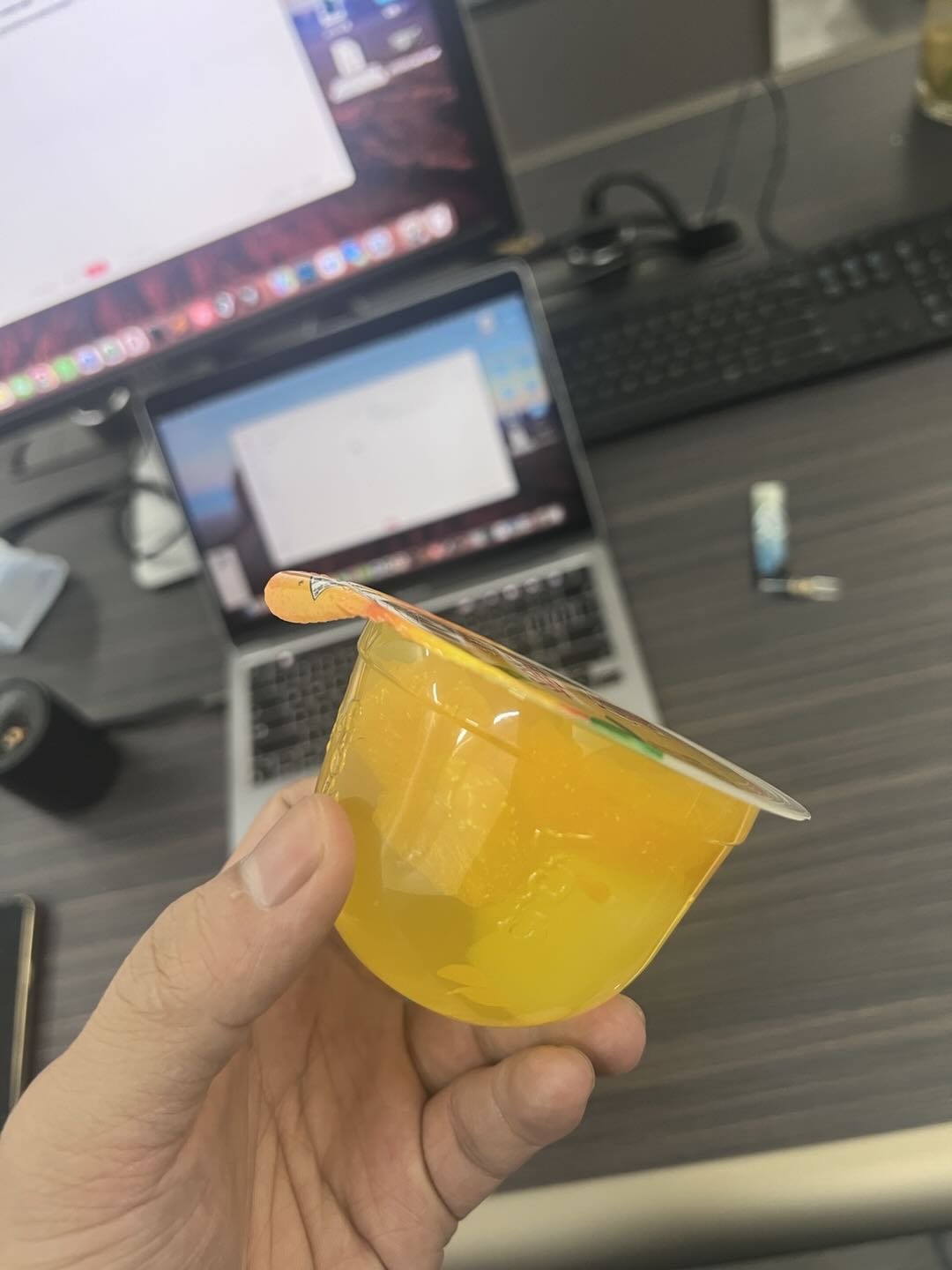
For a buyer planning jelly cup production, the filling and sealing machine is not only a machine that puts liquid into cups. It is the center of the whole packing rhythm: cups must be separated cleanly, filled accurately, combined with coconut jelly or other inclusions when required, sealed firmly, coded, cut, and discharged without damaging the cup or film.
Quick Answer: A jelly cup filling and sealing machine usually works through seven automatic steps: automatic cup dropping, automatic jelly filling, automatic coconut jelly feeding when required, automatic sealing film placing, automatic date coding, automatic cutting, and automatic cup output. The final design depends on cup diameter, cup height, filling volume, jelly viscosity, particle size, film type, target output, and whether the line needs pasteurization and cooling after sealing.
This article explains the workflow from a factory planning point of view. The goal is not to describe a generic packing machine, but to help food manufacturers understand what must be confirmed before Xinchuang designs a linear jelly cup filling and sealing machine solution.
Quick Answer: The Seven Main Working Steps
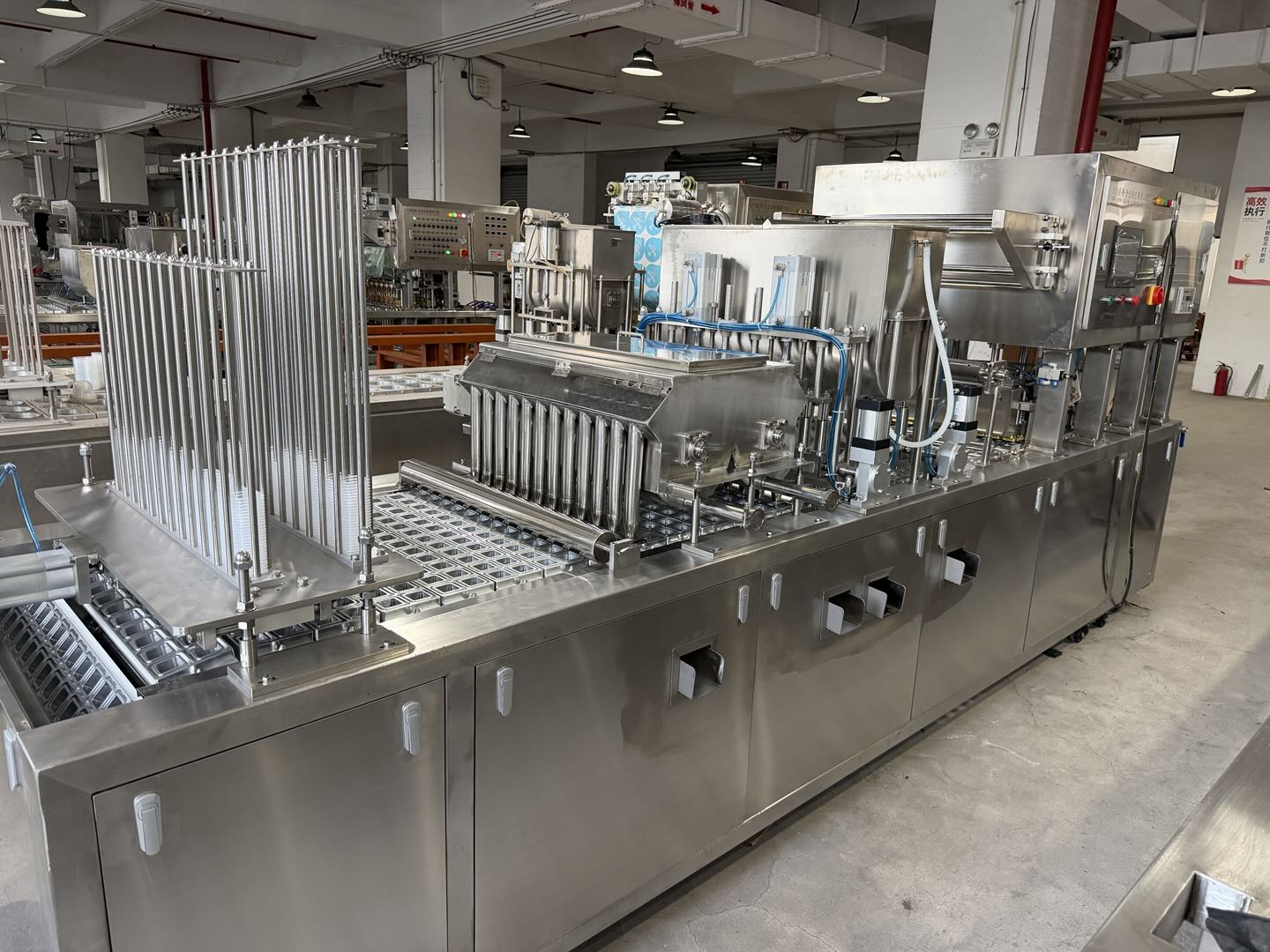
In a typical linear jelly cup filling and sealing machine, cups move station by station in molds. The basic sequence is:
- Automatic cup dropping
- Automatic jelly filling
- Automatic coconut jelly feeding or particle dosing, if required
- Automatic sealing film placing
- Automatic date coding
- Automatic film cutting
- Automatic cup output
The most important point for buyers is that these steps are connected mechanically. A change in cup size, filling volume, particle feeding method, or film format can affect more than one station. For example, a larger cup diameter may require a different mold plate, different cup dropping structure, wider filling spacing, adjusted sealing position, and a different output rhythm.
How the Linear Jelly Cup Machine Moves Cups Through Each Station
1. Automatic Cup Dropping
The machine first separates empty cups from a stacked cup magazine and drops each cup into a mold pocket. This step looks simple, but in real production it often decides whether the whole line can run smoothly.
Cup dropping depends on cup rigidity, rim shape, stacking quality, static electricity, and dimensional consistency. If the cups are too soft, stuck together, or inconsistent in height, the dropping station may miss cups or drop two cups at the same time. That creates filling waste and sealing problems downstream.
For this reason, buyers should send real cup samples before final design. A drawing is useful, but physical cups show the actual rim strength, stacking friction, wall thickness, and deformation risk.
2. Automatic Filling
After cup placement, the filling station doses jelly liquid into each cup. The filling method should match the product. Thin jelly liquid, hot-filled jelly base, and jelly with suspended pieces may need different pump or valve arrangements.
For jelly cup projects, the buyer should confirm filling volume, target accuracy, filling temperature, viscosity, and whether the product foams or drips. The number of filling nozzles is usually planned together with the number of lanes and the required output. Higher output is not only a motor speed question; it depends on filling time, cup spacing, sealing time, cooling or pasteurization planning, and how stable the cup handling is.
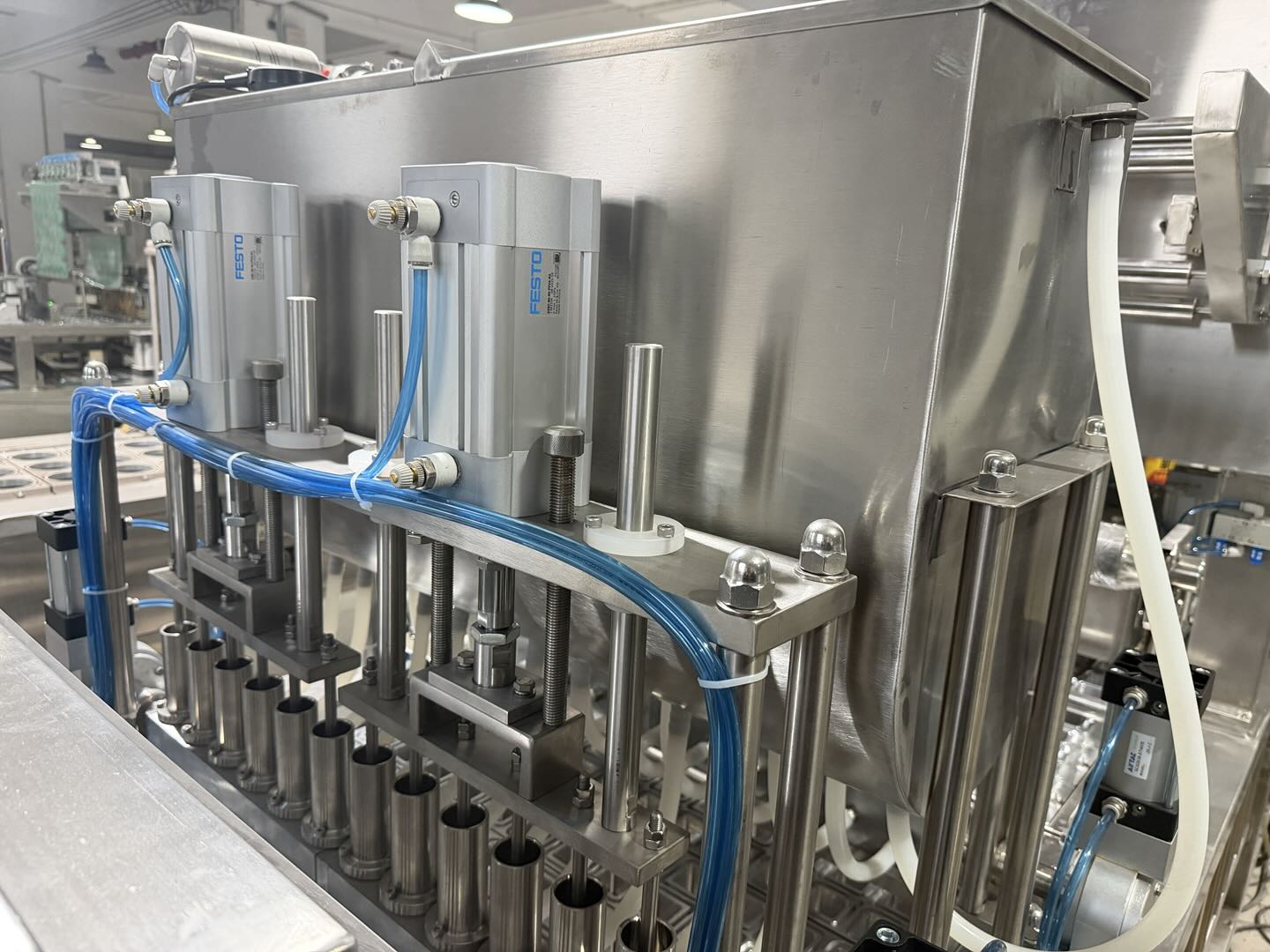
3. Automatic Coconut Jelly Feeding
Your factory insight is important here: many jelly cup buyers do not only fill jelly liquid. They may also need automatic coconut jelly feeding, fruit particles, or other inclusions. In English article wording, coconut jelly is often related to nata de coco, but the machine design should be confirmed by actual sample testing, not only by the product name.
Particle feeding affects the hopper, dosing device, product flow, and cleaning access. The buyer should confirm particle size, particle percentage, whether particles settle in the hopper, whether the liquid carries particles evenly, and whether separate dosing is required. If the coconut jelly is added separately from the liquid jelly base, the machine layout must allow both stable particle dosing and clean filling.
In many projects, a separate particle feeding station is more controllable than trying to push everything through one liquid filling circuit. The final choice depends on product sample testing.
Sealing, Date Coding, Cutting, and Output
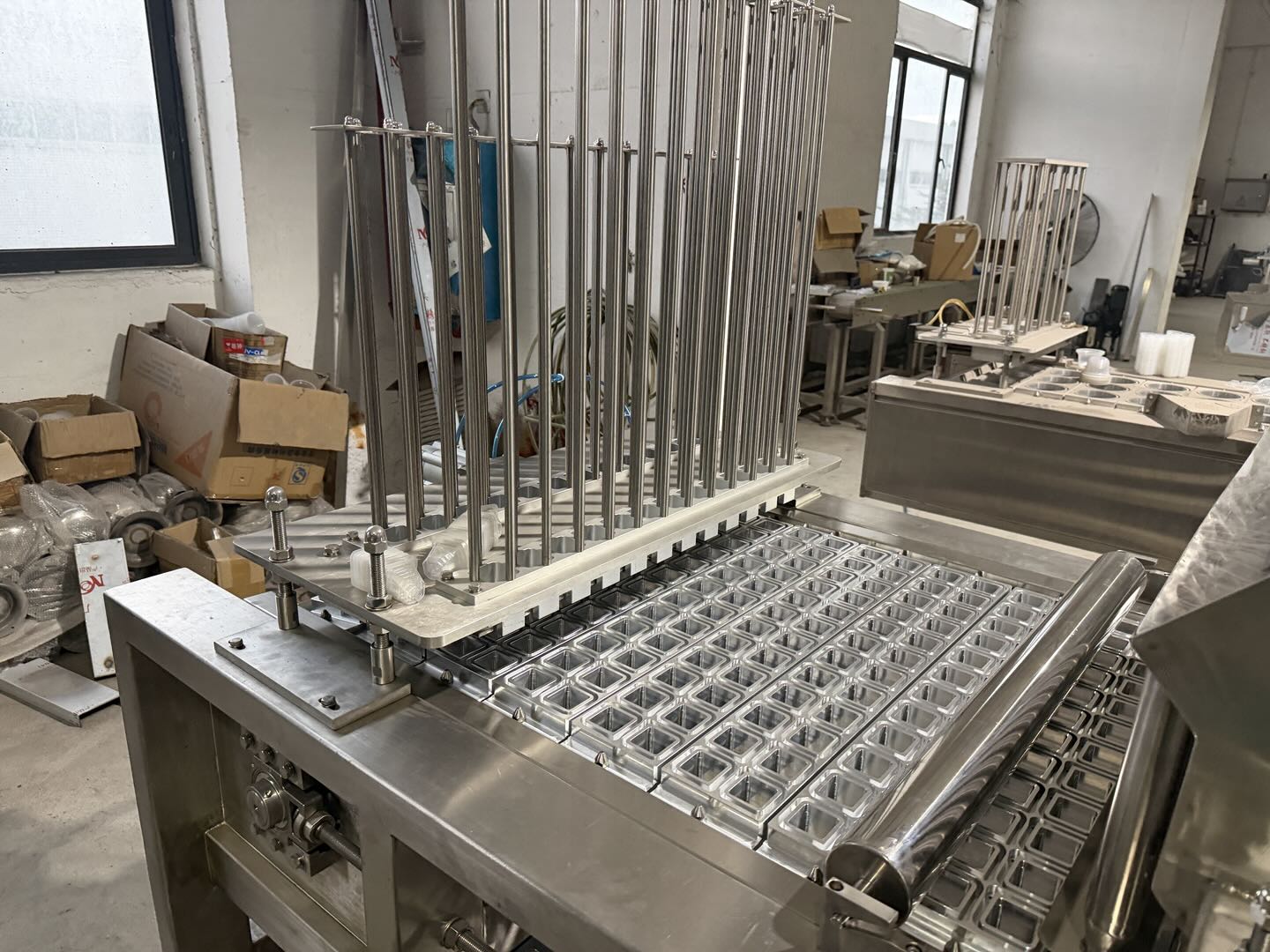
4. Automatic Sealing Film Placing
After filling, the machine places sealing film over each cup. The film may be pre-cut lids or roll film depending on the design. For jelly cups, sealing film quality matters because leakage after pasteurization or transportation can damage the whole batch.
Buyers should confirm film material, film thickness, printing position, roll width if roll film is used, and whether the film matches the cup rim. Heat sealing relies on suitable time, temperature, pressure, and clean contact surfaces. If jelly liquid contaminates the rim before sealing, the seal may become weak even if the machine temperature is correct. This is why filling height, anti-drip design, and cup positioning must be considered together.
5. Automatic Date Coding
Date coding is often requested for production date, expiry date, batch number, or factory code. It can be installed before or around the sealing/cutting area depending on film format and machine layout. Buyers should confirm coding content, character size, ink or thermal method, and whether the code must align with printed film artwork.
Date coding should be confirmed before machine layout is finalized, because the coder needs physical space, film travel distance, and access for ink replacement or maintenance.
6. Automatic Cutting
When roll film is used, the cutting station separates the sealed film around each cup. Cutting quality depends on cutter alignment, film tension, cup position, and cup rim accuracy. Poor cutting may leave rough edges, film tails, or inconsistent appearance.
For export-oriented jelly products, appearance is not a small detail. A clean cut improves shelf presentation and reduces customer complaints about sharp or uneven film edges.
7. Automatic Cup Output
Finally, the machine pushes or lifts finished cups out of the molds and transfers them to the next section. The next section may be manual collection, conveyor transfer, pasteurizer line, cooling line, drying, or carton packing. A conveyor system must be planned around cup stability and output rhythm.
For jelly cup production, downstream planning is especially important because many products need heat treatment after sealing. If the cup output is fast but the pasteurizer or cooling line is not matched, the machine output cannot be fully used.
What Buyers Should Confirm Before Machine Design
A jelly cup machine is usually customized around the buyer’s product and packaging. The following table gives the most practical confirmation points.
| Confirmation Item | Why It Matters | Machine Area Affected |
|---|---|---|
| Cup diameter and cup height | Determines mold design, lanes, filling spacing, sealing head size, and machine width. | Cup dropping, molds, filling, sealing, cutting |
| Cup rigidity and stacking quality | Weak or sticky cups may fail during automatic cup dropping. | Cup magazine and cup dropping station |
| Filling volume and temperature | Affects filling time, pump choice, anti-drip design, and material-contact parts. | Filling station and hopper |
| Coconut jelly or particles | Particle size and percentage decide whether separate dosing is needed. | Particle feeding and filling layout |
| Film type and coding requirement | Influences film feeding, sealing, date coding position, and cutting. | Film placing, coder, sealing, cutting |
| Downstream treatment | Pasteurization, cooling, and drying must match output rhythm. | Output conveyor and complete line planning |
Factory Insight: Why One Station Cannot Be Designed Alone
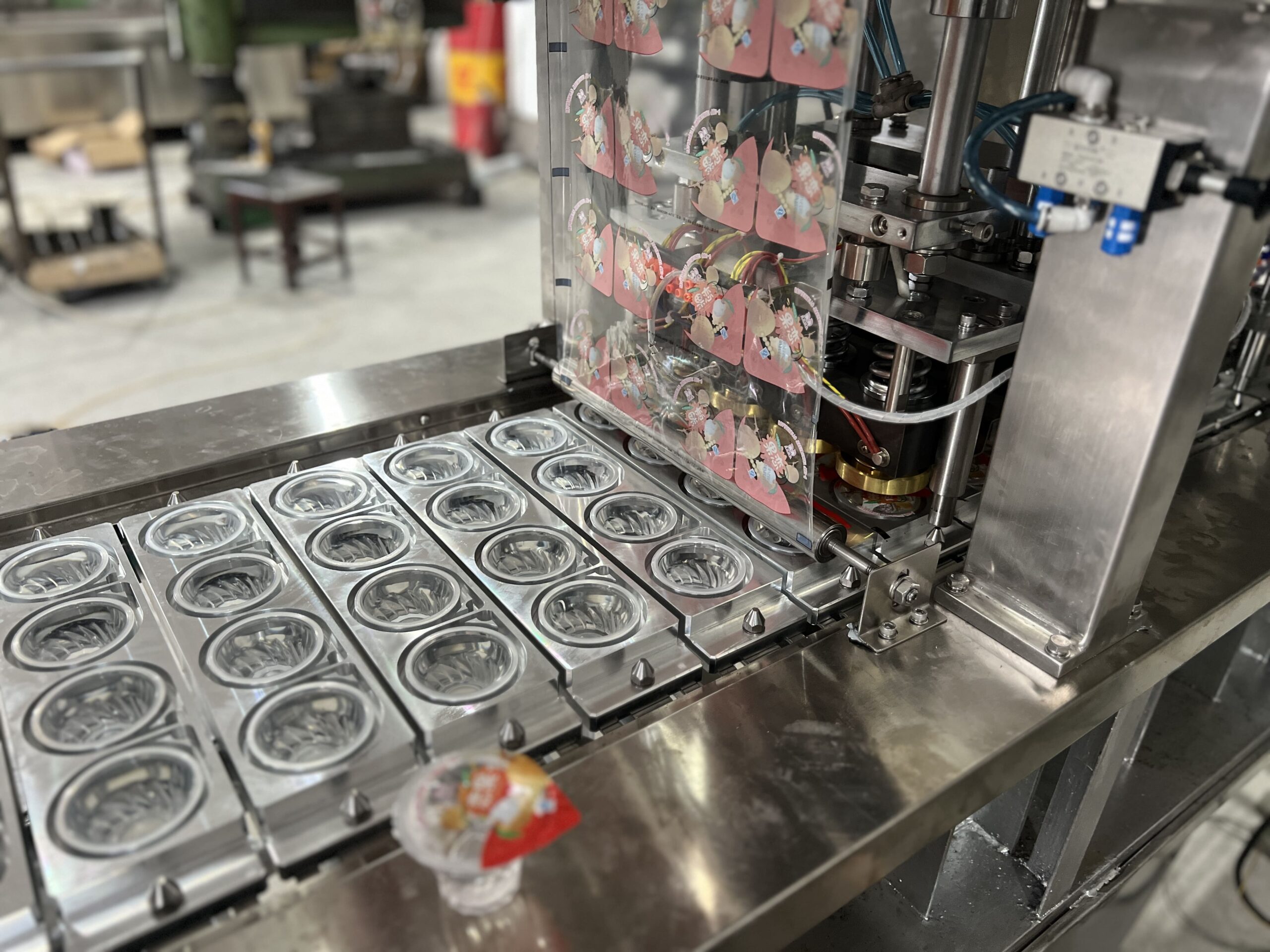
Factory Insight: For this topic, the real machine flow provided by the factory side is: automatic cup dropping, automatic filling, automatic coconut jelly feeding, automatic sealing film placing, automatic date coding, automatic cutting, and automatic cup output. This sequence is useful because it shows buyers that the machine is a connected production system, not seven isolated functions.
If the cup drops incorrectly, filling becomes unstable. If filling splashes or drips onto the rim, sealing becomes weak. If coconut jelly feeding is not stable, the product content becomes inconsistent. If film placing is not aligned, date coding and cutting may also be affected. If output is not smooth, the machine may stop even though the filling and sealing sections are working.
This is why Xinchuang normally needs real samples before final machine design: cups, sealing film, product liquid, coconut jelly or particles, and expected production arrangement. The buyer’s quotation should not be based only on the words “jelly cup machine.” It should be based on the actual cup, product, film, output target, and factory layout.
Buyer Checklist
- Send actual cup samples, not only drawings.
- Confirm cup diameter, cup height, cup rim shape, and stacking condition.
- Confirm filling volume, jelly viscosity, filling temperature, and whether the product is hot-filled.
- Send coconut jelly or particle samples if automatic particle feeding is required.
- Confirm whether the machine uses pre-cut lids or roll film.
- Confirm date coding content and code position.
- Confirm target output and whether future expansion is planned.
- Confirm whether pasteurizer, cooling line, drying, conveyor, or packing equipment is needed after sealing.
Not Suitable When
A standard jelly cup filling and sealing machine configuration may not be suitable when the buyer wants to change between very different cup diameters frequently, because large diameter changes are not simple mold swaps. It may also be unsuitable when cups are too soft for automatic dropping, when particles are too large for stable dosing, or when film material cannot seal reliably to the cup rim.
It is also not suitable to confirm the machine only by a desired output number. Actual capacity depends on cup size, filling volume, filling time, number of lanes, sealing time, product behavior, and downstream line arrangement.
How This Connects to a Complete Jelly Cup Production Line
Many jelly cup factories do not stop at filling and sealing. After cups are sealed, the product may go through a pasteurization and cooling process depending on formula, shelf-life target, and food safety requirements. The filling and sealing machine therefore should be planned together with downstream equipment.
For related factory planning topics, buyers can also review how much output a jelly cup filling and sealing machine can produce, how to avoid expensive mold changes in export projects, and how to reduce seal leakage during jelly cup production.
If the buyer is comparing different cup applications, the article on choosing a linear cup filling and sealing machine can also help explain why cup size and station layout should be confirmed early.
Conclusion
A jelly cup filling and sealing machine works by moving cups through a controlled linear sequence: cup dropping, filling, coconut jelly feeding, film placing, date coding, cutting, and cup output. The machine looks automatic from outside, but stable production depends on many small details inside each station.
For buyers, the safest approach is to confirm real samples, target output, film type, particle requirements, and downstream process before final quotation. This helps the machine builder design a practical solution instead of giving a price based only on a broad machine name.
Footnotes
- Heat sealing is relevant because cup seal quality depends on the correct combination of temperature, pressure, time, clean rim contact, and material compatibility. ↩
- Nata de coco is a common English technical reference for coconut jelly pieces, but actual feeding design must be confirmed with real samples. ↩
- Positive-displacement pump concepts help buyers understand why product viscosity and filling volume affect pump selection. ↩
- Conveyor system planning matters because finished cups must leave the machine smoothly and match downstream treatment or packing. ↩
- Pasteurization is often considered in jelly cup line planning when shelf-life and process requirements demand heat treatment after sealing. ↩