Automatic vs Manual Jelly Cup Filling: Which Is More Cost-Effective?
Quick answer: For commercially produced, low-unit-price jelly cups, an integrated automatic line is often the more practical production model. A semi-automatic machine can appear cheaper at purchase, but the labor needed around it can erase that saving. The right comparison is total cost per saleable cup, not machine price alone.
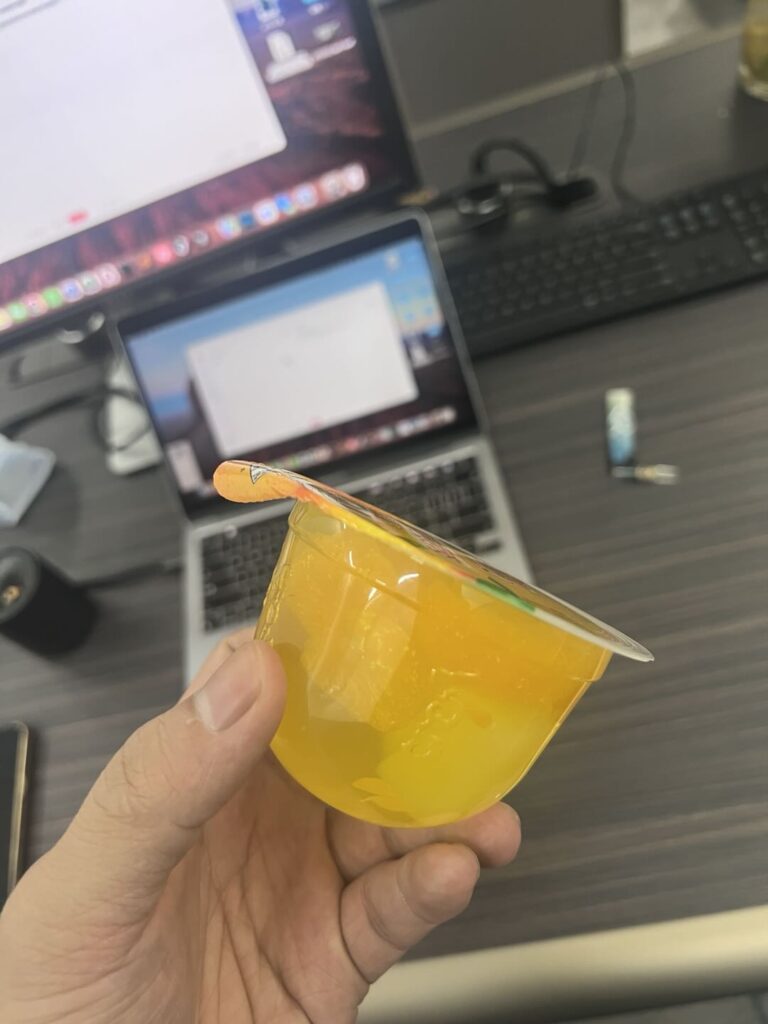
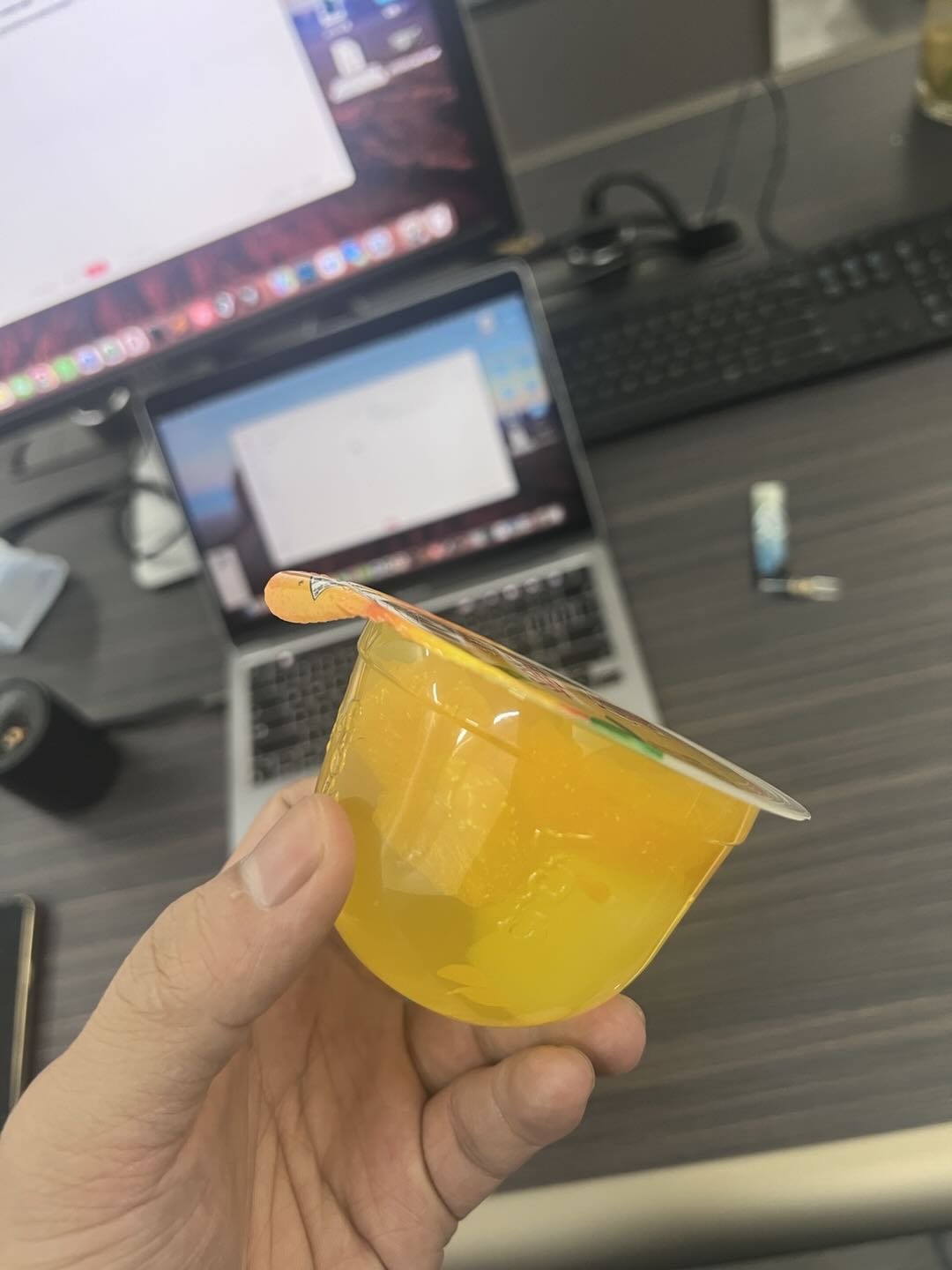
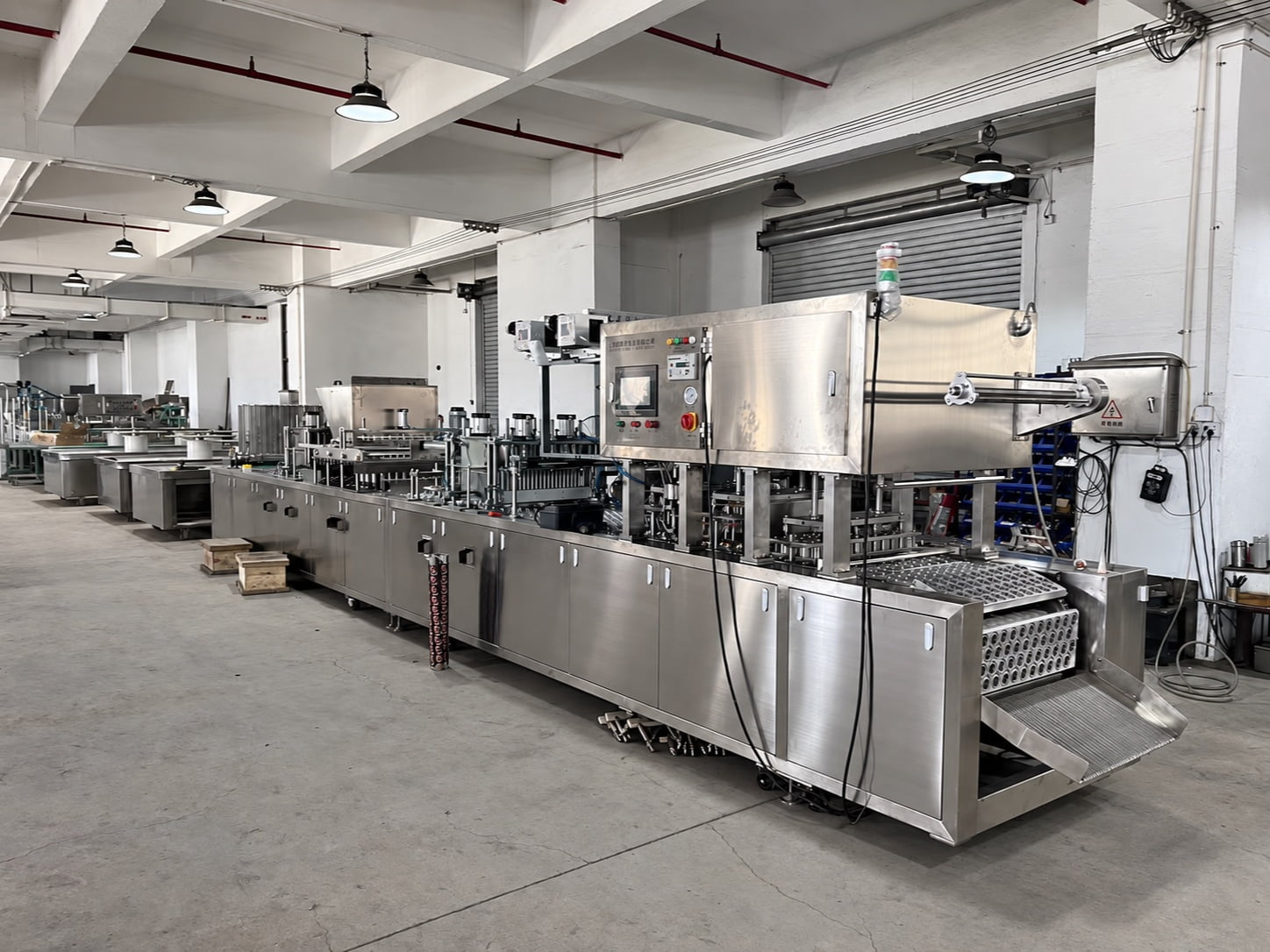
For cup jelly, automation is a connected process rather than one filling action. A configured line may automatically drop cups, add nata de coco when required, fill jelly, apply and seal film, print a date, cut the web, and discharge finished cups. The exact stations depend on the product and confirmed configuration. Cup diameter, single-colour or two-colour filling, inclusions, product shape, target output, and downstream cooling all affect the design.
This comparison is for jelly manufacturers deciding how much of the cup-packing process to automate. It does not assume a universal labor count, production rate, or payback period. Those figures depend on the selected machine, product, working pattern, local labor cost, and actual operating results.
What the comparison should include
A manual or semi-automatic arrangement may use a machine for one or more steps while workers handle the remaining operations. Depending on the arrangement, people may place cups, transfer product, add inclusions, position film, inspect seals, mark dates, cut or separate packs, and move finished cups. A fully automatic jelly cup line can combine cup dropping, inclusion feeding, filling, sealing, date coding, cutting, and discharge in one coordinated sequence. Safe access and guarding should be included in the machine review, following applicable machinery risk-assessment principles.12
The important distinction is whether one operation is automatic or whether the complete process is coordinated. Automating only the filler does not eliminate labor at cup loading, coconut feeding, film handling, date coding, or product transfer. Those remaining stations may become the pace-setting step and can interrupt the filler if their timing does not match.
| Process step | Manual or semi-automatic arrangement | Integrated automatic arrangement | What to confirm |
|---|---|---|---|
| Cup handling | Workers may place cups at the required position | Automatic cup dropping, based on the cup and machine design | Cup diameter, height, rim and sample performance |
| Inclusions | Workers may portion fruit or nata de coco | An additional feeding device can place inclusions before filling | Piece size, distribution, quantity and feed behavior |
| Filling | Operator starts or monitors each filling cycle | Filling is synchronized with cup movement and the selected product system | Product flow, filling volume and sample accuracy |
| Film and sealing | Workers may position film or handle sealing between cycles | Film feed and sealing stations operate in sequence | Film material, print registration and sealing sample |
| Date, cut and discharge | May require separate handling or downstream labor | Can be included according to the line configuration | Date method, cut format, collection and cooling route |
Why low selling price changes the labor equation
Jelly cups are generally a low-unit-price food. That makes recurring labor around every cup a meaningful part of the economics. A semi-automatic machine may reduce one task but still require several workers to keep cups, inclusions, film, coding, inspection, and output moving. The correct calculation includes these recurring costs across the intended production schedule.
Compare the cost of a manual or semi-automatic process with the cost of a fully automatic line over a realistic operating period. Include wages and related labor expenses, rejected or damaged cups, product loss, cleaning and changeover time, stoppages caused by manual feeding, and the cost of downstream handling. Then compare those items with the automatic machine investment, utilities, maintenance, spare parts, and any cooling or conveying equipment needed after sealing.
Do not treat a machine’s quoted maximum speed as the number of saleable cups per shift. Actual output depends on cup size, filling volume, product characteristics, line configuration, operator practices, stoppages, and downstream capacity. A cooling tunnel or other required process after filling can also constrain the complete line. The relevant measure is saleable output after rejects and interruptions.
| Cost or operating factor | Question for the buyer | Why it matters |
|---|---|---|
| Labor per shift | Which steps remain manual, and how many people are assigned to them? | A lower-priced machine can still carry high recurring labor costs. |
| Saleable output | How many cups pass inspection during normal production? | Rated machine speed does not include every production loss. |
| Product loss and rejects | Where do spills, incorrect portions, damaged cups, or poor seals occur? | Small losses per cup accumulate across repeated production. |
| Changeovers | How often do cup sizes, recipes, colours, or inclusions change? | Frequent changes can reduce available production time and require parts or adjustments. |
| Downstream handling | Can cooling, collection, packing, and storage accept the output? | The filler cannot deliver a stable line output if the next stage is constrained. |
What full automation changes on a jelly cup line
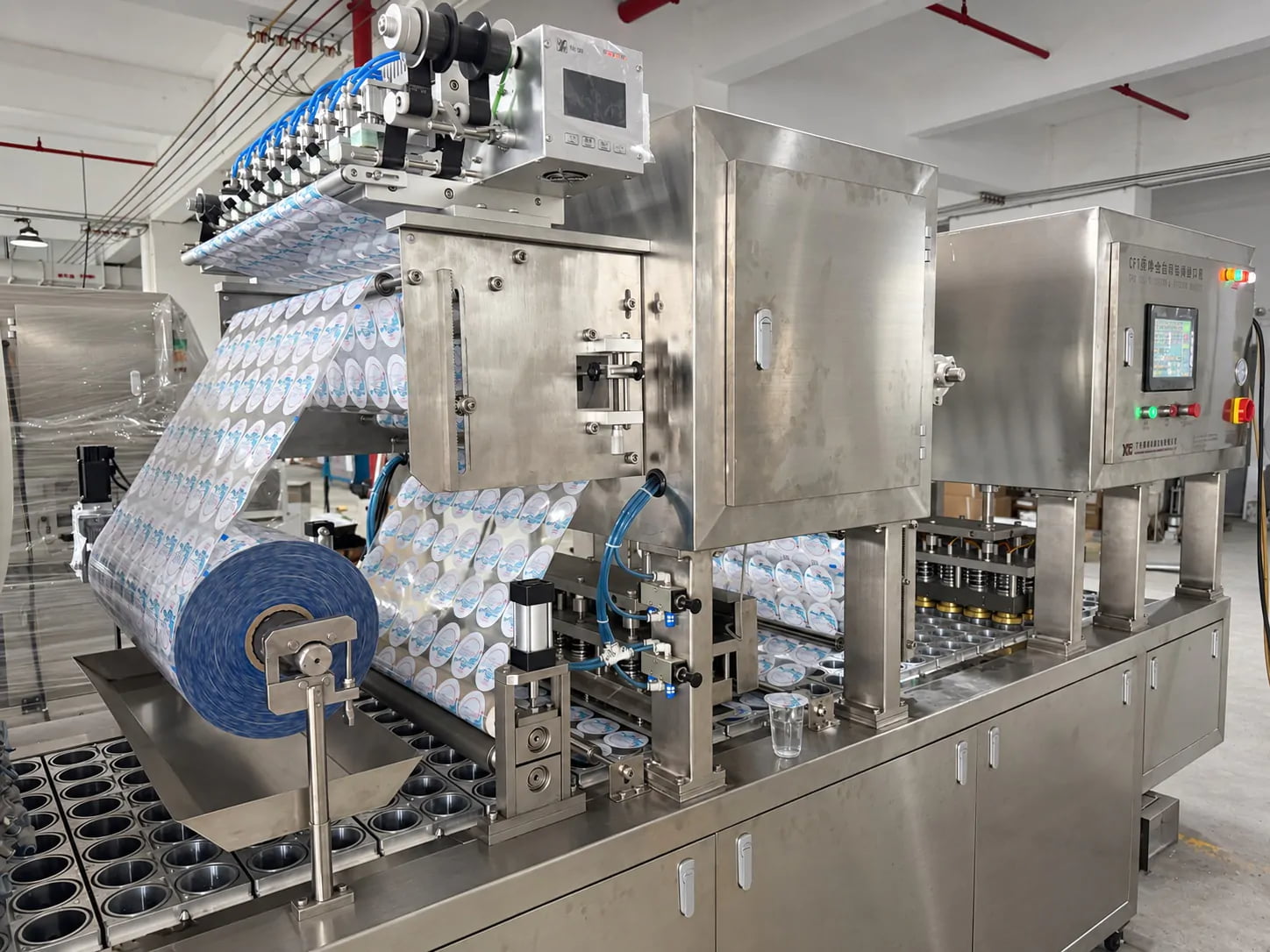
With an automatic line, the stations are planned as a sequence. Empty cups are placed, the optional nata de coco device feeds inclusions, the filling station doses jelly, film is supplied and sealed, the date is applied using the selected method, and cups are cut or discharged according to the design. The line can include only the stations required by the product; not every jelly needs inclusions, two-colour filling, or the same cut format.
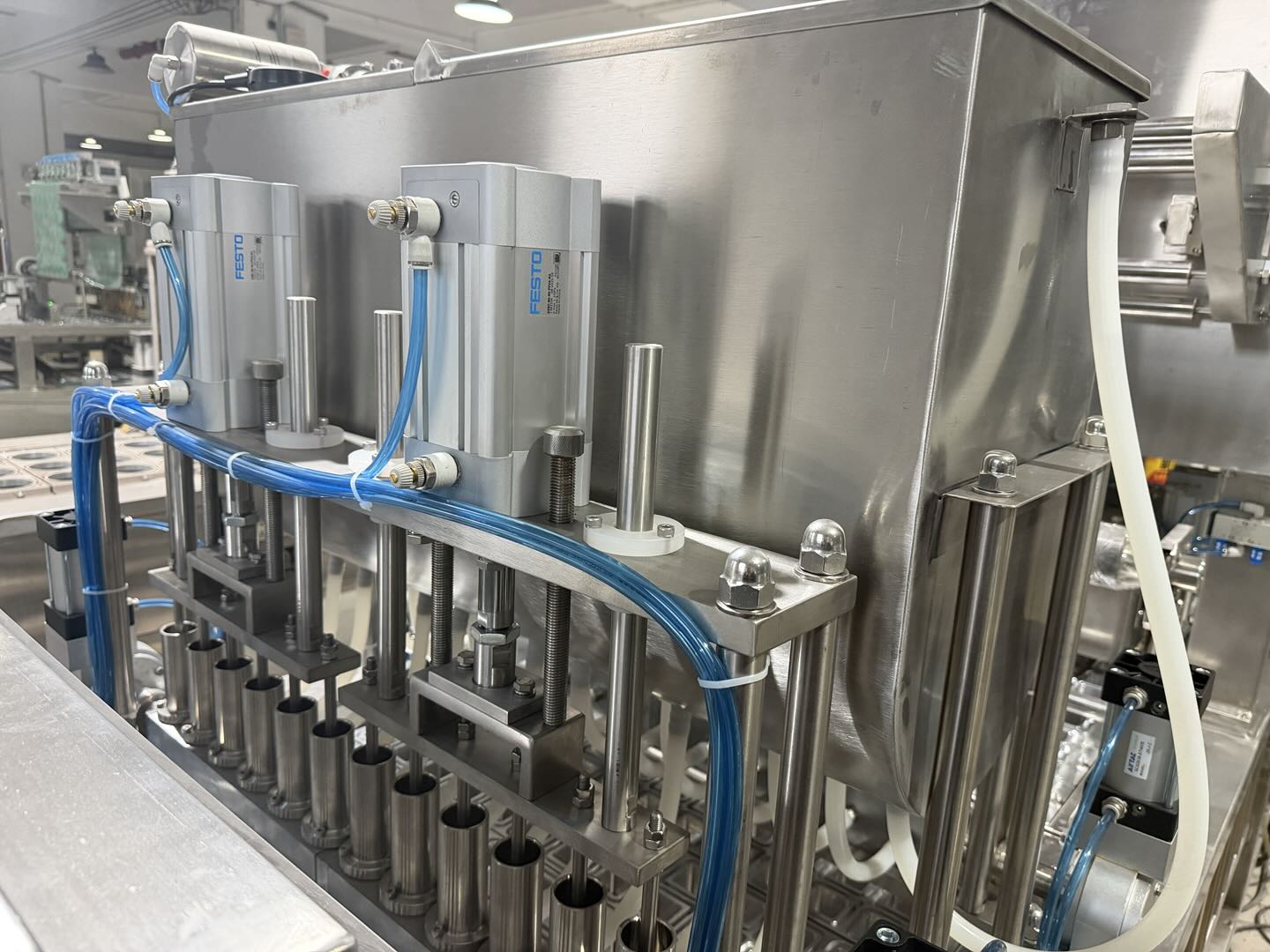
This integration can reduce the number of repeated manual handling points and makes the relationship between stations part of the machine design. It does not mean that labor becomes zero. Staff still prepare materials, load film or product as designed, monitor operation, perform quality checks, clean the equipment, manage changeovers, and respond to alarms. The practical question is whether fewer recurring manual interventions make the low-priced product viable at the planned output.
Configuration choices have direct consequences. Cup diameter affects cup dropping and spacing. Two-colour jelly can require a different filling arrangement and a longer machine layout than a single-colour product. Nata de coco or fruit pieces require a suitable additional feeding device. Different cup shapes can affect handling and tooling. The downstream cooling arrangement and the way finished cups are collected also need to be planned as part of the production route. Film and other food-contact materials should be evaluated for the intended product and market.3
For related planning, see how a jelly cup filling and sealing machine works, what affects jelly cup line output, and how to plan a jelly cup production line.
Buyer Checklist
- Confirm the cup diameter, height, shape, material, and rim using production samples.
- Define expected saleable output and the actual working schedule, not just a target machine speed.
- Specify whether the jelly is single-colour or two-colour and whether it contains nata de coco, fruit, or other pieces.
- Map each operation that must be automatic: cup dropping, inclusion feeding, filling, film feeding and sealing, date marking, cutting, and discharge.
- Confirm the date-marking method and the film design, material, width, and registration requirements.
- Include cooling, conveying, collection, packing, cleaning, utilities, and floor-space needs in the line plan.
- Compare labor and product losses with the automatic line’s investment and operating costs over the same period.
- Ask the supplier to confirm the design through product, cup, and film sample checks before finalizing the configuration.
Not suitable when
A fully automatic line may not be the first capital decision when the recipe, cup, market demand, or package format is still unvalidated, or when the factory cannot yet support required utilities, cooling, hygiene controls, maintenance, and operating staff. In that situation, first validate the product and production plan. A semi-automatic setup should not be assumed to be cheaper overall: for low-priced jelly, the labor required to complete the remaining operations may make the unit economics unattractive.
Factory Insight
Xinchuang’s factory-side planning insight is that jelly’s low selling price makes recurring manual work especially important in the cost comparison. A semi-automatic machine can leave workers responsible for several operations, adding labor cost while the product’s unit value remains low. For the planned commercial jelly process, the automatic line is designed to complete cup dropping, nata de coco feeding when required, filling, and sealing in a coordinated flow; date printing, cutting, and discharge can also be configured as needed. Hygienic handling and hazard-control procedures still need to be established by the food manufacturer for the actual product and factory process.45
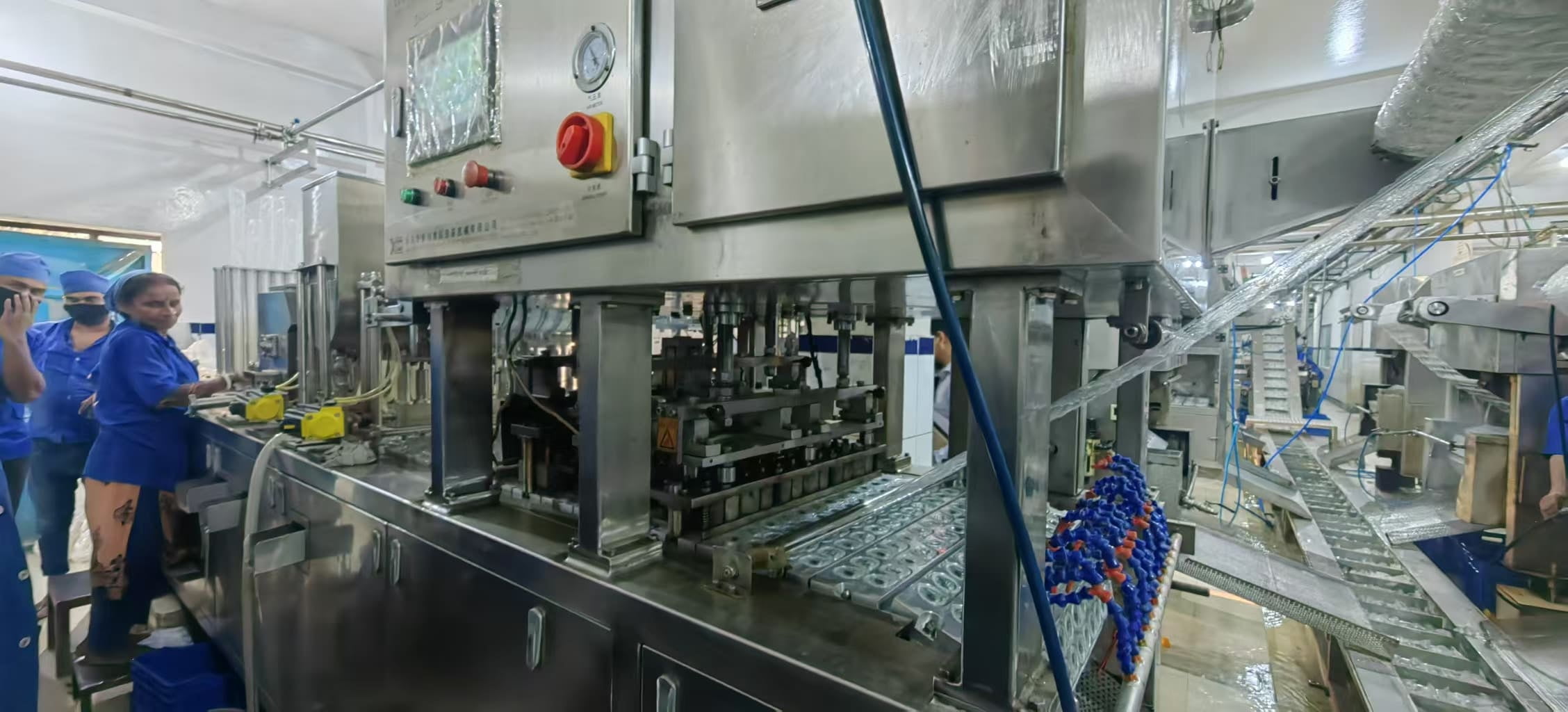
The machine should be quoted against the actual jelly product rather than a generic “jelly cup” description. The buyer should provide cup samples, product details, required output, single- or two-colour structure, inclusion requirements, date method, cut style, and downstream cooling needs. These choices affect line length, station configuration, and project cost. Final performance and product quality should be confirmed through sample testing; no specific labor saving or payback period should be promised without project data.
Conclusion
For low-unit-price jelly cups, a complete automatic process can be more economically practical than a semi-automatic machine surrounded by recurring manual work. Compare the full labor requirement and actual saleable output with the complete automatic line cost, including cooling and downstream handling. The right configuration follows the real cup, jelly style, inclusions, date coding, cut format, and production target. A sample-based quotation makes that comparison useful; machine price alone does not.
Footnotes
- ISO 12100: Safety of machinery describes general principles for machinery risk assessment and risk reduction. Use it as a reference when reviewing guarding and safe access. [return]
- OSHA machine guarding explains the purpose of guarding hazardous machine areas. The specific legal requirements depend on the installation location. [return]
- FDA food contact substances provides information on substances used in materials that contact food. Packaging material suitability must be checked for the intended product and market. [return]
- Codex codes of practice include the General Principles of Food Hygiene, a useful reference for hygienic food production and handling. [return]
- FDA HACCP guidance explains a preventive approach to identifying and controlling food safety hazards. It complements, rather than replaces, the factory’s applicable food safety system. [return]