Buying a jelly cup filling and sealing machine is not only a question of choosing a machine model. The final configuration is affected by the cup, product style, output target, particle feeding, date coding, post-treatment, and the level of automation expected in the factory. These points should be confirmed before a quotation is finalized.
Quick answer: Before ordering, confirm eight items: cup size, budget, target output, jelly style, whether coconut jelly or other particles are added, date-coding method, whether post-filling pasteurization is required, and the required automation level. Each item changes the machine layout, station count, tooling, utilities, testing work, and possible future upgrade cost.
This guide is written for food manufacturers planning a jelly cup project with a linear cup filling and sealing machine. It is also useful for OEM factories and new producers who need to compare quotations from different suppliers. For related planning questions, see our guides on how a jelly cup filling and sealing machine works, how jelly cup machine output is estimated, and whether a pasteurizer and cooling line are needed.
1. Confirm the Cup Size Before Comparing Machine Prices
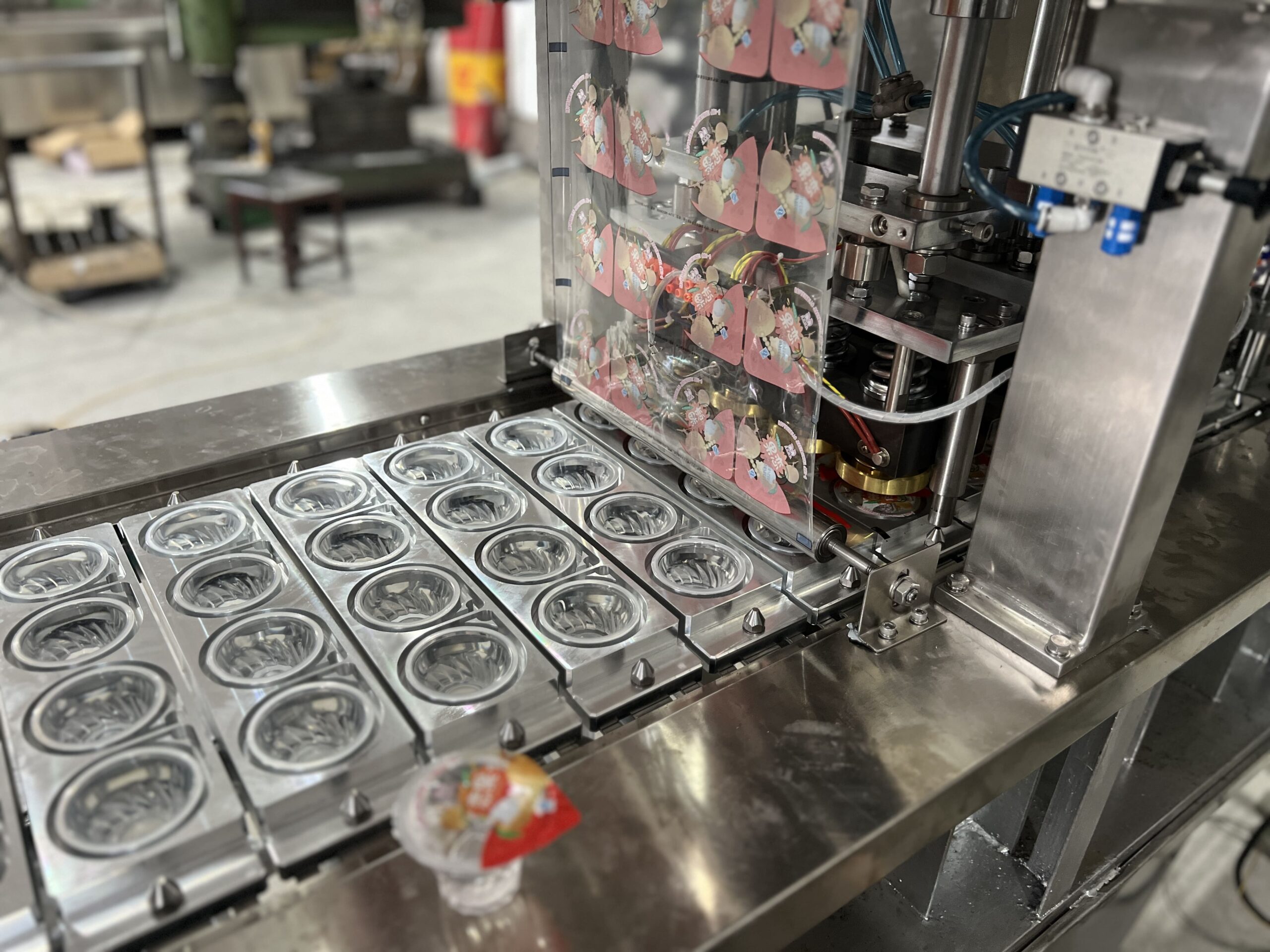
Cup size is the first engineering decision because the cup is the reference for many mechanical stations. Confirm the cup diameter, cup height, top rim, filling volume, material, and whether the cup is supplied preformed or made in a separate process. A cup that looks similar in a catalogue may still require different cup dropping, mold, filling spacing, sealing, cutting, and output arrangements.
A large cup diameter change is usually not a simple mold swap. It may change the cup feeding structure, the distance between lanes, the sealing film width, the cutting position, the number of cavities, the machine width, and export packing dimensions. For this reason, buyers should send drawings or physical cup samples before the supplier confirms the design.
| Information to confirm | Why it matters | Buyer risk if omitted |
|---|---|---|
| Cup diameter and height | Defines molds, cup dropping and sealing layout | Later tooling or station replacement |
| Filling volume | Affects filling time and output rhythm | Output target may not be realistic |
| Cup material and rim | Affects cup stability and sealing contact | Leakage or poor cup feeding |
| Film width and sealing area | Controls film placing and cutting design | Film waste or incorrect cutting |
2. Set the Budget as a Configuration Range, Not One Number
A buyer budget should be connected to the required functions. A quotation for a basic linear cup filling and sealing machine may not include the same stations as a project with automatic coconut jelly feeding, date coding, pasteurization, cooling, conveyors, and packing integration.
Ask suppliers to separate the quotation into the main machine, tooling, particle feeding, date coder, conveyors, pasteurizer, cooling line, spare parts, installation support, and optional upgrades. This makes quotations easier to compare and shows which functions are essential for the first phase.
The lowest initial price is not automatically the lowest project cost. If the product will later require particles, two-color filling, a different cup diameter, or a higher level of automation, the buyer should ask what can be upgraded and what would require a new machine section or new tooling.
3. Define the Required Output Using the Real Product and Cup
Target output should be expressed in finished cups per hour and should be connected to cup diameter, filling volume, product viscosity, and the number of lanes or cavities. A smaller cup may allow more cavities in one cycle, while a larger volume may require longer filling time. The actual capacity depends on configuration and product characteristics.
Do not compare a catalogue number with a guaranteed factory result unless the supplier has tested the actual cup and product. A sensible quotation should state the assumptions behind the output, including cup size, filling volume, product temperature, particle content, and operating conditions.
4. Decide Whether the Jelly Is Single-Color or Two-Color
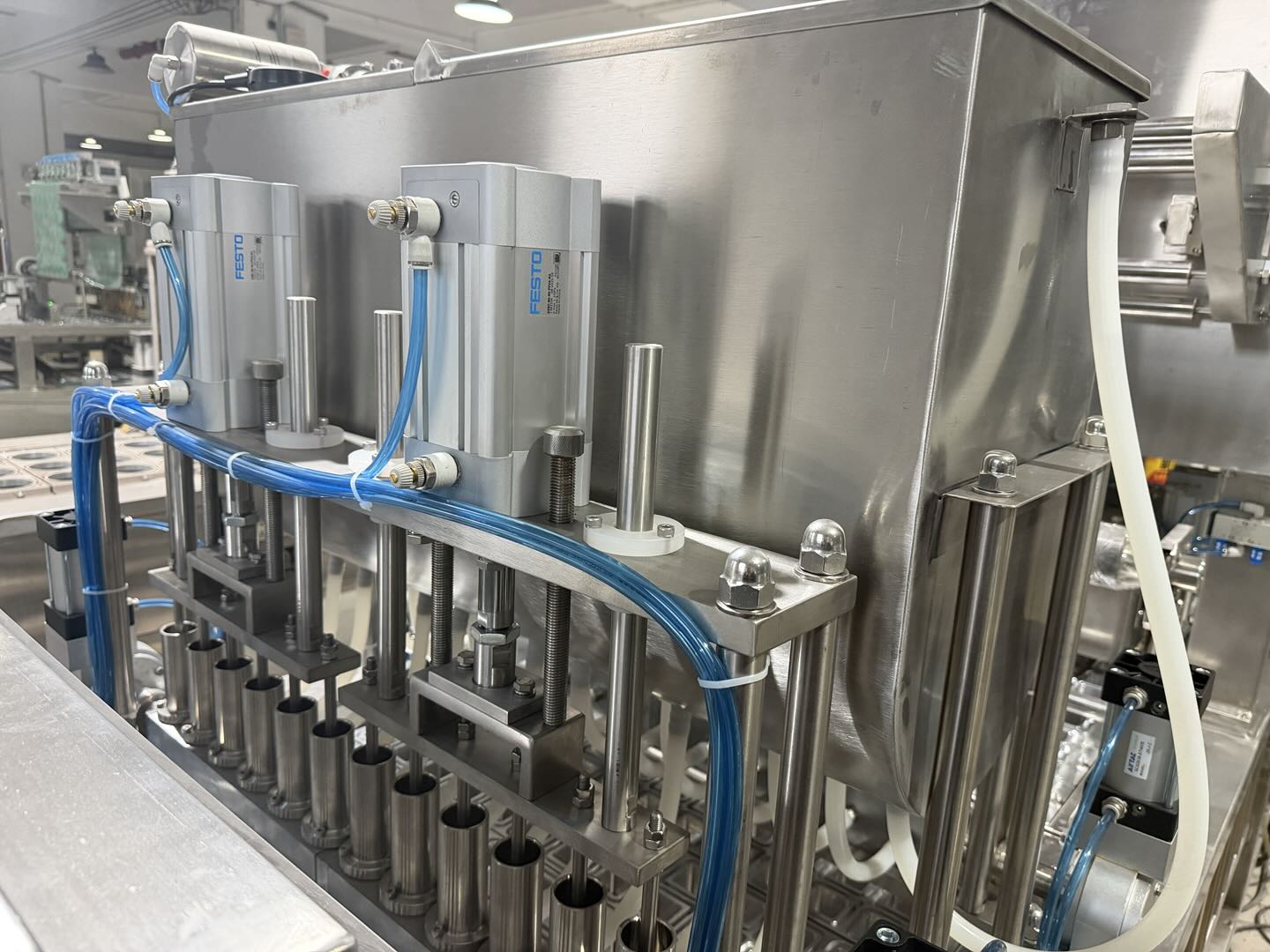
Single-color jelly is generally simpler to plan because it uses one main filling formulation and one filling path. Two-color jelly may require separated product preparation, additional filling heads or a special filling sequence, and sample testing to confirm the visual boundary between colors.
Buyers should define whether the two colors are filled side by side, in layers, or through another product-specific arrangement. The machine cannot be selected only from the phrase “two-color jelly.” The intended appearance, viscosity, filling temperature, and color separation must be checked with samples.
Confirm the product style before the machine layout is frozen. Adding a second color after the machine is built may affect hopper, pump, piping, filling heads, control logic, cleaning procedures, and cycle time.
5. Confirm Whether Coconut Jelly or Other Particles Are Added
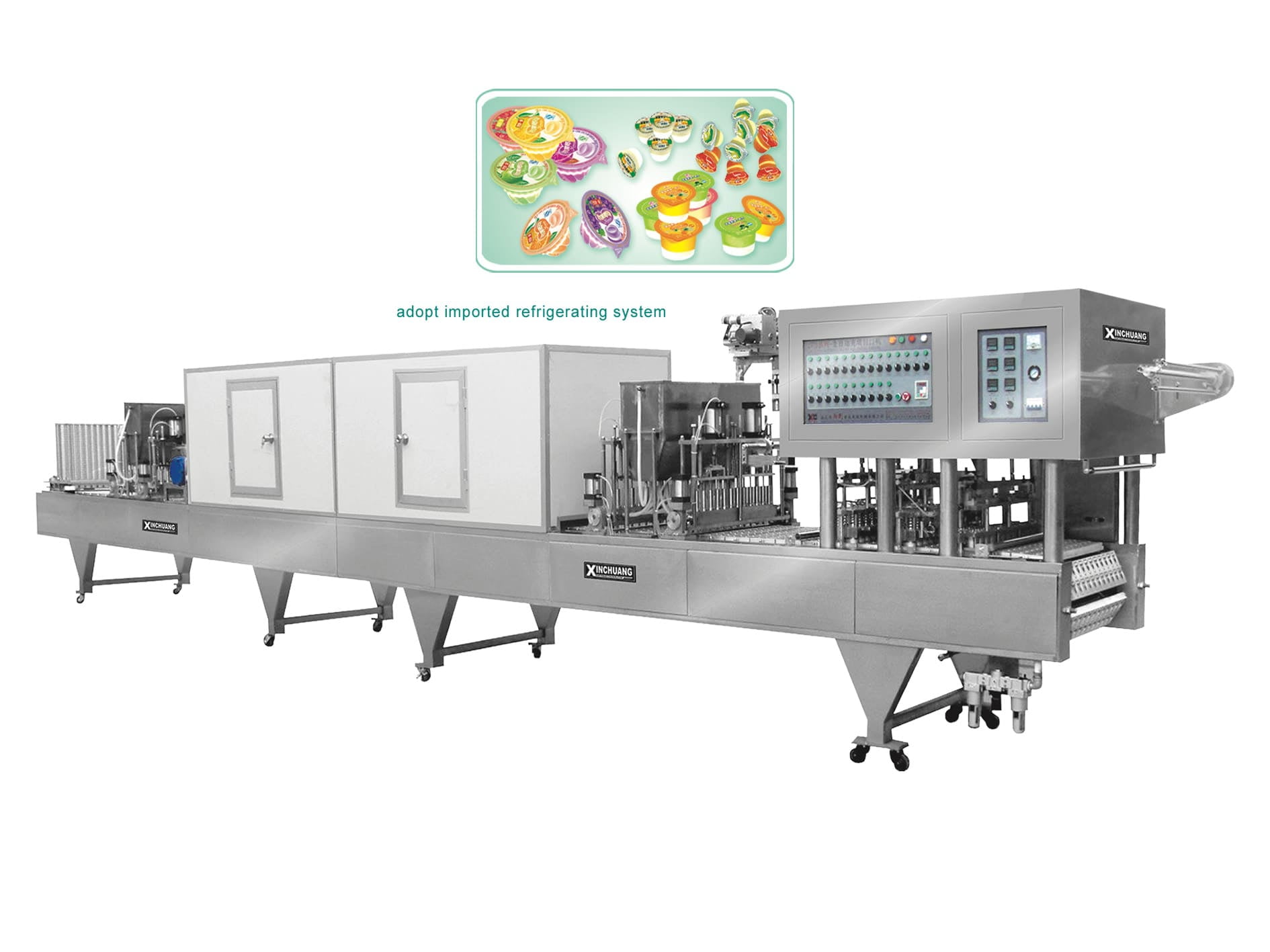
Coconut jelly pieces are not handled in the same way as a smooth jelly liquid. The particle size, shape, moisture, concentration, flow behavior, and desired distribution all affect the feeding method. The buyer should provide a sample of the actual coconut jelly and specify whether every cup needs a controlled quantity or whether the target is an approximate distribution.
Automatic particle feeding can improve repeatability and labor efficiency, but it adds a feeding station, product-contact parts, cleaning requirements, and testing work. The particle feeder should be evaluated together with the cup size and product recipe.
A supplier should confirm the result through sample testing. The final design should be confirmed after checking whether particles bridge, stick, settle, block the feeder, or damage the sealing area.
6. Select the Date-Coding Method Early
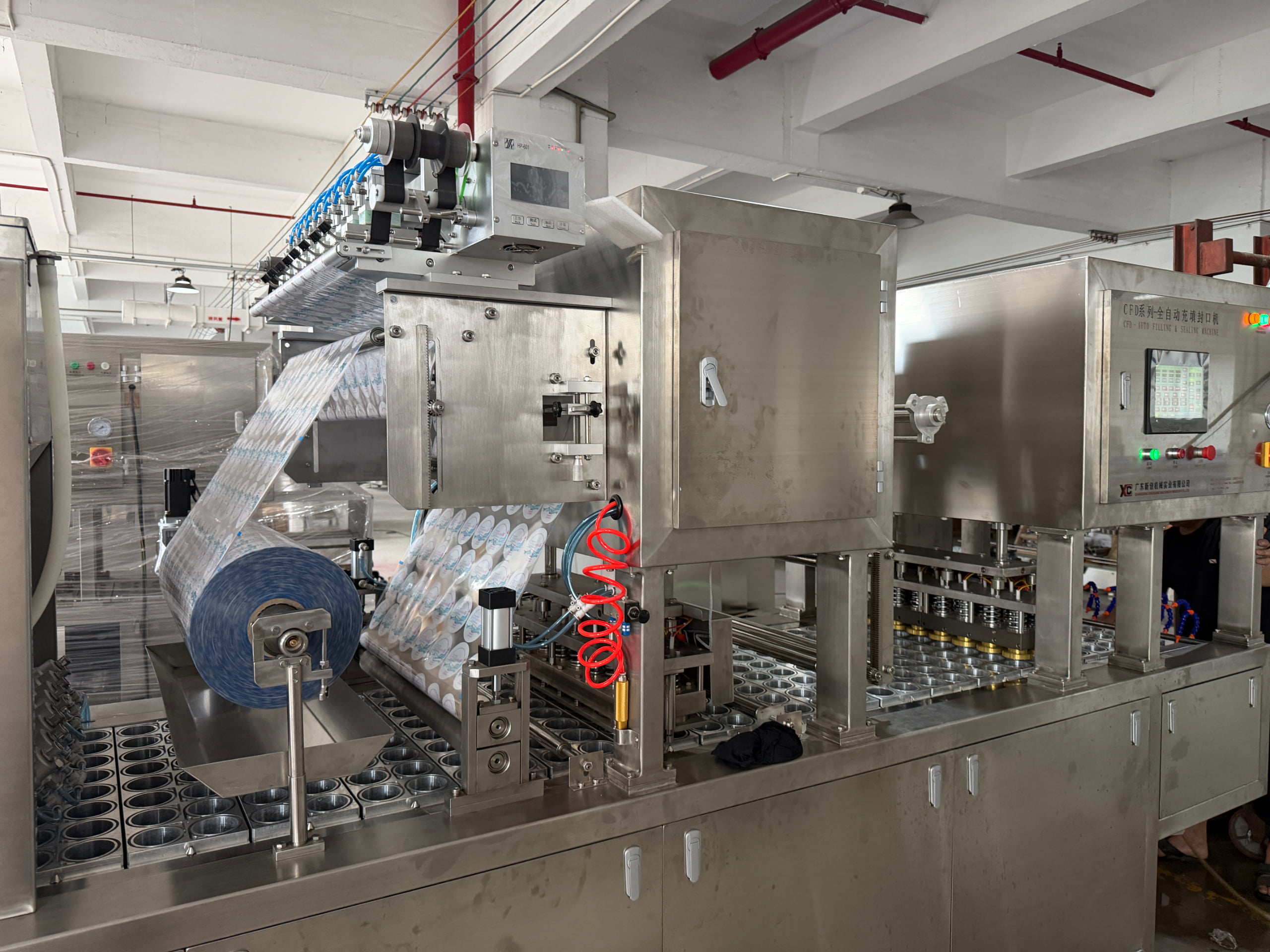
Date coding is often treated as a small accessory, but its position and method affect the machine layout and packaging result. Confirm whether the code is printed on the film, on the cup side, or at a downstream position. Also confirm the required information, such as production date, expiry date, batch number, or lot number.
Ask about ink compatibility, print contrast, code location, line speed, cleaning, and whether the code must remain readable after pasteurization or cooling. A coding method that works on a dry film surface may need different validation when the film, product, or downstream process changes.
7. Decide Whether Post-Filling Pasteurization Is Required
For many jelly products, the production plan may include pasteurization after filling and sealing, followed by cooling and drying. This is a process decision that should be confirmed with the product formulation, packaging material, shelf-life target, local food requirements, and the manufacturer’s process validation.
If pasteurization is required, the cup filling machine should be planned as part of a complete line rather than as an isolated machine. Conveyors, pasteurizer capacity, cooling water, drying, floor space, drainage, and product handling all become part of the project. The cup, film, seal, and date code should be checked under the intended post-treatment conditions.
Do not add a pasteurizer after the machine layout is finished without checking the complete flow. Downstream equipment can affect conveyor height, factory space, utilities, labor, and the required production rhythm.
8. Define the Required Automation Level
Automation should be defined by actual operations, not only by the words “fully automatic.” For a jelly cup line, the sequence may include automatic cup dropping, automatic filling, automatic coconut jelly feeding, automatic film placing, date coding, cutting, and cup output. Some projects also connect pasteurization, cooling, drying, packing, and transfer conveyors.
| Automation question | What to clarify with the supplier | Effect on project planning |
|---|---|---|
| Cup handling | Automatic cup dropping and empty-cup detection? | Labor and cup-feed stability |
| Product filling | One color, two colors, or separate filling stages? | Hoppers, pumps, heads and controls |
| Particle addition | Automatic coconut jelly feeding and cleaning method? | Extra station and product-contact parts |
| Film and coding | Film placing, date coding and cutting included? | Film layout, code position and maintenance |
| Downstream handling | Pasteurizer, cooling, drying and packing connected? | Space, utilities and line balance |
For a startup factory, a staged automation plan may be more practical than purchasing every downstream option immediately. For an OEM or high-volume manufacturer, automatic feeding and integrated downstream handling may reduce labor and improve repeatability. The correct level depends on the production target, available operators, factory space, budget, and expansion plan.
Buyer Checklist Before Requesting a Final Quotation
- Send the cup drawing or physical sample, including diameter, height, rim and material.
- State the filling volume and realistic finished-cup output target.
- Provide the jelly recipe information needed for sample testing, including whether it is single-color or two-color.
- Send coconut jelly or particle samples if automatic feeding is required.
- Confirm the film material, width, sealing area, cutting style and date-code position.
- State whether pasteurization, cooling and drying are part of the planned line.
- Describe the available electrical power, compressed air, water, drainage and floor space.
- Separate current requirements from possible future upgrades.
Not Suitable When
A standard configuration may not be suitable when the buyer has not finalized the cup, product style, particle size, output target, or post-treatment process. It is also unsuitable when the factory expects large cup-size changes without new tooling or assumes that a catalogue capacity applies to every filling volume. Final suitability should be confirmed through drawings, samples, and a configuration review.
Factory Insight
In practical buyer discussions, the eight questions above usually appear in a different order: budget and output are asked first, while cup size, particles, film, coding, and pasteurization are often clarified later. Engineering-wise, the later items can be just as important as the first two. A buyer who confirms them early gives the supplier enough information to plan the linear machine, compare quotations fairly, and reduce the risk of expensive changes after production starts.
Conclusion
A jelly cup filling and sealing machine should be purchased as a product-and-line solution. Confirm the cup size, budget, output, jelly style, coconut jelly feeding, date coding, pasteurization, and automation level before comparing quotations. These decisions determine the machine stations, tooling, utilities, testing scope, and future expansion path. A reliable final design should be based on actual cup and product samples, not on a generic machine description.
Footnotes
- Clean-in-place explains the principle of cleaning product-contact equipment without full disassembly. ↩
- Pasteurization is a heat-treatment concept that must be validated for the product and package. ↩
- Heat sealing helps explain why film, temperature, pressure and dwell time affect seal quality. ↩
- Codex food hygiene codes provide a useful reference point for hygienic production planning. ↩
- FDA food-contact packaging information is a technical reference when reviewing packaging materials for food use. ↩
[1] [2] [3] [4] [5]