
Sauce cup buyers often ask whether one cup filling and sealing machine can handle thick products. The real question is not only whether the sauce is thick. The first question is whether the sauce can still flow, and which filling method can control it accurately inside the cup.
The direct answer is: for thick sauce products, the most important selection point is the filling method. If the sauce is very viscous but still flowable, a piston pump filling system is usually the practical choice. The sauce may be thick, but it must have flowability. If it cannot flow through the hopper, pipe, valve, pump, and filling nozzle, it cannot be treated as a normal automatic cup filling product.
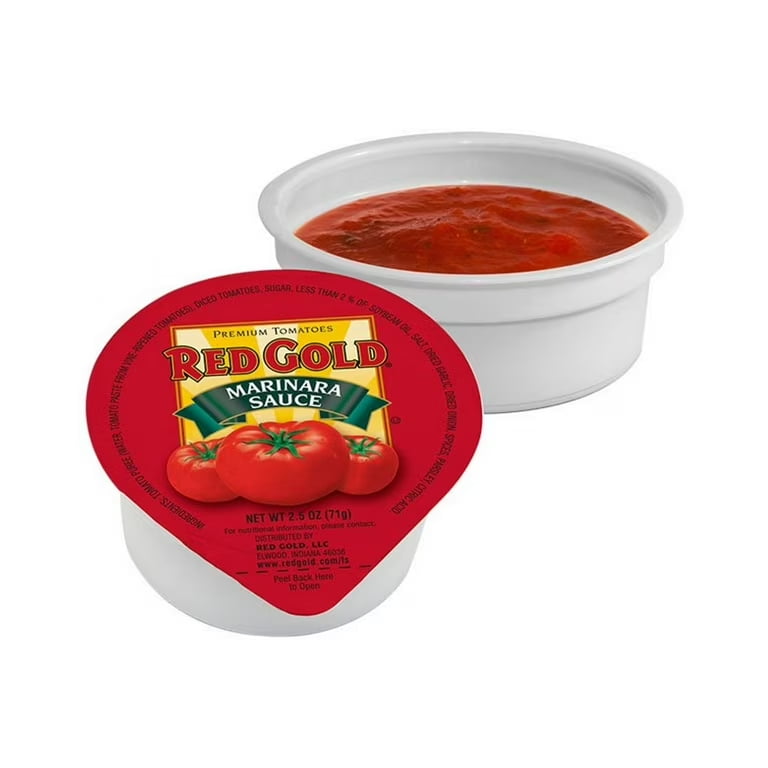
Guangdong Xinchuang Machinery Industry Co., Ltd. builds linear cup filling and sealing machine solutions for cup products such as sauce, jam, jelly, yogurt, pudding, cup water, milk tea, and prepared food cups. For sauce applications, machine selection should be based on real sample checking because sauce products vary widely in viscosity, oil content, particles, temperature, and filling volume.
Useful technical terms for this topic include viscosity1, piston pump2, heat sealing3, stainless steel4, and food contact materials5. These concepts help buyers discuss filling accuracy, cleaning, machine material, and sealing quality more clearly.
Quick Answer: What is the key point for thick sauce filling?
The key point is the filling method. Thin liquid may be filled by simpler methods depending on the project, but thick sauce normally needs stronger volume control and product pushing force. This is why piston pump filling is commonly discussed for thick but flowable products.
A sauce can be thick, but it must still flow. If the sauce cannot move smoothly into the filling system, automatic filling becomes unstable or impossible without changing the product condition, temperature, or feeding design.
Buyers should avoid describing the product only as “sauce.” Chili sauce, ketchup, chocolate sauce, salad dressing, jam, dipping sauce, garlic paste, and thick condiment products may behave very differently. The machine should be matched to the real product, not only to the product name.
Why does thick sauce usually need piston pump filling?
A piston pump fills by drawing product into a chamber and pushing a measured volume out through the filling nozzle. For thick sauce, this method can provide better control than gravity-style filling because the pump actively moves the product.
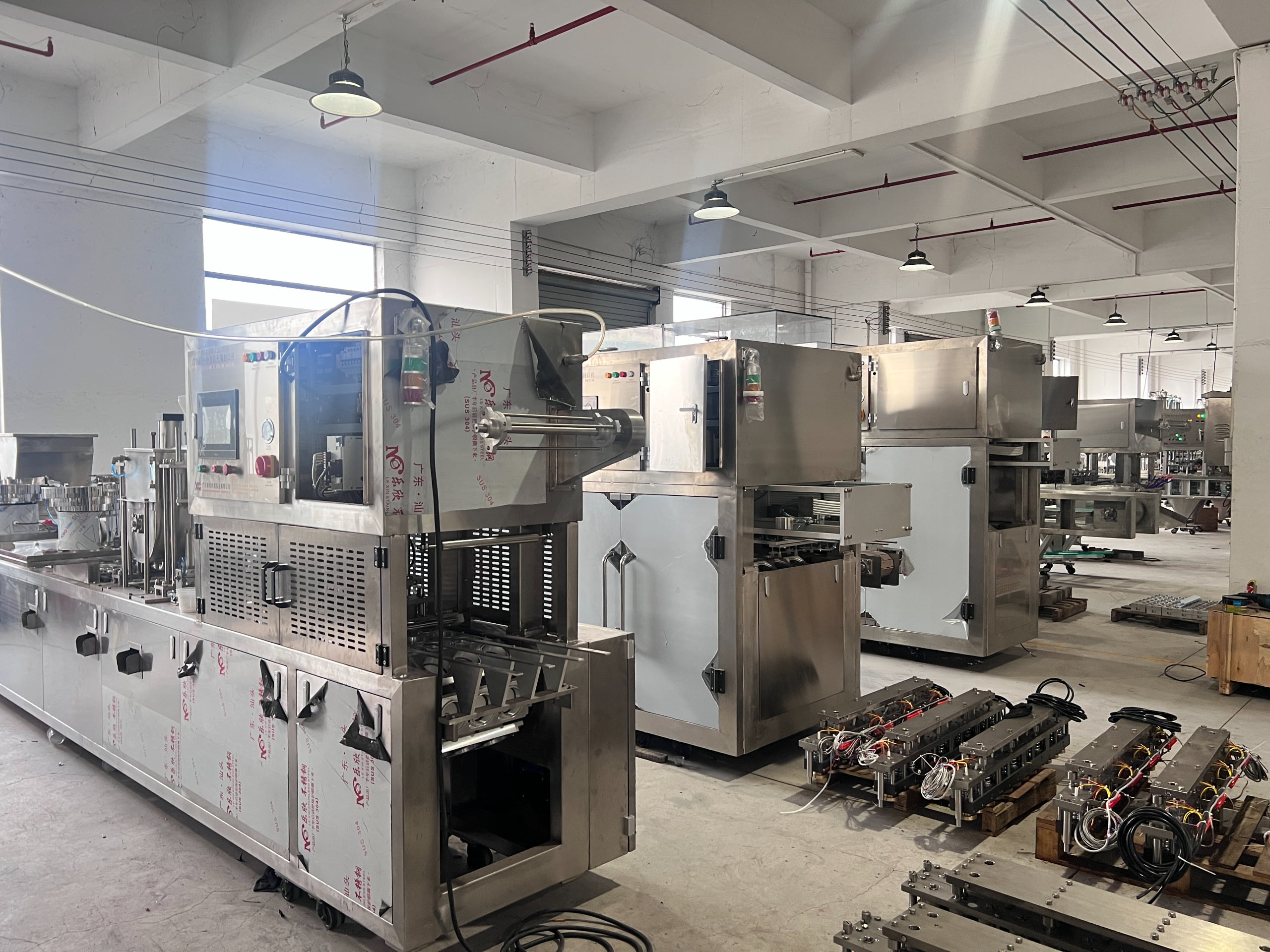
For very viscous sauce, piston pump filling is usually important because the product does not flow quickly by itself. The pump helps control filling volume and supports more stable dosing, depending on product characteristics and final machine configuration.
However, piston pump selection does not remove the need for sample checking. If the sauce has large particles, strong stickiness, high oil separation, or poor flow at room temperature, the hopper, valve, pump, nozzle, and pipe design may need adjustment. Some products may need mixing, heating, or a special hopper structure before filling can run smoothly.
Filling method decision table for sauce cups
| Sauce Condition | Filling Concern | Practical Machine Direction |
|---|---|---|
| Thin sauce | Dripping and foam may need control | Confirm filling method after sample checking |
| Thick but flowable sauce | Needs stronger product movement and volume control | Piston pump filling is usually suitable |
| Sauce with small particles | Particles may block valves or nozzles | Confirm particle size and nozzle design |
| Very sticky paste with poor flow | May not move smoothly through the filling path | Needs special evaluation; may require heating or feeding changes |
| Non-flowable product | Cannot be handled like normal cup filling liquid | Not suitable for standard automatic filling without product/process change |
What does “flowable” mean in factory discussion?
Flowable means the sauce can move through the product-contact path: hopper, outlet, pipe, valve, pump, filling head, and nozzle. It does not mean the sauce must be watery. A thick sauce can still be flowable if it can be pushed and discharged in a controlled way.
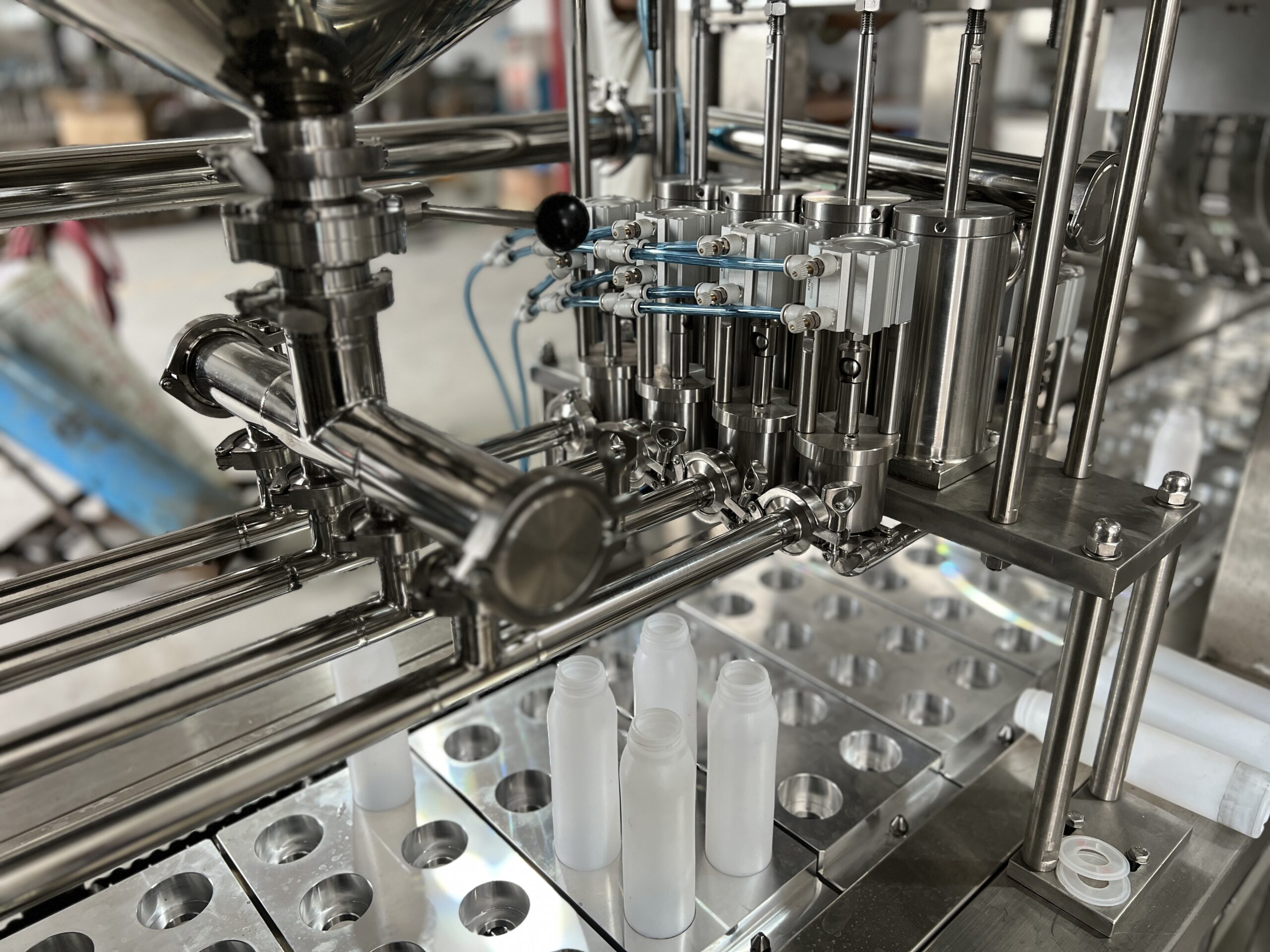
When buyers say “my sauce is very thick,” the next question should be: can it still flow under production conditions? Temperature, particle size, oil separation, and product stickiness all affect the answer.
For example, a sauce may flow when warm but become difficult at low temperature. Another product may flow in a bucket but block at the nozzle because it contains large particles. A third product may separate oil from solids and require mixing before filling. These details should be clarified before the machine is confirmed.
How does sealing quality affect sauce cup production?
Sauce products often create sealing challenges because they may splash, string, drip, or contaminate the cup rim during filling. If sauce remains on the sealing rim, heat sealing may become weak or uneven. This can lead to leakage during packing, transport, or storage.
For sauce cups, filling accuracy and rim cleanliness are closely connected to sealing quality. A good machine plan should reduce dripping, control filling position, keep the rim clean, and match the sealing film to the cup material.
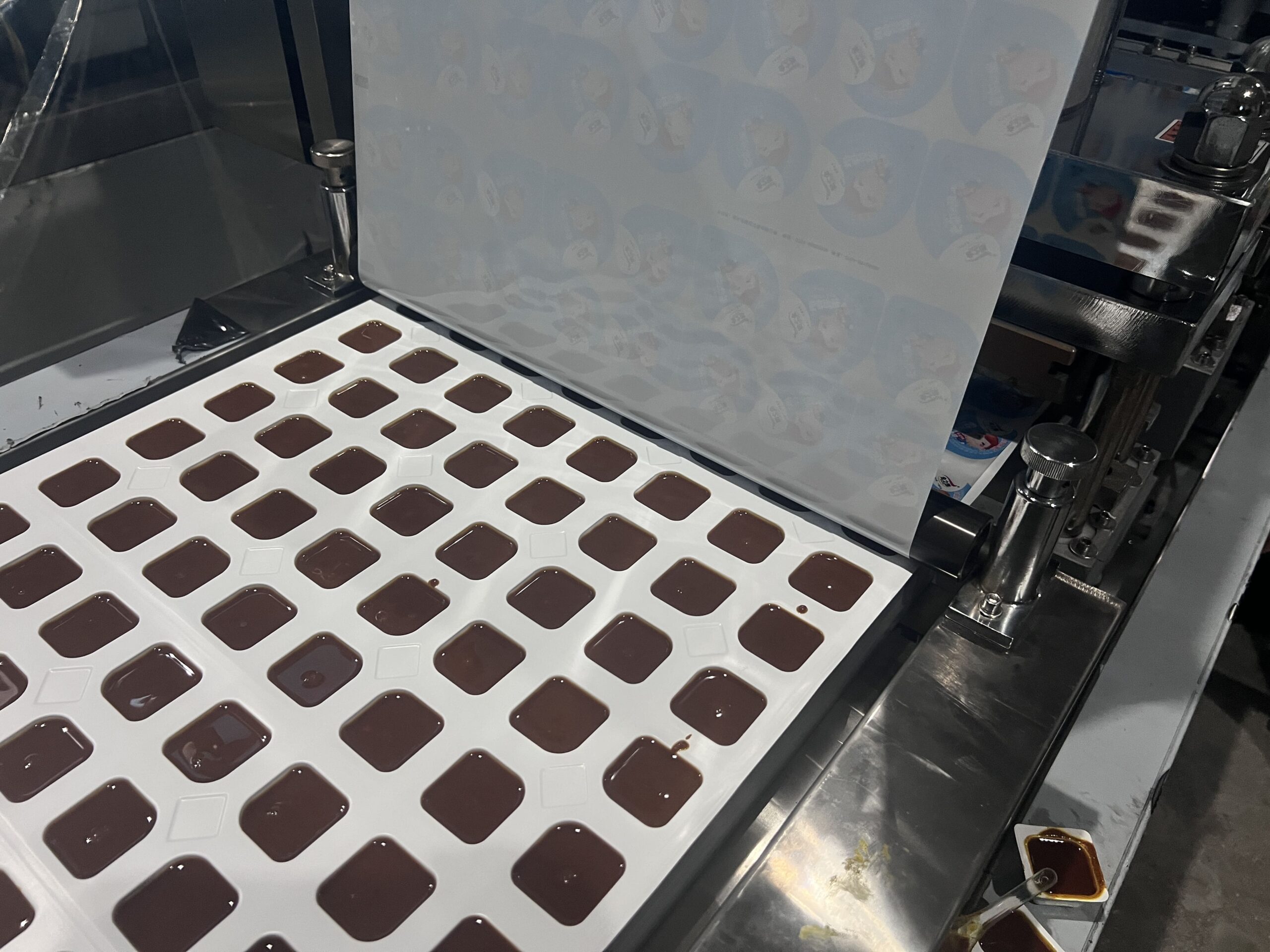
The final sealing setup should be confirmed with real cup and film samples. Cup rim quality, cup material, film material, filling temperature, sauce oil content, and sealing dwell time all affect the result. A high-output machine is not useful if leakage appears after sealing.
Buyer Checklist: What samples and information should be prepared?
Before choosing a sauce cup filling and sealing machine, buyers should prepare sauce samples, cup samples, sealing film, target filling volume, sauce temperature, particle size, viscosity condition, daily output target, cleaning requirements, and packing method.
The most useful sample is the real sauce under real production conditions. If the sauce is normally filled warm, test it warm. If it contains particles, send particles. If it separates, explain how the factory plans to mix or hold it before filling.
| Information Needed | Why It Matters | Machine Impact |
|---|---|---|
| Real sauce sample | Shows viscosity, stickiness, flowability, and particles | Decides pump, hopper, valve, and nozzle direction |
| Cup diameter and volume | Affects template, lanes, filling time, and output | Defines machine layout and tooling |
| Sealing film sample | Seal strength depends on film and cup material | Helps confirm sealing temperature and pressure |
| Filling temperature | Warm sauce may flow differently from cold sauce | May affect hopper or product holding design |
| Cleaning requirement | Sticky sauce can leave residue in product-contact areas | Affects hopper access, pipe design, and cleaning plan |
For related planning, buyers can read why buyers should send samples before choosing a filling machine, how to choose a linear cup filling and sealing machine, why cup size affects cup filling machine design, and how downstream line planning affects cup products.
Not Suitable When
This machine direction is not suitable when the product has no real flowability and cannot pass through the hopper, valve, pump, and nozzle under production conditions. In that case, the buyer may need to adjust product temperature, formulation, feeding method, or process design before automatic filling can be confirmed.
It is also not suitable when buyers refuse to provide samples but expect a guaranteed filling result for a very thick sauce. For thick sauce products, sample checking is not a formality. It is part of the machine selection process.
Factory Insight
From a factory-side view, sauce cup projects should be discussed from the product first, then the cup, then the machine. The most important question is the filling method. For thick sauce, piston pump filling is usually the practical direction, but the sauce must still be flowable. A product that is thick but flowable can often be handled with the right pump, hopper, valve, and nozzle design. A product that does not flow needs a deeper process discussion.
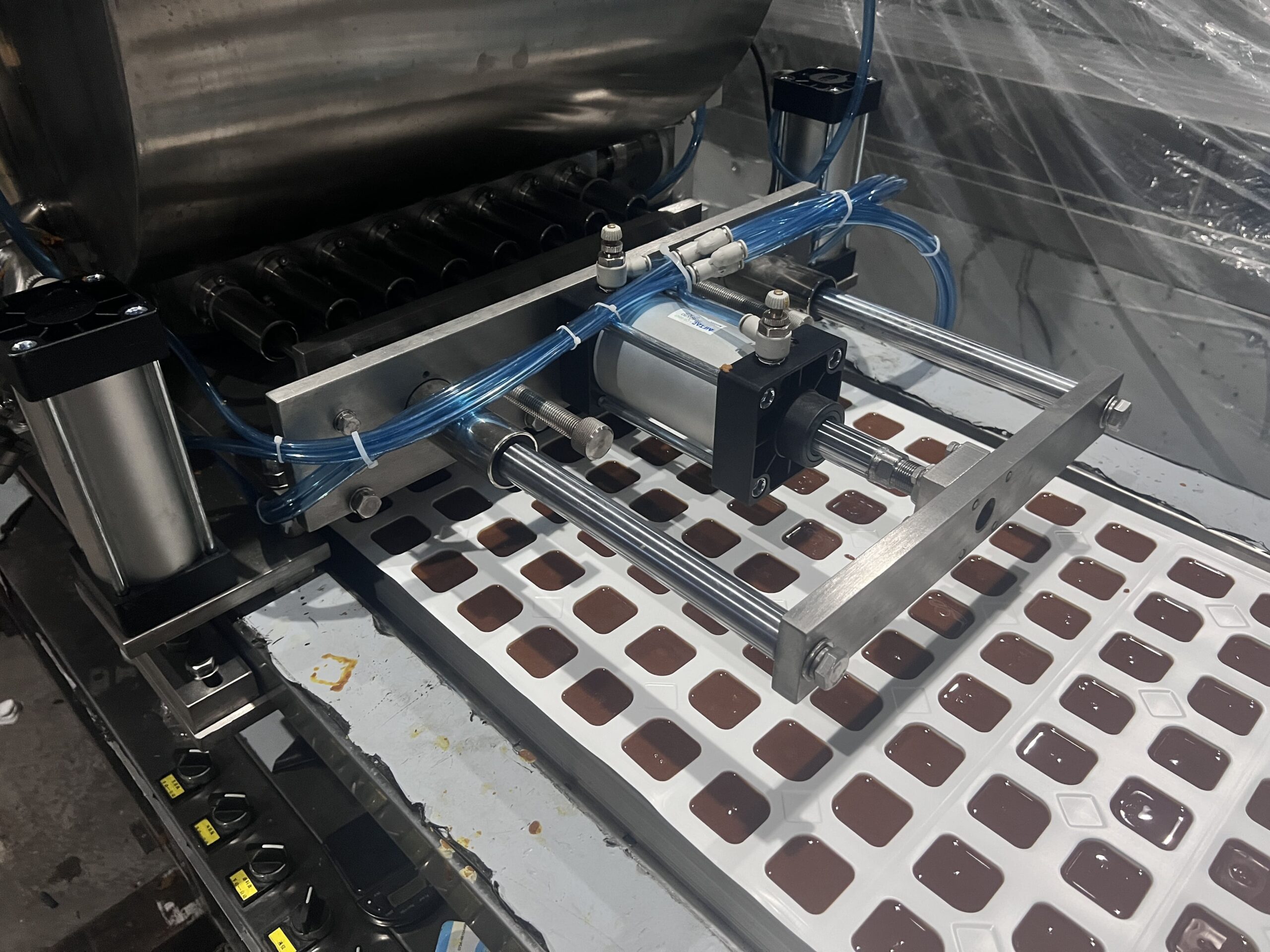
The best quotation discussion starts with real sauce samples and real packaging samples. This lets the machine supplier evaluate flowability, filling accuracy, dripping, rim cleanliness, sealing quality, cleaning access, and realistic output before final configuration.
Conclusion
Choosing a sauce cup filling and sealing machine starts with the filling method. For very thick sauce products, piston pump filling is usually the key configuration because it can push and measure thick but flowable products more effectively. But the sauce must have flowability. It can be viscous, but it still needs to move through the machine’s product-contact path.
Buyers should send real sauce, cup, and sealing film samples before confirming the machine. Final design should be confirmed according to sauce viscosity, particles, filling temperature, cup size, filling volume, sealing quality, cleaning requirements, output target, and downstream packing method.
- Viscosity describes resistance to flow; it directly affects filling speed, nozzle selection, and pump choice. Return
- Piston pump filling is commonly used when a product needs measured volume control and active product movement. Return
- Heat sealing depends on clean cup rims, correct film, pressure, temperature, and dwell time. Return
- Stainless steel is commonly used for food machinery, but cleanability also depends on layout, access, and product residue behavior. Return
- Food contact materials should be considered for parts that directly touch sauce during filling. Return